
Pest Fox · Planning guides
Bird exclusion enquiry preparation
By JR Digital Services editorial team · Published 6 November 2026
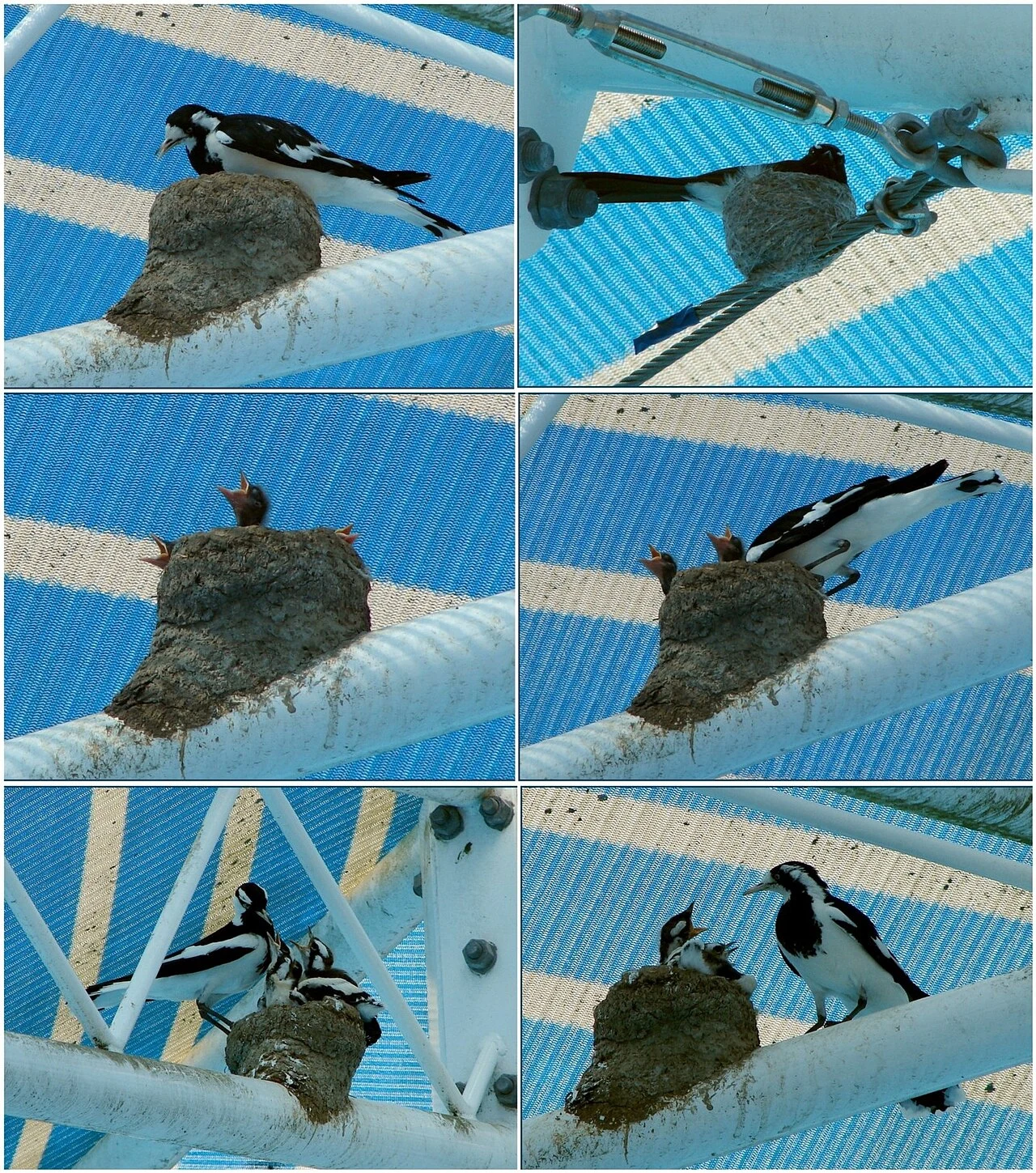
Illustrative 2008 magpie-lark nesting sequence beneath a swimming-pool shade structure in Brisbane; not a project-site finding. Photo: Grallina cyanoleuca -swimming pool roof -nest sequence-8.jpg — Tatiana Gerus from Brisbane, Australia. CC BY 2.0. Proportional resize and WebP encoding; no content alterations. Image derivative retains CC BY 2.0.

Why preparation makes a bird proofing enquiry more productive
When you contact a provider about birds accessing your building, the quality of information you supply directly shapes the usefulness of the response. A well-prepared enquiry helps the assessor understand what they are dealing with before attending, ask the right follow-up questions, and explain what their scope does and does not cover—including any legal considerations that apply to the species involved.
Describing the bird activity and the affected area
Start with the basics: where on the building are the birds entering or roosting, and what are they doing there? A roof void, parapet cavity, air-conditioning recess, and open eave all present different access and exclusion challenges. Try to note:
- Which part of the building structure is affected (roof void, external ledge, wall cavity, solar panel gap)
- Whether you are seeing birds entering a gap or simply roosting on a surface
- Roughly how long the activity has been occurring and whether it appears seasonal or constant
- Any sounds from inside the roof or walls—scratching, calling, or the sound of young birds—that suggest nesting rather than casual roosting
- Any visible fouling, debris, or feathers around entry points
The South Australian Department for Environment and Water’s living-with-wildlife guidance asks landholders to assess whether an impact is serious or a nuisance, and whether it is temporary, seasonal, or ongoing before deciding on a management approach. Giving the provider this same information upfront saves time and leads to a more targeted site assessment.
Taking useful photographs without approaching nests
Photographs help enormously, but there is an important limit: do not disturb, handle, or closely approach a nest or birds that may be nesting. SA law protects most native bird species and their eggs, and disturbance before anyone has established what species are present and what permissions may apply is worth avoiding.
Useful photographs you can take safely from a distance or from areas you normally access include:
- The exterior of the building showing the gap, entry point, or ledge
- Fouling or feather deposits on surfaces below the access point
- Birds perched or in flight near the building (from ground level or a window)
- Any visible nest material at the opening, photographed from a safe distance
If you can photograph the bird itself—even at a distance—that image may help the assessor or a wildlife authority make a preliminary species assessment.
Questions to ask about species identification and applicable permissions
Species identity is not a minor detail for bird proofing work. The SA Department for Environment and Water states that most native bird species are protected by state laws, and that to catch, move, or kill protected animals or their eggs, a permit is required. Activities to deter, exclude, or scare native animals do not require a permit under that framework—but it is worth confirming with the provider exactly how that applies to the specific species and the specific exclusion method proposed.
Useful questions to put to the provider or enquiry handler:
- Can you identify the species from my photographs, or will species identification form part of the site assessment?
- Is the species I have described or photographed likely to be a protected native bird under SA law?
- If nesting is active, does that change what can be done and when?
- Will the exclusion approach you are proposing require any permit, notification, or wildlife authority consultation?
- If you find during assessment that the species or situation is different from what I have described, how does that affect the scope and timing of work?
These are questions for the provider attending your property, not questions this website can answer for your specific situation. What matters is that you ask them before work begins.
Clarifying the proposed assessment and exclusion scope
Bird exclusion work can range from installing physical barriers such as netting, spikes, or wire mesh over gaps, through to habitat modification or installing deterrents. The site assessment should ideally clarify:
- Which access points or surfaces are within the proposed scope
- What exclusion method is being recommended and why it suits the species and building type
- Whether any internal inspection (roof void access, for example) is included
- Whether removal of existing fouling, nesting material, or debris is part of the service or a separate item
- What follow-up or warranty the provider offers if birds return through a different access point
A useful question to ask before work begins is how the provider handles access points that are identified during assessment but were not part of the original enquiry—specifically, whether those points can be included in the same scope or whether a separate assessment and quotation would be required.
Clarify whether the proposal is an inspection, physical exclusion work, pesticide use or a combination. SA Health’s Guide for pest controllers and pest management technicians addresses pesticide licensing, including business and individual authorisations, endorsements, supervision, recognised interstate arrangements and exemptions. Ask which requirements apply to the actual tasks proposed, who will perform them and what evidence supports their authorisation. If pesticide work is proposed, ask the provider to identify the relevant business and technician arrangements, licence endorsements or applicable recognition or exemption. Controlled Substances Licensing in SA Health can confirm the position; a description such as “bird proofing” does not settle it.
For any proposed chemical product, ask the provider to identify the product, approved label and any applicable permit relied on for the intended use. Confirm the proposed use and precautions with the responsible provider rather than assuming every exclusion product or assessment falls under the same registration or licensing requirements.
Recording limitations when no wildlife-handling guide applies
This article is an enquiry-preparation guide, not a wildlife-handling or removal guide. Several things sit outside its scope:
- It cannot tell you whether a specific bird species at your property is protected, unprotected, or subject to special management rules
- It cannot advise on what a permit application involves or whether one is needed for your situation—ask the relevant SA wildlife authority and the provider what applies to the actual species and work
- It does not cover the physical steps of installing exclusion systems, which require a qualified installer and should follow the specific product and site requirements that apply
If you are uncertain whether the activity you are observing involves a protected species, the SA Department for Environment and Water’s living-with-wildlife pages include species-specific information and contact pathways. The department’s guidance suggests understanding whether the animal’s behaviour is related to breeding or a threat, and whether there are attractors such as food, water, or shelter—all useful framing for your enquiry even before you speak to a provider.
Submitting an enquiry for possible referral
If you are ready to seek an assessment, you are welcome to use the enquiry form on this site to request a possible referral where available. Providing the detail covered in this guide—activity description, photographs, building area, and your species questions—will help any follow-up be as specific as possible from the outset.
Further reading and sources
- SA Department for Environment and Water — Living with wildlife
- SA Government — Pest control licence
- SA Health — Guide for pest controllers and pest management technicians
- APVMA — Using PubCRIS
Related guides on this site