Pest Fox · Adelaide pest & termite specialists
Bull Ants Adelaide — ID, Stings, Treatment & Hills Reality | Pest Fox
By Pest Fox · Published 5 May 2026
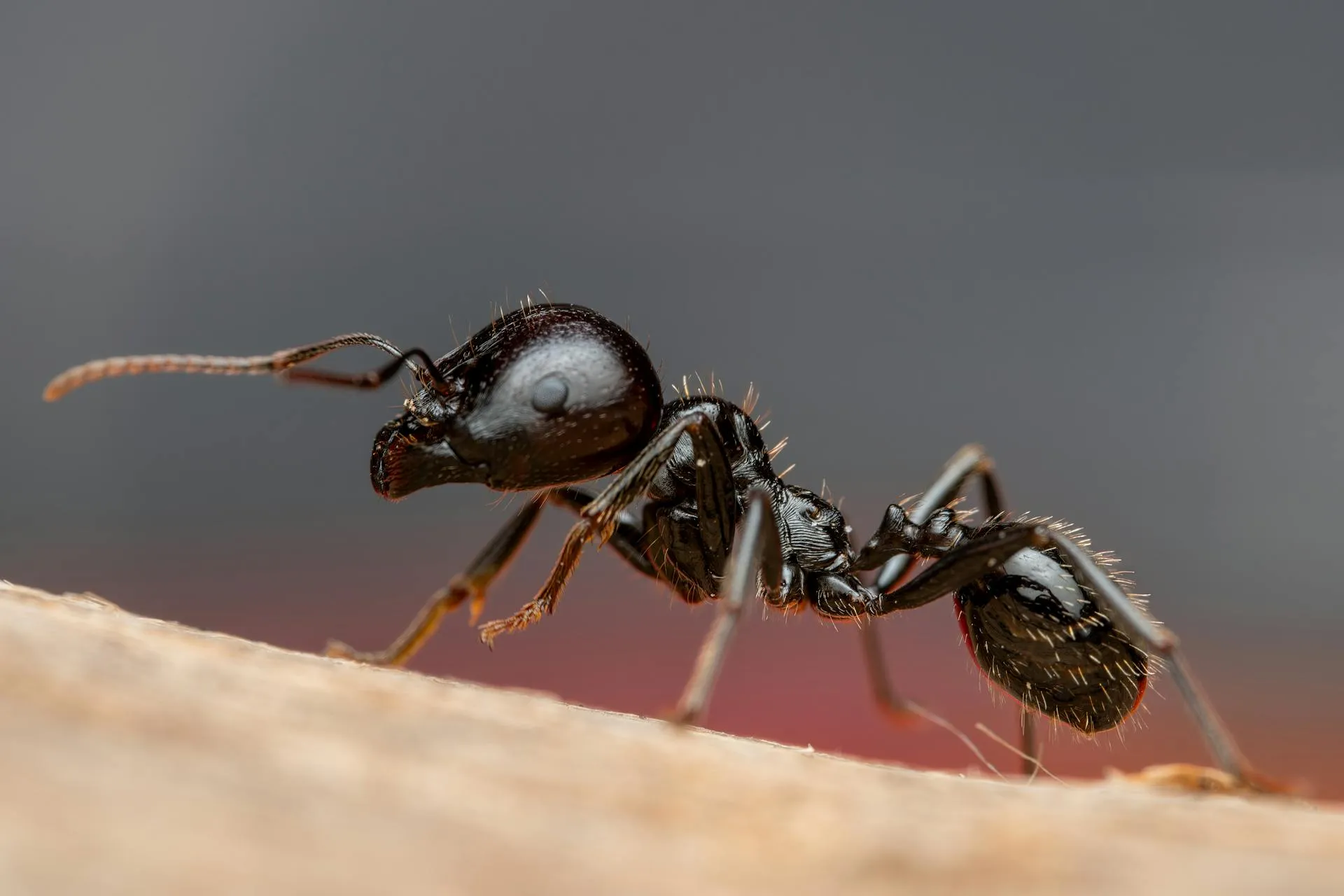
Bull Ants in Adelaide — Identification, Stings and What Actually Works
Bull ants in Adelaide are species in the genus Myrmecia — large (12-25 mm), aggressive, sting-equipped ants with mound nests in lawns, garden edges and bushland-fringe rockeries. The Adelaide Hills and the foothills suburbs (Belair, Blackwood, Aldgate, Stirling, Crafers) carry the heaviest pressure; the inner-metro grid sees them less but does see them. The sting is medically significant — for sensitive individuals, jumper-ant venom is a documented anaphylaxis trigger — and for a confirmed nest near the house, a nest-targeted treatment by a licensed technician is the only reliable answer. Surface sprays kill foragers and miss the queen, so the nest restores within weeks.
This article covers identifying the Myrmecia species you will actually see in Adelaide, where the nests are, what the sting does, and why nest-into-mound treatment beats anything in a retail bottle.
Identifying Myrmecia species in Adelaide
Three groups within Myrmecia turn up across Adelaide gardens. Use size, mandible shape and behaviour to tell them apart.
Jack jumper / jumper ant — Myrmecia pilosula group
- Size: 10-15 mm
- Colour: Dark body with bright orange-red mandibles and forelegs.
- Behaviour: Jumps when threatened — short, deliberate hops of 5-10 cm. This is the unmistakable identifier.
- Where: Adelaide Hills and foothills bushland-fringe properties; less common in the metro grid.
Inch ant / red bull ant — larger Myrmecia species
- Size: 18-25 mm
- Colour: Dark red-brown body, sometimes with a black gaster, large pale mandibles.
- Behaviour: Aggressive ground patrol, no jumping. Will follow a perceived threat several metres.
- Where: Hills, foothills, mature gardens with established mulched borders, properties bordering reserve land.
Bulldog ant — common Myrmecia species
- Size: 15-20 mm
- Colour: Black or red-black, often with paler mandibles.
- Behaviour: Aggressive defence at the mound; visible foraging on tree trunks and lawn edges.
- Where: Across metro Adelaide on properties with established lawns and large eucalypts.
Bull ant versus sugar ant — the common confusion
| Feature | Bull ant (Myrmecia) | Sugar ant (Camponotus) |
|---|---|---|
| Size | 12-25 mm | 5-15 mm |
| Mandibles | Large, visible, used in defence | Small, not prominent |
| Behaviour | Aggressive, ground patrol | Trail-following, indoor kitchen pressure |
| Nest | Mound in lawn or garden, deep | Stump, log, wall cavity, less defended |
| Sting | Medically significant | None — bites only, not venomous |
Sugar ant treatment is its own story — see the Adelaide sugar ants and black house ants guide for the trail-bait approach. For bull ants, the mound is the target.
Where the nests are
Bull ant nests are mound-shaped, with a central entry hole and a halo of soil grains the workers excavate. They go deep — chambers can extend 1-2 metres below the surface, with the queen at the bottom. The visible mound is one entry; mature colonies often have multiple satellite entries within a 5-10 metre radius.
Common Adelaide nesting sites:
- Lawns — open sun, low foot traffic. The mound disappears under mowing if the entry is below grass height.
- Garden edges — between lawn and mulched border, especially north-facing.
- Rockeries and dry-stone walls — gaps between rocks shelter the entries.
- Under pavers and stepping stones — the warm undersurface and excavation room suit them.
- Bushland-fringe properties — Hills suburbs (Stirling, Aldgate, Crafers, Mylor) and foothills (Belair, Blackwood, Coromandel Valley) sit at the buffer between residential land and Myrmecia habitat. Constant pressure.
- Around eucalypt root systems — the structural anchor and warmer microclimate around large established gums.
Mia’s local plan flags the Adelaide Hills and southern foothills as the bull-ant priority — the Adelaide Hills and Mitcham southern suburbs location pages connect to this article for that reason.
The sting and the medical reality
A bull ant sting is delivered through a stinger at the abdomen tip — not through the mandibles. The mandibles grip; the abdomen curls under and stings. A single ant can sting multiple times.
What the sting does:
- Immediate severe burning pain at the site, lasting 1-3 hours.
- Local swelling and redness, sometimes for 2-3 days.
- Itching during the resolution phase.
For sensitive individuals, the sting is a documented allergic and anaphylaxis trigger. The Australasian Society of Clinical Immunology and Allergy (ASCIA) lists jack jumper ant (Myrmecia pilosula) venom as a recognised cause of anaphylaxis in Australia, particularly in Tasmania and Victoria — the species is also present in the Adelaide Hills and SA bushland-fringe.
What this means for an Adelaide household:
- Anaphylaxis history → treat seriously. A confirmed previous anaphylactic reaction to any ant or wasp sting means the next sting is a medical event. ASCIA-recommended action: an EpiPen on hand and an emergency plan.
- Allergy testing exists. Specific Myrmecia venom immunotherapy is available in Australia for confirmed allergy — discuss with a clinical immunologist.
- First aid for an unsensitised sting: cold pack, oral antihistamine if itching is intense, monitor for systemic symptoms (hives spreading, throat tightness, breathing difficulty, dizziness). Any of these → call 000.
For a property with a confirmed anaphylaxis-risk household member and a documented bull ant nest in the yard, treatment is not optional. It is a safety measure.
Why DIY surface sprays don’t work
Two structural reasons:
- The mound goes deep. Surface chemistry stays on the surface. The queen and the brood are 1-2 metres down, in chambers the spray never reaches. Workers killed at the entry are replaced from below within hours.
- Bull ants are tolerant of perimeter chemistry. The aggressive defence means workers will walk over treated ground at the mound entry, accept the dose, and continue. Foragers die; the colony does not.
The result of a hardware-store retail spray is a temporary reduction in visible workers and a visible mound that returns to normal activity within 1-3 weeks. Repeat applications fragment the surface population without touching the queen, and the colony rebuilds.
How a licensed bull ant treatment actually works
A licensed nest treatment uses direct nest application — chemistry delivered into the mound and the chambers below.
The standard approach:
- Locate every entry. Mature Myrmecia mounds have satellite entries; missing one means the colony shifts to the missed entry and the work is undone. The technician walks the property and marks each.
- Granular bait near the mound — registered ant baits with a delayed-action active ingredient that workers carry into the colony and feed to the queen and brood. The delay is what allows colony-level penetration.
- Direct dust or liquid application into the entry — APVMA-registered insecticidal dust or non-repellent liquid pumped into the mound. Reaches the chambers the surface spray cannot.
- Follow-up at 14-21 days — confirms colony elimination, treats any satellite mound that has activated.
Chemistry by class — synthetic pyrethroid liquids, fipronil-class non-repellents, and IGR-supplemented baits are the typical APVMA-registered options. The technician selects per nest size, location (proximity to vegetable gardens, rainwater tanks, fish ponds), pet-and-child exposure, and product label conditions.
Children, pets and bull ant nests
A documented bull ant nest in a yard with small children or pets is a treat-now scenario. The risk profile of the sting is higher than the risk profile of professional chemistry applied to the nest entry:
- Granular baits are deployed in tamper-resistant placements where children and pets cannot access them.
- Liquid mound treatments dry rapidly; the technician briefs the household on a re-entry window (typically 2-4 hours for the lawn, longer for the immediate mound area).
- Keep dogs off the treated mound for 24 hours. Bull ant mounds are not toys for dogs — both before and after treatment.
- Aquariums and vegetable gardens are flagged in the pre-service walkthrough; the technician adjusts placement and chemistry accordingly.
For pricing context, a single-mound bull ant treatment in Adelaide typically rolls into a general pest service or sits as a stand-alone job — the pest control cost guide covers the typical range.
Prevention and ongoing management on bushland-fringe properties
Hills and foothills properties with constant Myrmecia pressure cannot be “cleared once” — the surrounding bushland is the source population and re-establishment is continuous. The realistic posture is monitoring plus quick response:
- Quarterly walk of the property perimeter — lawn edges, garden borders, rockeries, paver gaps, established trees.
- Mark and treat new mounds within a week of appearance. Young colonies are easier to eliminate than mature ones.
- Mulch and rockery audit. Excessive mulch depth and unmaintained dry-stone walls give Myrmecia prime real estate. Reducing both reduces pressure.
- Lawn maintenance. Mowing exposes mound entries; thick uncut grass hides them until they are mature.
- Service contract with a licensed operator — quarterly programs are cost-effective on bushland-fringe land and catch new nests at the establishment phase.
When to call us
- A confirmed bull ant nest within 5 metres of an outdoor entertaining area, child play space, dog run, or vegetable garden.
- An anaphylaxis-risk household member. No threshold debate — treat the nest.
- Multiple mounds on the property. Suggests an established population that the property cannot self-resolve.
- Visible bull ant foraging on or near the house — in Hills properties this is common; in metro suburbs it usually indicates a nearby nest worth locating.
- Pre-tenancy or pre-listing where outdoor pest history is a sale or rental concern.
FAQ
Are bull ants dangerous in Adelaide? Yes — particularly for allergic individuals. The sting causes immediate severe burning pain, local swelling and redness for 2-3 days, and in sensitive people can trigger anaphylaxis. Jack jumper ant (Myrmecia pilosula) venom is a documented Australian anaphylaxis cause and is present in the Adelaide Hills and bushland-fringe metro suburbs.
How do I find a bull ant nest in my yard? Walk the property edges, garden borders, rockeries, paver gaps and the area around large established trees. The mound is a small soil-grain pile around a central entry hole, often disappearing into mown grass — look for the soil halo, not the mound itself. Following workers from a foraging path back to the entry is the most reliable method.
Will pest control kill bull ants permanently in Adelaide? A licensed nest treatment with direct mound application and queen-targeted bait will eliminate a single colony reliably. On bushland-fringe properties (Hills, foothills, reserve-adjacent land) ongoing pressure means new nests will establish from the surrounding population — a quarterly monitoring program catches them at the young-colony stage when treatment is fastest and cheapest.
What kills bull ants — what actually works? Surface sprays kill foragers and miss the queen 1-2 metres below the surface, so the colony restores within weeks. What works: granular bait carried back to the nest by workers, plus direct dust or liquid application into the mound entry, applied by a licensed technician using APVMA-registered chemistry. Follow-up at 14-21 days confirms colony elimination.
Are bull ants more common in the Adelaide Hills? Yes. The Hills (Stirling, Aldgate, Crafers, Mylor) and the foothills suburbs (Belair, Blackwood, Coromandel Valley, Mitcham) sit at the buffer between metro residential land and Myrmecia habitat. Bushland-fringe properties carry constant pressure and benefit from a quarterly monitoring program rather than one-shot treatment.
Sources
- Australian Museum — Bull Ants (Myrmecia) species pages: https://australian.museum/learn/animals/insects/bull-ants/
- Australasian Society of Clinical Immunology and Allergy (ASCIA) — Jack Jumper Ant Allergy: https://www.allergy.org.au/patients/insect-allergy-bites-and-stings/jack-jumper-ant-allergy
- Australian Environmental Pest Managers Association (AEPMA) ant treatment standards: https://aepma.com.au