Pest Fox · Adelaide pest & termite specialists
Sugar Ants Adelaide — Trail Treatment That Actually Works | Pest Fox
By Pest Fox · Published 5 May 2026
Sugar Ants and Black House Ants in Adelaide — Trail Treatment and Long-Term Control
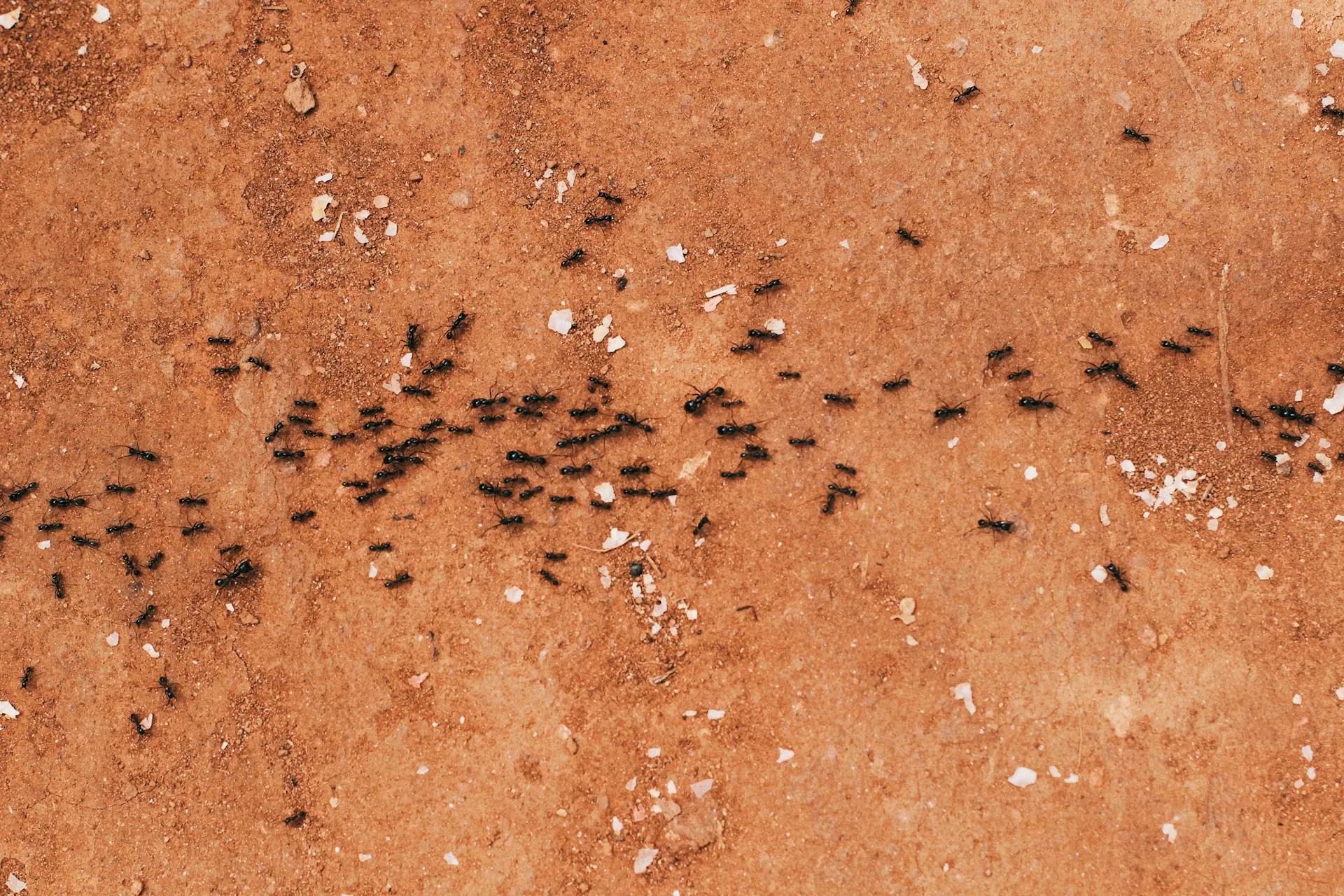
Sugar ants and black house ants are the two species behind almost every “ants in the kitchen” call across Adelaide. They are different ants — different size, different colour, different colony behaviour — and the same retail surface spray that fails on both is the most common reason the trail keeps coming back. The right approach is to bait the trail, not break it: a gel bait carried back to the colony where it eliminates the queen and the brood. Spray-and-wipe interrupts the pheromone trail visually and leaves the colony intact, and within 48-72 hours a fresh trail re-establishes through a different entry point.
This guide explains the species ID, why surface chemistry makes the problem worse, what a licensed gel-bait program looks like, and where the line sits between a one-trail DIY moment and a recurring infestation that needs professional treatment.
Identifying sugar ants versus black house ants
The two species look different and behave differently. Treatment principles overlap; the chemistry chosen does not.
Banded sugar ant — Camponotus consobrinus
- Size: 5-15 mm — large for a household ant, a clear visual cue.
- Colour: Bicoloured. Orange-brown thorax and legs, black head and gaster (rear segment).
- Behaviour: Mostly nocturnal. Trails appear after dark on kitchen counters, around pet food bowls, near unsealed pantry items.
- Nest: Outside the building — under logs, in tree stumps, between pavers, in soil under garden mulch. Workers come inside to forage and return to the outdoor nest. Old stumps left in the garden become long-term ant harbourage; Adelaide stump grinding removes the most common outdoor nest source. If a broader landscape refresh is on the cards, a landscaping quote covering outdoor projects and the pest treatment can be coordinated as a single visit.
- Colony size: Moderate (typically 2,000-7,000 workers).
- Range in Adelaide: Across the metro grid — common in Norwood, Prospect, Unley, Burnside, Glenelg and into the foothills.
Black house ant — Ochetellus glaber
- Size: 2-3 mm — small, the standard “black ant” of Adelaide kitchens.
- Colour: Uniformly shiny black to dark brown.
- Behaviour: Active day and night. Trails are persistent, narrow, and follow building edges (skirtings, window sills, tile grout lines).
- Nest: Often inside the building — wall cavities, roof voids, behind plasterboard, under loose flooring. Outdoor nests in mulch, retaining walls, paving cracks also common.
- Colony size: Smaller (a few hundred to several thousand workers) but commonly distributed across multiple satellite nests — the same colony in two parts of the house.
- Range in Adelaide: Ubiquitous. Heavy pressure in mature villa stock — Norwood, Unley, Walkerville — where age-related cracks in skirtings and architraves give nest access.
Why the species matters for treatment
| Treatment lever | Sugar ant (Camponotus) | Black house ant (Ochetellus) |
|---|---|---|
| Bait carrier | Sweet/sugar-based gel | Sweet and protein-based — multi-bait |
| Nest target | Outdoor — soil, log, mulch | Often indoor — wall cavity, satellite nests |
| Perimeter treatment | High value | Useful — but indoor work is the lever |
| Time to colony elimination | 7-14 days typically | 2-4 weeks — multiple satellites slow it |
A licensed program identifies the species first, picks the bait chemistry second.
For the larger, ground-nesting Myrmecia (bull ants) — a different family entirely — see the Adelaide bull ants guide. Sugar ants do not sting; bull ants very much do.
Why they come inside in Adelaide
Three drivers across the metro:
- Food residue. Counter crumbs, pet food, ripening fruit on the bench, an unsealed sugar jar, the underside of the dishwasher door. Trails follow gradients of food scent and reward.
- Water. Adelaide’s hot dry summer pushes outdoor colonies indoors looking for moisture. A leaking dishwasher seal, condensation under the fridge, pet water bowl — entry points for the foraging path.
- Weather pressure. Heavy summer rain after a dry spell floods outdoor nests and triggers indoor migration. The post-storm ant trail is the classic Adelaide November-to-March pattern.
Adelaide kitchens that open onto established gardens — heritage villa stock with kitchen-into-courtyard access in the inner-east, foothills properties with mature mulched borders — see the heaviest seasonal pressure.
Why bug spray makes the trail worse
The single highest-leverage thing to know:
Surface sprays interrupt the pheromone trail. They do not eliminate the colony.
The ant’s foraging path is a chemical trail laid on the surface as workers pass. A surface spray kills the workers on the path and disrupts the pheromone signature. The colony reads the disruption as a route problem, not a colony problem. Within 24-72 hours:
- A new trail establishes through a different entry point.
- The colony often fragments into satellite nests — particularly in Ochetellus (black house ants), where this is a known stress response.
- The remaining workforce hides harbourage points the homeowner cannot see.
The result of a hardware-store spray is a one-week reduction in visible activity and a worse problem in week three, with multiple trails through multiple entries instead of one.
The right move is the opposite of disruption: leave the trail alone, place a slow-action bait, and let the workers do the colony work for you.
How a licensed gel-bait treatment works
A licensed ant program targets the colony, not the visible trail.
The gel-bait approach
- Identify the species. Sugar ant gets sweet bait; black house ant gets a sweet and protein bait array. Misidentification means workers ignore the bait.
- Place bait at the trail edge — small dabs of APVMA-registered gel bait at access points, not in the food-prep zone. Workers carry the bait back to the colony, feed it to other workers and the queen.
- Slow-action active ingredient. The chemistry is designed to take effect over hours — fast enough to eliminate the queen, slow enough that workers reach the colony before they die. Hydramethylnon, fipronil and indoxacarb are typical APVMA-registered bait actives.
- Allow 7-14 days for colony elimination. Visible trail activity may increase in the first 48 hours as workers feed on and recruit to the bait. This is the bait working. Spraying it now restarts the cycle.
Plus the perimeter and entry points
- Non-repellent residual at the perimeter. Synthetic pyrethroid or fipronil-class non-repellents at the building edge. Foragers crossing the perimeter pick up a dose; the chemistry is not strong enough to kill before they return to the colony, so it travels with them.
- Entry-point treatment. Weep-holes, wall-cavity access points, plumbing penetrations, door thresholds — targeted dust or residual application.
- Internal harbourage for black house ants — wall cavities and roof voids near sustained activity, treated with insecticidal dust through entry points.
Pets, kids and gel bait
Gel bait points are sub-gram placements at access points, not food-prep surfaces. Standard practice:
- Bait points in cupboard hinges, behind appliances, in inaccessible junctions — tamper-resistant by location.
- Pet food bowls moved during placement; technician briefs the household on the 2-4 hour window before reinstating.
- APVMA-registered actives at residential bait concentrations are safe at the placement dose for inadvertent contact, though the technician will avoid placement where children could access.
For pricing context, Adelaide ant treatments typically sit in the pest control cost guide range — single-trail jobs at the lower end, recurring infestations with internal Ochetellus satellite nests at the higher end.
DIY versus pro — where the line sits
One-trail, one-time:
- Single trail, single entry, recently appeared after a storm or food spill.
- Pet food bowl ant trail.
- Outdoor paver-gap trail not crossing into the house.
A DIY approach that works for these scenarios:
- Wipe down the food source — clean the trail surface with detergent, not insect spray.
- Place a hardware-store gel bait at the trail entry point. Leave the trail alone for 7-14 days.
- Monitor for activity reduction over two weeks.
Recurring infestation — call a licensed operator:
- Trails returning week-after-week regardless of clean-up.
- Multiple trails through multiple rooms.
- Visible workers indoors year-round (suggests internal Ochetellus nest).
- Trails in commercial premises — food premises have HACCP and SA Health audit obligations a DIY trail-bait does not satisfy.
- Properties about to list, sell or be tenanted.
The recurring pattern means the colony is established and bait reach into the colony has not happened. A licensed program with the species ID, full perimeter, internal harbourage treatment and a follow-up visit is the reset.
Prevention — keeping the kitchen unattractive
Adelaide ant prevention is cumulative discipline, not one big move:
- Wipe counters at end of day. Sugar residue, fruit drips, pet food crumbs.
- Seal pantry items in glass or sealed plastic — paper-bag rice and open biscuit packets are reliable triggers.
- Empty bins daily in summer; line them; clean the bin lip.
- Pet food bowls on a tray, picked up between meals, washed.
- Dishwasher seal wiped weekly — moisture and food residue here.
- Weep-hole and threshold review annually — small gaps under door thresholds are entries.
- Mulch buffer — keep garden mulch back from the house slab edge by 30 cm minimum; nest pressure starts at the slab interface.
- Fix leaks — under-sink drips and outdoor irrigation overspill near the house both feed indoor migration.
- Trim back vegetation that touches the house wall — branches that reach the eaves give Ochetellus an alternate route in.
A pre-summer treatment in October-November flattens the curve before the seasonal indoor migration peak.
FAQ
What kills sugar ants in Adelaide kitchens — what actually works? A slow-action gel bait that workers carry back to the colony, where it eliminates the queen and brood over 7-14 days. Surface sprays kill workers on the trail but disrupt the pheromone signal without reaching the colony, and a new trail establishes within 48-72 hours through a different entry point. Bait, do not spray.
Why do my ant trails come back after I spray? Surface sprays interrupt the pheromone trail and kill foragers but do not reach the queen. The colony reads the disruption as a route problem and re-routes through a new entry — and in Ochetellus (black house ants), the stress response often fragments the nest into satellites, leaving you with multiple trails instead of one.
Do ants die from surface spray? Workers crossing the spray die — yes. The colony does not. The queen and the brood are in the nest (outdoors for sugar ants, often indoors in walls for black house ants) where the surface spray does not reach. Eliminating workers without the colony is a temporary fix that triggers re-establishment within days.
How long does an Adelaide ant treatment last? A licensed gel-bait colony-elimination treatment typically clears the active infestation in 1-4 weeks (faster for sugar ants, slower for black house ants with multiple satellite nests). New colonies can establish from the surrounding garden, so a 6-monthly perimeter or quarterly general program is the standard maintenance approach for properties with documented recurring pressure.
Are sugar ants harmful in Adelaide? No — sugar ants do not sting and do not transmit known disease in Australian residential settings. They are a contamination and nuisance pest: trails on food prep surfaces, food spoilage, and the persistent indoor activity. The medically significant ant in Adelaide is the bull ant (Myrmecia) — a different genus with a documented anaphylaxis-trigger sting.
Sources
- Australian Museum — Banded Sugar Ant (Camponotus consobrinus) species page: https://australian.museum/learn/animals/insects/banded-sugar-ant/
- Australian Museum — Black House Ant (Ochetellus glaber) species page: https://australian.museum/learn/animals/insects/black-house-ant/
- AEPMA ant Integrated Pest Management guidance: https://aepma.com.au