Pest Fox · Adelaide pest & termite specialists
Huntsman Spider Adelaide — Why They're Almost Always Welcome | Pest Fox
By Pest Fox · Published 5 May 2026
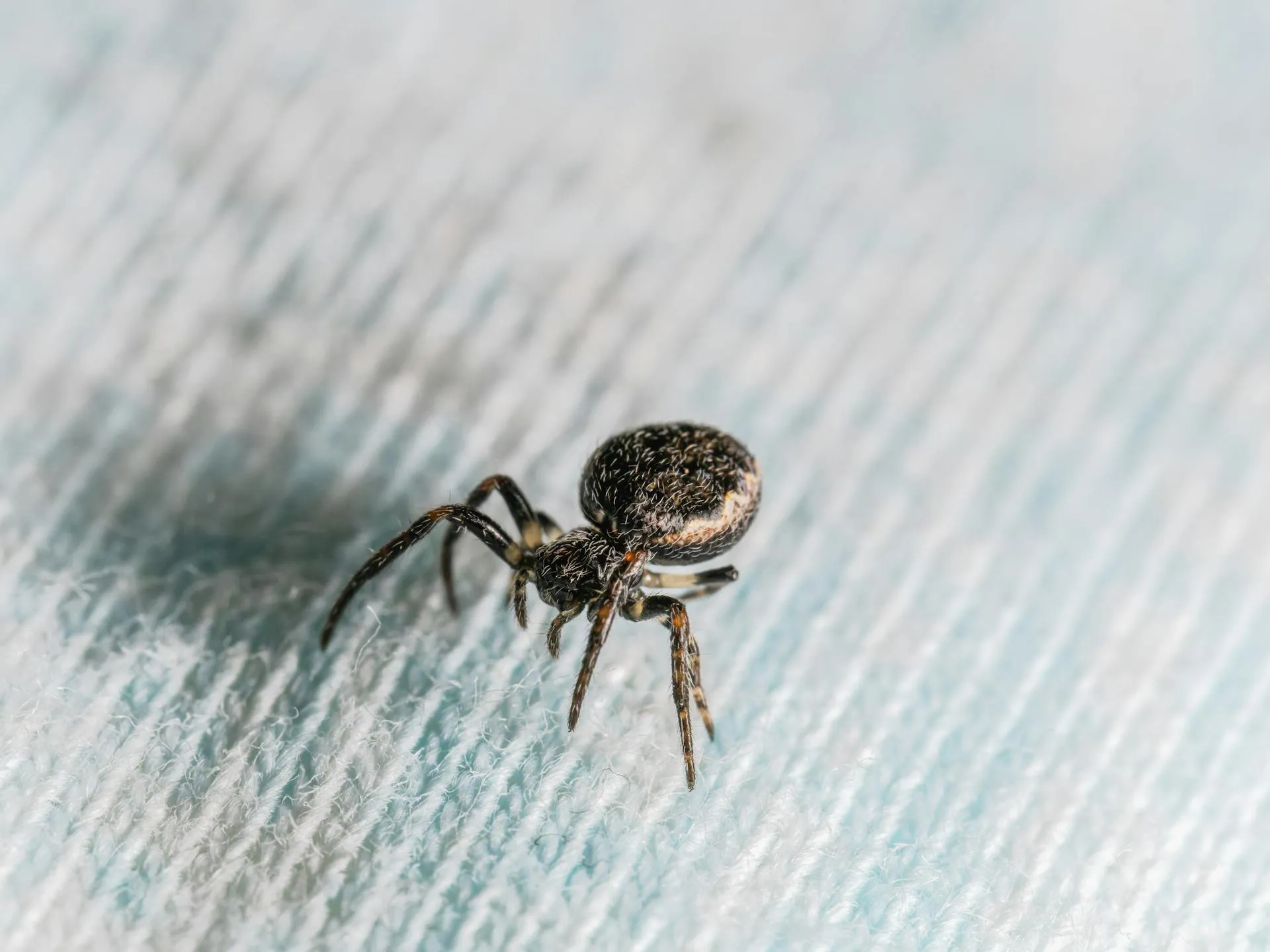
Huntsman Spider in Adelaide — Why They’re Almost Always Welcome (and When They’re Not)
A huntsman spider in your Adelaide ceiling is almost always good news. They are large, fast, and visually startling — and they are also non-aggressive, not medically significant, and they consume the cockroaches, moths, mosquitoes and other small insects you do not want in the house. The case for treatment is a narrow one: a vulnerable household member, severe arachnophobia, or a genuinely high-density indoor population. For everything else, the right move is a glass-and-card relocation to the garden — not a chemical program.
This article explains how to identify an Adelaide huntsman, why they appear inside in autumn, what the bite actually does, and where the line sits between live-and-let-live and a licensed treatment.
Identifying the Adelaide huntsman — Sparassidae family
Huntsman are flat, large, fast spiders in the family Sparassidae. The Adelaide huntsman is most often the social huntsman (Delena cancerides) or the brown huntsman (Heteropoda spp.) — the two genera produce the species you actually see indoors.
ID points:
- Leg-span up to 15 cm. Body is small relative to leg-span — most of what you see is leg.
- Flat body. They live under bark and behind wall linings; the flat profile is functional. A round-bodied spider on a wall is something else.
- Sideways gait. Huntsman walk and run sideways, not forward. This is the single most reliable visual ID.
- Brown to grey colouring with paler bands on the legs.
- Active at night, sitting still during the day on walls, ceilings and behind wardrobes.
How a huntsman differs from a wolf spider
The everyday confusion in Adelaide gardens is huntsman versus wolf spider (Lycosidae).
| Feature | Huntsman (Sparassidae) | Wolf spider (Lycosidae) |
|---|---|---|
| Size | Up to 15 cm leg-span | 15-35 mm body |
| Body | Flat, leg-span dominant | Stocky, robust |
| Legs | Long, splayed sideways | Robust, forward-pointing |
| Behaviour | Wall and ceiling, sideways gait | Ground, runs forward |
| Eye pattern | Two rows of four small eyes | Two large forward eyes plus six smaller |
| Where you find it | Indoor walls, ceilings, behind bark | Outdoor lawns, mulch, garden edges |
Wolf spiders rarely come inside. If it is on your living-room ceiling, it is a huntsman.
For the other common Adelaide indoor confusion — small dark cylindrical spider on the laundry floor — see the Adelaide white-tail spider guide. Different family, different size, different behaviour.
Why your Adelaide house has them
Three reasons:
- Roof voids and wall cavities are warm. Huntsman are thermophilic — they prefer warm shelter. A tiled or Colorbond Adelaide roof void in summer or a north-facing wall cavity in autumn is exactly the microclimate they want.
- Indoor insect activity feeds them. Huntsman consume the small moths drawn to outdoor lights, the cockroaches under appliances, mosquitoes through open windows, and silverfish in the linen cupboard. A house with huntsman is a house with available prey.
- Inward migration in autumn. As the nights cool through April and May, garden-active huntsman move under eaves and into roof voids and wall cavities for shelter. This is the seasonal peak for “huntsman in the house” calls across Adelaide.
A useful posture: huntsman are territorial. One adult huntsman in a roof void usually means one adult huntsman in that roof void. Multiple sightings in different rooms are most often the same spider relocating, not a population.
The bite — what’s actually true
A huntsman bite is defensive and rare. They flee from humans rather than confront them. When a bite does occur, it is from accidental hand-contact with a hidden spider — picking up firewood, reaching into a roof-void cavity, or rolling over in bed onto one that has wandered in.
What the medical evidence shows:
- Localised pain at the bite site, sometimes severe for an hour or two.
- Localised swelling and redness. Usually resolves within 24-48 hours.
- Occasional nausea or headache in larger-spider bites — uncommon, transient.
- No documented systemic envenomation of clinical concern in healthy adults.
- No anaphylaxis association in published case series.
SA Health’s bites and stings guidance manages huntsman bites the same way as most non-medically-significant spider bites — clean the site, cold pack for pain, monitor for unusual symptoms, see a GP if anything escalates.
For a medically significant Adelaide spider, the redback (Latrodectus hasselti) is the one — small, glossy black with the red dorsal stripe, found under outdoor furniture and in garden sheds. A redback bite has documented systemic effects and is treated as a medical event. A huntsman bite is not in that category.
Living with a huntsman versus treating
Most Adelaide households the right answer is leave it alone or relocate it. The reasons are biological, not sentimental:
- It is removing pests for you. A resident roof-void huntsman is consuming cockroaches, moths and small insects that would otherwise need to be treated for separately.
- Killing it does not stop the next one. If the indoor environment supports a huntsman, the next one will arrive in autumn through the same eave gap.
- Surface spray on a single spider is poor value. A targeted residual makes sense for a population, not a single individual.
When treatment is genuinely warranted:
- Severe arachnophobia in a household member where the size of huntsman alone causes meaningful distress.
- Vulnerable household members — small children, elderly residents — and a documented bite incident or repeated bedroom incursion.
- Repeated incursions of multiple huntsman in living areas — usually a sign of an unsealed roof entry-point combined with high outdoor population pressure.
- Pre-tenancy or pre-listing where a visible spider history is a sale or rental concern.
Removal versus treatment — what each looks like
Glass-and-card relocation (the standard answer)
The relocation method:
- A clear container — a 1L jar, a clear plastic food container, or a wide-mouth glass.
- A stiff card — postcard-thickness, larger than the jar opening.
- Approach calmly. Huntsman move fast when threatened. A slow, smooth approach gives the spider less reason to bolt.
- Place the container over the spider. Slide the card under the rim, between the spider and the wall.
- Lift container and card together, keep the card pressed against the rim, walk to the garden, release on a mature shrub or tree trunk away from the house.
The single hardest part is calm. The spider is harmless and has no interest in you; rapid retreat happens because human movement is what triggers the run.
When a licensed treatment is the right call
A licensed huntsman treatment program looks like:
- Roof-void inspection — identify entry points (eave gaps, ridge-cap clearances, vent screens) and the void’s resident insect activity.
- Targeted void dust application — APVMA-registered insecticidal dust into the void; reaches harbourage areas a surface spray cannot.
- Internal residual — perimeter spray along skirtings, behind wardrobes, around door and window architraves, where huntsman travel between roof and rooms.
- Entry-point sealing recommendations — eave gap closure, vent screen replacement, builder-grade weep-hole screens; the technician notes where structural sealing reduces ongoing pressure.
- External web and harbourage management — clearing eave-corner webs and outdoor harbourage where the wider spider population sits. Clean window frames and clear sills make harbourage easier to spot the next time around — homeowners often pair the program with Adelaide window cleaning so the technician’s prevention work has a fair chance to hold.
Pricing for a spider-inclusive general pest treatment in Adelaide sits in the range covered in the pest control cost guide. A standalone huntsman-focused treatment is uncommon — the work usually rolls into a quarterly general program.
Pets, kids and chemistry
APVMA-registered surface residuals dry within an hour, after which re-entry is safe. Insecticidal dusts go into voids and cavities — out of reach by design. The technician briefs the household on the standard re-entry window and removes or covers fish tanks during application. None of the chemistry used in a residential huntsman program is more aggressive than standard pest treatment.
Huntsman in the car — the specific case
Huntsman in cars is an Adelaide summer classic. The spider walks into the cabin through an open window or via a parking garage and shelters behind a sun-visor or in a door cavity.
What works:
- Park in sun, doors open, windows down, for an hour. The cabin heats and the spider leaves through the door for the cooler garden.
- Approach passenger door from outside, leave it open, then drive a short circuit at low speed. The airflow encourages exit.
- Don’t try to swat it while driving. This is the only way a huntsman in a car causes harm — driver distraction and a crash.
If it persists, a vehicle service centre or pest controller can do a single-vehicle clearance — but the sun-and-time method usually solves it.
FAQ
Are huntsman spiders dangerous? No. Huntsman bites cause localised pain, swelling and redness for 24-48 hours, and there are no documented cases of clinically significant systemic envenomation. They are non-aggressive — they flee from humans rather than confront them — and they consume cockroaches, moths and other indoor pests.
Why do huntsman come inside in Adelaide autumn? Cooling night temperatures from April to May push outdoor-active huntsman under eaves and into warm roof voids and wall cavities. Combined with available indoor insect prey — cockroaches, moths, silverfish — the indoor environment is more attractive than the cooling garden, and they migrate in.
How do I get a huntsman out of my car in Adelaide? Park in direct sun with all doors and windows open for an hour; the cabin heats above the spider’s preferred temperature and it leaves voluntarily. Avoid swatting at it while driving — driver distraction is the only real risk a huntsman in a car presents.
Should I kill or relocate a huntsman in my house? Relocation is the standard answer. Glass-and-card removal to the garden is straightforward, and the resident huntsman is consuming cockroaches and moths you would otherwise treat for separately. Killing a single huntsman does not address the entry-point that admitted it; the next one arrives next autumn through the same gap.
Will pest control kill huntsman spiders? A general pest treatment that includes spider work will kill huntsman that walk on treated surfaces, yes. Most Adelaide households do not need that — a single huntsman is best relocated. Treatment is warranted for repeated incursions, vulnerable household members, severe arachnophobia, or where the spider activity is symptomatic of a wider indoor insect problem the program addresses at the same time.
Sources
- Australian Museum — Huntsman Spiders (Sparassidae) species pages: https://australian.museum/learn/animals/spiders/huntsman-spiders/
- SA Health — Bites and Stings guidance: https://www.sahealth.sa.gov.au/wps/wcm/connect/public+content/sa+health+internet/conditions/poisoning/bites+and+stings
- Queensland Museum — Spider identification and advice: https://www.qm.qld.gov.au/learning-resources/discovery-centre/inquiry-form/animal-identification-and-advice/spiders