Pest Fox · Adelaide pest & termite specialists
White-Tail Spider Adelaide — Identification, Bite, Treatment | Pest Fox
By Pest Fox · Published 5 May 2026
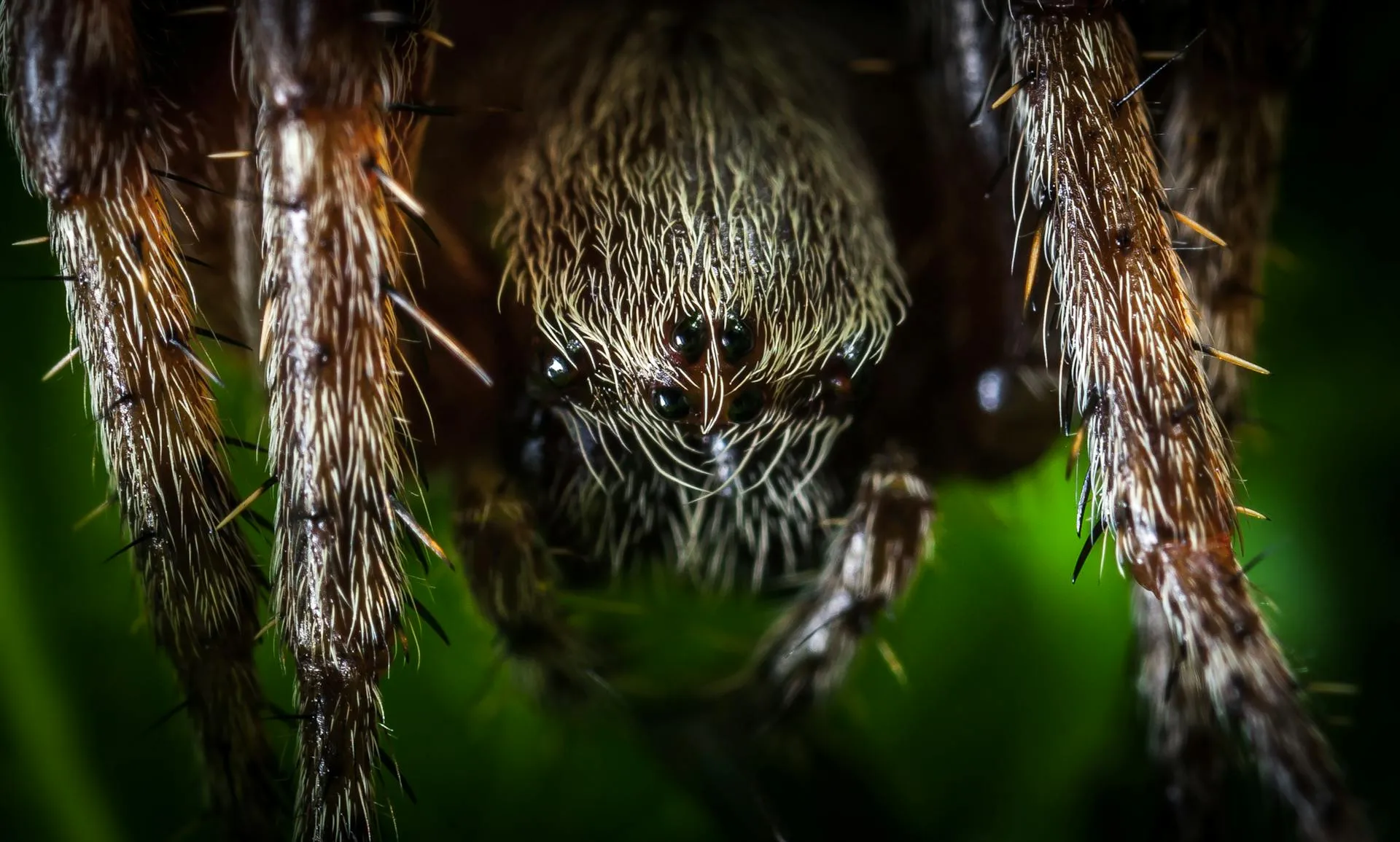
White-Tail Spider in Adelaide — Identification, Treatment and What’s Actually True About the Bite
A white-tail spider (Lampona cylindrata) is the cylindrical, dark grey-brown spider with a small white tip on the abdomen that turns up in Adelaide laundries, shoes, beds and brick cavities. It is a wandering indoor spider that feeds on other spiders — particularly black house spiders — which is why mature Adelaide gardens with established black-house populations end up with a steady supply of them. The bite causes localised pain and a red mark; the long-running myth that the bite causes necrotic skin ulcers has been tested and found wrong. The 2003 Isbister and Gray prospective study of 130 confirmed white-tail bites recorded no cases of necrosis, and that finding has held up in the two decades since.
This guide explains how to identify a white-tail spider, where they appear in Adelaide homes, what the medical evidence actually says about the bite, and how a licensed treatment program clears them and keeps them out.
Identifying Lampona cylindrata — what an Adelaide white-tail looks like
Adult Lampona cylindrata is 12–18 mm body length, dark grey to charcoal-brown, with a long cylindrical abdomen. The marking that names the species is a small white or cream patch at the tip of the abdomen — sometimes a single spot, sometimes flanked by two pale dots earlier on the body. The legs have faint banding when viewed up close.
Two ID points that catch most homeowners out:
- Body shape, not just the white tip. Several Adelaide spiders have pale abdominal markings; the white-tail’s is paired with a long, smooth, almost tube-shaped abdomen. If the body is round and bulbous, it is not a white-tail.
- Behaviour. White-tails do not build webs to catch prey. They are active wanderers, usually seen on a wall, on bedding, or scuttling across the floor at night. A spider in a permanent web in a wall corner is more likely a black house spider — which the white-tail eats.
How it differs from other Adelaide spiders
| Species | Size | Body shape | Behaviour |
|---|---|---|---|
| White-tail (Lampona cylindrata) | 12–18 mm | Cylindrical, dark, white tip | Wanderer, no web |
| Black house spider (Badumna insignis) | 15–18 mm | Stocky, dark, hairy | Lacy web in window frames, eaves |
| Huntsman (Sparassidae) | Up to 15 cm leg-span | Flat, large, sideways gait | Wanderer on walls and ceilings |
| Wolf spider (Lycosidae) | 15–35 mm | Stocky, grey-brown, robust legs | Ground-active, no web |
A clearer eye on the huntsman spider in Adelaide homes helps with the everyday confusion — huntsman are flat and fast, white-tails are slim and slow.
Where white-tails live in Adelaide homes
White-tails are indoor wanderers and they show up in the same handful of places across thousands of Adelaide call-outs:
- Laundries. Behind the washing machine, in folded towels, on the floor under the trough.
- Shoes left at the back door. A favourite daytime hideout. The standard advice — shake out shoes before putting them on — exists because of this species.
- Beds. Between sheets and on the underside of the doona at night, especially in spring and autumn.
- Wardrobes. Among hanging clothes and on the floor under shoes and bags.
- Brick cavities and weep-holes on external walls — entry-and-exit points to the indoor environment.
- Behind picture frames, bookshelves and skirtings — any narrow daytime harbourage.
The species is concentrated in south-east Australia, with Adelaide and Melbourne both inside the core range. Mature gardens with established black house spider populations under eaves and around windows sustain the local white-tail population. Eastern and southern Adelaide suburbs with older garden stock — Norwood, Unley, Burnside, Mitcham, Brighton, Glenelg — see white-tails reliably. New-build estates with sparse plantings see them less.
The bite — what’s true, what’s myth
The persistent myth is that a white-tail bite causes necrotic skin ulcers. Modern medical evidence does not support that claim. The definitive study — Isbister and Gray (2003), Medical Journal of Australia — followed 130 confirmed bites by Lampona cylindrata and L. murina (collected with the spider caught and identified by an expert) and found:
- No cases of necrotic skin lesions.
- Pain was the consistent feature — sometimes severe.
- Visible signs included a red mark or redness in 83% of cases and itchiness in 44%.
- A small puncture mark was visible in 17%.
- No confirmed bacterial infection from the bite itself.
The 97.5% confidence interval for necrosis in the study is less than 3%, which gives strong evidence against the necrosis link. Earlier media-driven cases of “white-tail bite causing flesh-eating ulcers” were not bites confirmed by spider capture and identification — they were attributed to white-tails after the fact, often misdiagnosed bacterial or vascular ulcers.
What this means for an Adelaide household:
- A confirmed white-tail bite hurts. It is not medically trivial — get it cleaned, watch for infection, see a GP if redness spreads or you develop systemic symptoms.
- It does not eat the flesh around the bite site. That outcome was never demonstrated under the experimental conditions where the spider was identified.
- If a wound starts to ulcerate, see a doctor. The cause is far more likely to be a bacterial infection, vascular issue, or another condition than a white-tail bite — but it needs medical attention regardless.
SA Health’s bites and stings guidance follows the same logic — clean the site, manage pain, monitor for infection, seek medical care for unusual symptoms.
Why Adelaide has more than most cities
White-tails track the distribution of their prey. Their main food is the black house spider (Badumna insignis) — the lacy-webbed spider in window frames, eaves, fence posts and brick mortar. Mature Adelaide gardens, especially the east and inner-south, hold high black-house populations, and that is what sustains the indoor white-tail wandering through houses at night.
Practically: clearing the underlying black-house web population is the long-term move. A surface treatment that knocks down white-tails without touching the food supply produces a temporary effect.
Treatment options for an Adelaide home
A reliable white-tail program is two-step — interior wandering-spider treatment + exterior food-source reduction — both delivered by a licensed Pest Management Technician using APVMA-registered chemistry.
What a licensed program looks like
- Internal residual perimeter. A non-repellent residual insecticide applied along skirtings, wardrobe interiors, behind appliances and around laundry plumbing. The spider walks across treated surfaces during night activity and picks up a lethal dose.
- Roof-void and wall-cavity dust. A registered insecticidal dust applied into the roof void and wall-cavity weep-hole entry points. Targets white-tails moving between the roof, wall cavity and living areas.
- External web treatment. Direct treatment of black-house webs in eaves, window frames, fence posts, garden sheds and outbuildings — both to remove the food source and to clear the visible web problem at the same time.
- Weep-hole and entry-point review. Identifying access routes from external brick cavities into the home; the technician notes where a builder-grade screen could be added if the homeowner wants to escalate.
What’s APVMA-registered for white-tails in Adelaide
Australian Pesticides and Veterinary Medicines Authority (APVMA)-registered products used for spider work in domestic settings include synthetic pyrethroid residuals (bifenthrin, deltamethrin), non-repellent indoor residuals, and insecticidal dusts (deltamethrin or permethrin formulations) for void application. A licensed technician selects the chemistry per label conditions, surface type and household sensitivity.
Pets and kids. Modern spider treatments are surface-applied at low concentrations and dry within an hour. The technician will brief on the standard re-entry window (typically 1–4 hours after application, longer for treated bedrooms) and the dust application is into voids and cavities — out of reach by design. Aquariums are covered or removed; food-prep surfaces are cleared and wiped post-service.
Why DIY usually fails
Retail surface sprays are repellent — they push the spider somewhere else rather than reach the harbourage. White-tails return through brick cavities and roof voids the surface spray never touches. Single-can fogger products do not penetrate the wall cavities and roof spaces where the resident spiders shelter. A one-shot retail treatment buys a few weeks of reduced sightings and the spider population restores.
For a single sighting in spring, a cup-and-card removal is usually fine. For repeated finds — same room, same week — a licensed program is the move.
Prevention — the long game
White-tail prevention is mostly about reducing harbourage and the food supply:
- Declutter laundries. Loose folded laundry, shoes, towels and rags piled on the laundry floor are the primary daytime hide.
- Shake out shoes and bedding before use, especially after a few days unworn or unmade.
- Clear black-house webs from eaves, window frames and fence corners every 6–8 weeks.
- Screen weep-holes if recurring entry from the brick cavity is documented.
- Fix gaps under door thresholds, around window architraves, and at skirting-to-floor junctions.
- Move beds away from walls by a small margin where possible; spiders walk along wall-floor junctions and prefer that route to crossing open carpet.
A pre-spring program (October–November) flattens the activity curve before the warm-weather wandering peak — the same timing that suits the wider summer pest pressure cluster.
When to call a licensed technician
- Repeated sightings in the same room within a week.
- A bite incident in the home — even with the bite myth dispelled, recurrent indoor activity is worth treating.
- Vulnerable household members — small children, elderly residents, severe arachnophobia.
- A property already on a quarterly pest program where the technician can roll spider work into a scheduled service.
- Pre-tenancy or pre-listing, where a clear visible spider history matters.
For pricing context, the pest control cost guide for Adelaide covers the typical range for spider-included general pest treatments and dedicated spider programs.
FAQ
Are white-tail spiders dangerous? A white-tail bite causes localised pain and a red mark; in confirmed bites studied prospectively, no necrotic skin lesions were recorded. The bite is not medically trivial — clean the site, manage pain, see a GP if redness spreads or systemic symptoms develop — but the long-running “flesh-eating” myth is not supported by the evidence.
Do white-tail spiders cause necrosis? No. The 2003 Isbister and Gray prospective study of 130 confirmed white-tail bites recorded zero cases of necrotic skin lesions. The 97.5% confidence interval for necrosis was less than 3%. Earlier media reports were of unconfirmed bites, frequently misdiagnosed bacterial or vascular ulcers attributed to white-tails after the fact.
How do I get rid of white-tail spiders in my Adelaide home? A licensed program combines internal residual perimeter treatment (skirtings, wardrobes, laundries), roof-void and wall-cavity insecticidal dust, external black-house spider web removal (the white-tail’s food source), and weep-hole entry-point review. DIY retail sprays clear the visible spiders briefly but do not reach the harbourage that sustains the population.
What attracts white-tail spiders to my house? Black house spiders. White-tails feed on them, and Adelaide gardens with established black-house populations under eaves, in window frames and around brick mortar sustain the indoor white-tail population. Cluttered laundries, shoes left at the back door, and undisturbed wardrobes provide the daytime harbourage that keeps them indoors.
Can pest control completely eliminate white-tails? A licensed program reduces the population to near-zero indoors and disrupts the outdoor food supply. Ongoing pressure from neighbouring gardens and brick-cavity entry points means a maintained outcome usually requires a quarterly or six-monthly service rather than a one-shot treatment, especially in mature east and south Adelaide suburbs.
Sources
- Isbister, G.K. & Gray, M.R. (2003). White-tail spider bite: a prospective study of 130 definite bites by Lampona species. Medical Journal of Australia, 179(4), 199-202: https://www.mja.com.au/journal/2003/179/4/white-tail-spider-bite-prospective-study-130-definite-bites-lampona-species
- Australian Museum — White-tailed Spider species page: https://australian.museum/learn/animals/spiders/white-tailed-spider/
- SA Health — Bites and Stings guidance: https://www.sahealth.sa.gov.au/wps/wcm/connect/public+content/sa+health+internet/conditions/poisoning/bites+and+stings