
Pest Fox · Planning guides
Pest control around food preparation areas
By JR Digital Services editorial team · Published 6 November 2026
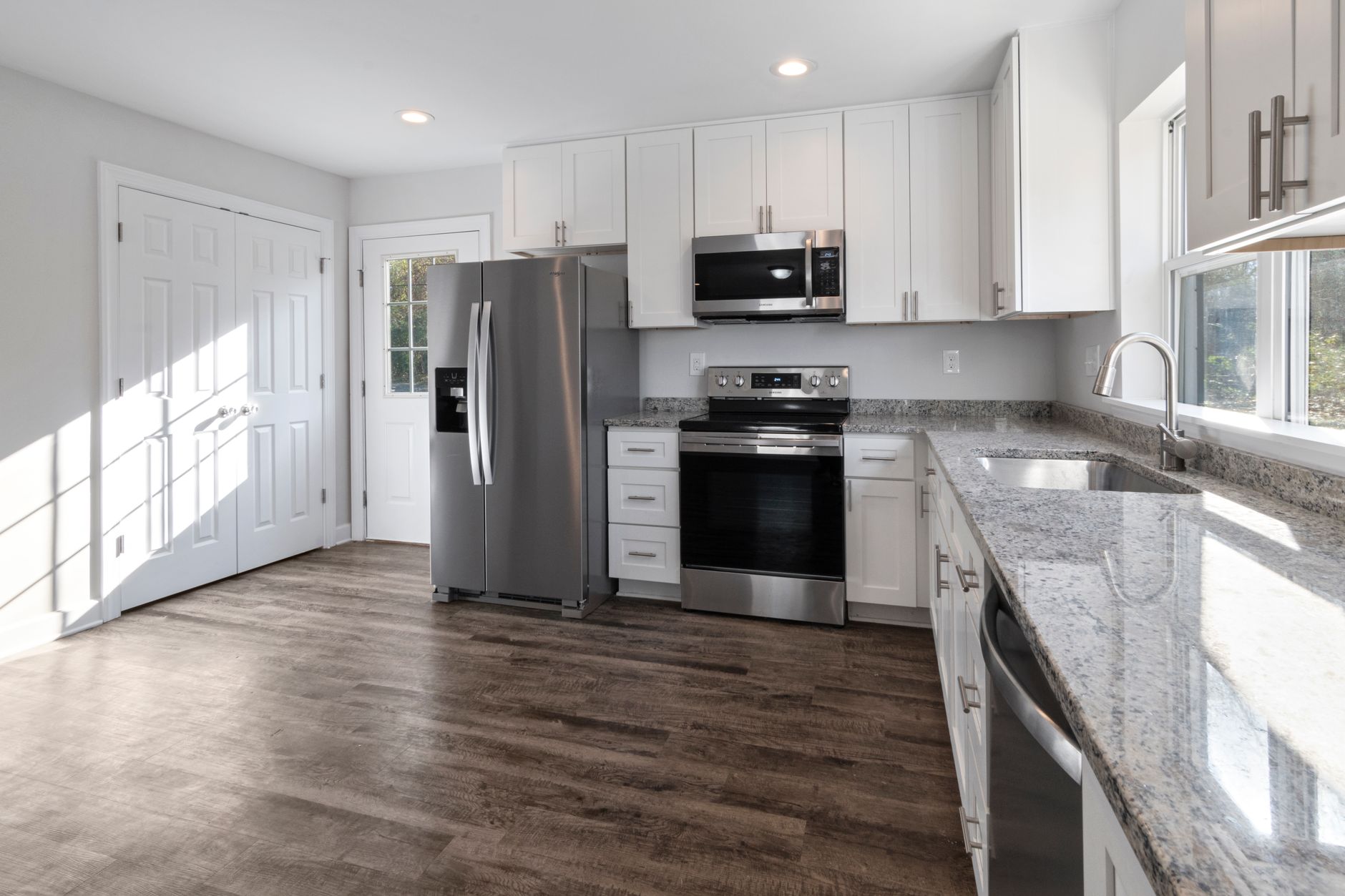
Illustrative stock photograph, not a local project or provider’s work. Photo: Curtis Adams. Pexels License.
What does pest control around a food preparation area actually involve?
If you have a pest problem near your kitchen bench, pantry, or food storage area, the most useful thing you can do before any treatment is give the person handling the job a clear, accurate picture of the space and what happens in it. The closer a treatment area is to surfaces and items that come into contact with food, the more site-specific the planning needs to be — and that planning starts with the questions you bring to the conversation.
Identifying the food-preparation area and how it is used
Before a licensed technician can make an informed plan, they need to understand exactly what kind of space they are dealing with. A domestic kitchen used every morning for breakfast is different from a bench used occasionally to prepare produce, and both differ from a pantry storing sealed dry goods versus one holding open containers of flour or pet food.
Useful things to describe clearly:
- Which surfaces are used for direct food contact (benches, chopping boards, sink surrounds)
- What food is stored in the area, and whether it is in sealed, airtight containers or open packaging
- Whether the space is used continuously throughout the day, or only at set times
- Whether there are pets, children, or household members with health vulnerabilities who regularly use the same area
This context matters because, as the Victorian Better Health Channel notes for indoor pesticide use, food, cooking utensils and other personal items should be removed from or covered in the area to be treated, and kitchen benches should be thoroughly cleaned before preparing food after treatment. Knowing what is typically present — and what cannot easily be moved — helps the technician determine what approach is appropriate for your specific layout.
Describing the concern and stored food locations
The clearer you can be about where you have seen pest activity, and where food items are stored, the more targeted a treatment can be. The placement of treatments relative to where the pest is actually travelling or harbouring is a question worth raising explicitly with the technician before work begins.
For example, the Better Health Channel guidance notes that surface sprays are typically applied to out-of-the-way areas like skirting boards, not to surfaces commonly touched by people, and that traps and baits should be positioned where the target pest actually travels — not placed in the open where they may fail to attract the pest and may pose a risk to others.
If you can describe:
- Where you have seen cockroaches, rodent droppings, or pantry moths specifically (under the sink, behind the fridge, inside a cupboard)
- What food products appear to have been affected
- Whether activity is confined to one area or spread across multiple spots
…this significantly narrows where the technician needs to focus, and reduces the chance of products being applied near surfaces where they do not need to be.
Questions about site-specific preparation and protection
Before treatment, it is reasonable to ask the technician what preparation they need from you. This conversation is worth having explicitly rather than assuming a standard answer applies. Questions worth raising include:
- What needs to be removed from benches, shelves, and cupboards before they arrive?
- Are there areas they will avoid entirely because of their proximity to food surfaces?
- What is the re-entry timeframe they recommend for the treated space — and does that differ for the room overall versus the specific surfaces?
- Do any items that cannot be moved need to be covered, and if so, how?
- Are there particular storage containers or food packaging types that require extra attention?
These are not questions this site can answer on your behalf — the right answers depend on what products the technician intends to use, the specific layout of your kitchen, and what is stored where. The technician is the person with that information, and the pre-treatment conversation is the right time to work through it.
A hypothetical scenario to illustrate the information gaps
The following is a hypothetical example to illustrate why site-specific detail matters — it is not a customer story or a prediction of outcomes.
Imagine a household with a cockroach issue concentrated behind the refrigerator and under the dishwasher. The pantry is adjacent, and contains a mix of sealed canned goods, open packets of rice, and a bag of pet food stored on the bottom shelf. Without knowing the open packets and pet food are there, a technician might not prompt the householder to move or seal those items beforehand. With that information, they can advise specifically on what to relocate and whether the pantry itself warrants a different approach than the appliance zone. The pest concern is the same; the preparation conversation changes meaningfully based on what is actually in the space.
Clarifying provider instructions after the visit
After treatment, it is worth confirming a few things with the technician before they leave rather than relying on assumptions:
- What surfaces, if any, were treated directly, and which were avoided?
- Is there anything in the area that should remain uncovered, removed, or washed before the space returns to normal use?
- When should food preparation surfaces be cleaned, and what does the technician recommend for that cleaning?
- What follow-up signs should you look for, and when would it be appropriate to call them back?
The Better Health Channel guidance for indoor pesticide use describes leaving the room while a pesticide is taking effect, and then opening windows when you return. What ventilation, re-entry timing, and surface preparation steps apply after a professional treatment will depend on the specific products used — ask the technician for instructions based on what they applied, and check the product label guidance they can provide.
Separating household questions from food-business requirements
If your kitchen is part of a registered food business — including a home-based food operation — the requirements you are working within are different from those for a purely domestic situation.
FSANZ explains Standard 3.2.2 as a food-business duty to take all reasonable pest-prevention measures. Its guidance covers keeping pests out, preventing them becoming established, and eliminating pests from both the premises and food-transport vehicles.
FSANZ guidance for food businesses also specifies that pest control devices and pesticides should be placed where they cannot come into contact with food or food contact surfaces — explicitly noting that above food preparation areas is not an appropriate location — and that businesses should maintain a site map of device and pesticide locations, as well as records of inspections and treatments including dates, pest activity observed, controls used, and recommended actions.
If you are operating a food business from your home and are unsure whether these requirements apply to your operation, that is a question for your local council or SA Health, not something a lead-referral site can resolve for you. The domestic and commercial regulatory contexts are genuinely distinct, and the right professional to clarify your obligations is a food safety officer or licenced practitioner familiar with your specific situation.
Licensing for pest control work in South Australia
Ask which parts of the proposed service involve pesticide use and who will carry them out. SA Health’s guide describes business and individual pesticide authorisations, licence endorsements, supervised arrangements, recognised interstate pathways and exemptions. For the actual kitchen or food-premises work, ask the business to identify the technician, the relevant endorsements and the authorisation arrangements relied on.
If a limited technician is proposed, ask what supervision is approved for that person and task rather than assuming every limited licence has the same arrangements. SA Health’s guide includes approved indirect-supervision arrangements for some technicians. Controlled Substances Licensing can confirm unclear licence, recognition or exemption details. Keep that authorisation question separate from the product-specific food-area preparation and precautions discussed above.
Further reading
-
Food Standards Australia New Zealand — Controlling pests: https://www.foodstandards.gov.au/business/food-safety/pests
-
Better Health Channel (Vic) — Pest control in the home: https://www.betterhealth.vic.gov.au/health/HealthyLiving/pest-control-in-the-home
-
SA.gov.au — Pest control licence: https://www.sa.gov.au/topics/business-and-trade/licensing/building-and-trades/pest-control-licence
-
SA Health — Guide for pest controllers and pest management technicians
Related guides on this site:
- Pest-control visit preparation checklist
- Pest control around pets consultation
- Cockroach treatment follow-up questions
- Pest treatment product information questions
If you would like to request a possible referral to a pest controller in Adelaide who can discuss treatment near food preparation areas, use the enquiry form where available.