Pest Fox · Adelaide pest & termite specialists
Pre-Purchase Termite Inspection Adelaide — AS 4349.3 Explained | Pest Fox
By Pest Fox · Published 5 May 2026
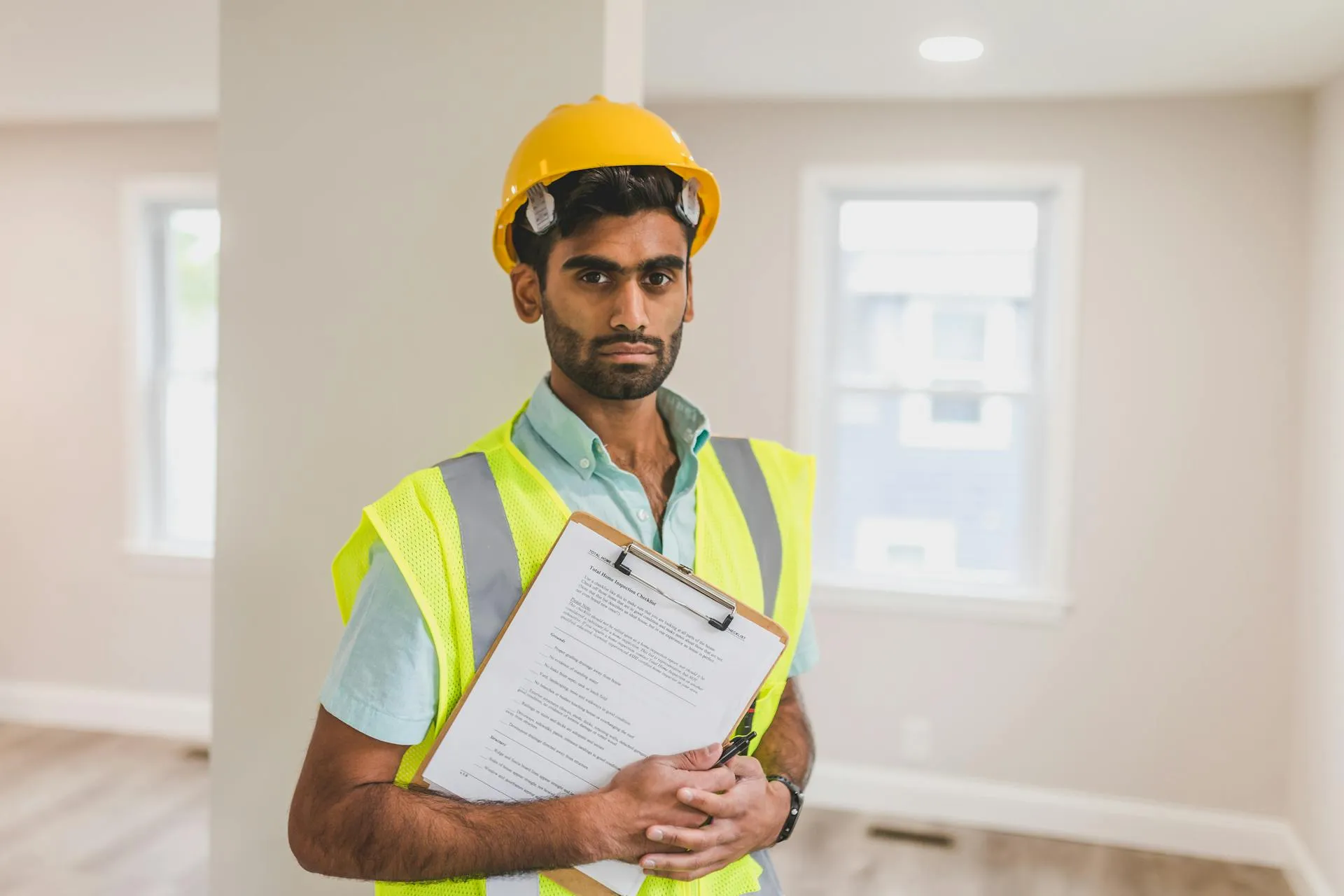
Pre-Purchase Termite Inspection in Adelaide: AS 4349.3 Explained
A pre-purchase termite inspection in Adelaide is a timber pest assessment of the property you’re about to buy, written to AS 4349.3-2010 with methodology drawn from AS 3660.2-2017, and delivered before your cooling-off period closes. The report covers subterranean termites, termite damage, timber decay (rot), borers and conducive conditions. It costs $250–$450 and lands within 24 hours of inspection. It is the document your conveyancer uses to negotiate price, request remediation, or recommend withdrawal.
This guide explains what’s actually inside the report, what’s deliberately not in scope, why it’s a separate inspection from the building structural report, and when it’s worth ordering even on a “modern” home.
The two-line summary
- What the pre-purchase termite inspection is: a non-invasive timber pest assessment of an existing building, conducted to AS 3660.2-2017 methodology and reported to AS 4349.3-2010 form and content.
- What it’s not: a building structural inspection (that’s AS 4349.1-2007 — different document, different inspector, different scope), an electrical or plumbing certification, a pool-fence compliance check, or a guarantee about the future.
The two inspections (timber pest + building) are usually ordered together as “building and pest” but they are distinct reports written to distinct standards. A buyer who orders one without the other is half-covered.
Why it’s separate from the building inspection
The Australian standards system separates timber pest inspection (AS 4349.3-2010) from general building inspection (AS 4349.1-2007) because they require different expertise and different equipment.
- AS 4349.1-2007 — Inspection of buildings — Part 1: Pre-purchase inspections — Residential buildings. Covers structural condition, weather-tightness, finishes, fixtures, mechanical and plumbing visible-condition assessment. Written by a building inspector — usually a licensed builder or building consultant.
- AS 4349.3-2010 — Inspection of buildings — Part 3: Timber pest inspections. Covers subterranean termites, termite damage, wood decay (rot), borers, and conducive conditions for timber pest activity. Written by a licensed Pest Management Technician under SA Health pest control regulations.
The distinction matters because:
- A building inspector is not licensed to apply termite chemicals or read termite gallery morphology. A pest inspector is not licensed to comment on structural compliance or building defects beyond the timber pest scope.
- The kit is different. A building inspector carries a moisture meter and a level. A pest inspector carries a thermal camera, a moisture meter, a borescope and acoustic sounding tools.
- The legal scope of each report is different — courts and conveyancers treat them as different documents in negotiation and dispute.
A combined “building and pest” appointment usually means two inspectors on site at the same time (or one operator partnered with the other). Two reports get delivered. A single combined report from a single inspector is unusual and worth questioning — it usually means one of the two scopes is being shortcut.
What’s inside the AS 4349.3-2010 report
AS 4349.3-2010 sets the form and content requirements for a timber pest inspection report. A compliant report includes:
Scope of inspection
A clear statement of what the inspection covered, the standards applied, and the limits of the inspection (non-invasive, visual + sounding + moisture metering + thermal imaging, no destructive investigation).
Areas inspected
Documented coverage of:
- Subfloor — bearers, joists, piers, ant caps, ventilation, slab edges
- Internal — skirtings, architraves, door jambs, window reveals, exposed structural timbers, wet-area edges
- Roof void — rafters, ridge beams, hanging beams, valleys, sarking, insulation lifted at sample points
- External — fascias, eaves, deck framing, retaining sleepers, garden beds against the slab edge, weep-holes
- Outbuildings within 30 metres — sheds, carports, granny flats, workshops
Areas NOT accessible
This is mandatory under AS 4349.3 and where many non-compliant reports fall short. The inspector must list every area of the property they were unable to reach safely — restricted subfloor crawl, sealed roof voids, fixed cladding obscuring framing, locked outbuildings, blocked access points. A clean report on a half-inspected property is non-compliant.
Findings
For every timber pest issue identified:
- Type — active subterranean termites, historic termite damage, wet rot, dry rot, borer activity (lyctus, anobium, longicorn)
- Location — building element, position, room or zone
- Severity grading — minor, moderate, major (with the inspector’s reasoning)
- Photographs — every finding photographed and labelled
Conducive conditions
Site conditions that elevate timber pest risk, even where no current activity is found:
- Slab-edge soil contact
- Untreated softwood landscaping in ground contact
- Drainage failures, downpipe and gutter overflow
- Plumbing leaks (mains, hot water, irrigation)
- Subfloor ventilation deficiencies
- Mulch and pavers built up against the slab
- Tree stumps within 50 metres
- Mature gardens with timber edging touching the building
Existing termite management systems
If a barrier is in place, the report records:
- System type (chemical reticulation, trenched chemical barrier, physical barrier, baiting)
- Apparent age and condition
- Currency of any durable notice in the meter box (AS 3660.1-2014 requires a durable notice for new-construction systems; the report verifies its presence and content)
Susceptibility assessment
A statement on the building’s susceptibility to future timber pest activity given the construction era, soil profile, and site conditions.
Further investigations required
Where the inspector cannot reach a finding, what further investigation is recommended (destructive inspection in a specific zone, follow-up borescope inspection, inspection after a builder removes a particular section of cladding).
Plain-English summary
A page-one summary written for the buyer, distinct from the technical detail through the body of the report.
Recommendations
- Treatment recommendations where active workings or significant damage are found
- Re-inspection interval (12 months default; sooner on high-risk findings)
- Conducive-conditions remediation list
What AS 4349.3-2010 does NOT cover
Worth being explicit. AS 4349.3 is a non-invasive standard with a defined scope. It does not cover:
- Drywood termites — rare in southern Australia; outside scope
- Mould — not a timber pest; separate inspection
- Rodents — separate inspection scope
- Underground inspection — house stumps below ground level, tree roots, parts of fence posts below grade
- Destructive investigation — opening up walls, lifting floorboards, removing cladding requires the inspector’s “further investigation” recommendation and a separate appointment
- Future certainty — the report is a snapshot of the building on the day. It does not guarantee the absence of future termite activity.
- Structural defects — covered by AS 4349.1-2007 building inspection, not the pest report
- Legal advice — interpretation of contract clauses, cooling-off rights and negotiation strategy is the conveyancer’s role
If a vendor or agent claims the AS 4349.3 report covers any of the above, it doesn’t.
Why pre-1960 Adelaide stock makes the inspection non-negotiable
The AS 3660 family of standards is recent in Australian building history. Part 1 (new construction) was first introduced in 1995 and last revised in 2014. Most of inner Adelaide’s housing stock pre-dates AS 3660 entirely:
- Norwood villas (1880s–1920s)
- Unley character homes (1880s–1930s)
- Walkerville premium villa stock (1880s–1910s)
- Prospect bungalows (1900s–1940s)
- Semaphore and Port Adelaide heritage stock (1880s–1920s)
- Gawler township (1850s–1960s)
- Mitcham and Belair stone bungalows (1920s–1950s)
These properties had no AS 3660-compliant termite barrier installed at construction — because the standard didn’t exist. They are not non-compliant; they are uninspected by default. The AS 4349.3 report is the only document that converts “we think the property is fine” into a severity-graded, written assessment with photographs and recommendations.
The dominant termite species in South Australia is Coptotermes acinaciformis — responsible for the majority of structural termite damage in Australia, with foraging galleries up to 50 metres from the colony. The combination of pre-1960 stock, suspended timber floors, mature gardens and reactive clay soils in inner Adelaide is structurally the highest-risk profile for Coptotermes activity.
A buyer who waives the pre-purchase termite inspection on a 1922 Norwood villa is walking past the single highest-risk diagnostic available before settlement.
When it’s worth ordering on a “modern” home
The pre-purchase termite inspection is non-negotiable on heritage stock. It is also worth ordering on more recent builds where one or more of the following apply:
- 2000s estate construction without a documented durable notice. AS 3660.1 was first introduced in 1995 and revised in 2014. New builds since 1 May 2017 must comply with AS 3660.1-2014 as the only Deemed-to-Satisfy Solution under the National Construction Code. If the durable notice in the meter box is missing, illegible or absent, the system can’t be verified and the inspection is the substitute confirmation.
- A previous treatment in the property’s history. The report verifies that the documented treatment matches what’s actually in the ground, that the warranty cycle is current, and that no re-treatment is overdue.
- Bushland-adjacent location. Foothills and Adelaide Hills properties (Belair, Stirling, Aldgate, Mount Barker) carry secondary risk from bushland-edge colonies. A “new” build in Mount Barker still warrants the report.
- Owner-builder construction. Self-built homes don’t always have the AS 3660.1-2014 durable notice properly registered; verify before settlement.
- Properties with extensions or renovations. Each renovation cycle is an opportunity for the original barrier to have been bridged or breached. The inspection confirms what’s currently in place across the whole structure.
- Coastal sandy-soil properties. Henley Beach, Glenelg, the south coast — different termite-control chemistry suits sandy soils, and a barrier installed for clay-heavy inland sites may not perform on sandy loam.
The cost of the inspection ($250–$450) sits below 0.05% of a typical Adelaide median property value. The cost of being wrong on a missed Coptotermes infestation runs into five or six figures of structural repair. The arithmetic is one-sided.
The SA-specific timeline you’re working to
South Australia’s standard real estate contract has built-in timeframes that determine when the inspection has to happen.
- Cooling-off period. Under the Land and Business (Sale and Conveyancing) Act 1994, a private treaty contract has a cooling-off period of 2 clear business days from contract date or service of vendor’s statement, whichever is later. Auction contracts have no cooling-off.
- Building and pest inspection clause. Most SA contracts include a building-and-pest inspection clause as a condition of settlement, typically with a window of 5–10 business days from contract date for the buyer to inspect and notify any objections.
- Finance approval clause. Often runs concurrently with the inspection clause, typically 14–21 days from contract.
- Settlement. Typically 30, 45, 60, 90 or 120 days from contract.
What this means in practice: book the AS 4349.3 inspection within 48 hours of contract signing. The cooling-off period is too short for inspection, and the building-and-pest clause is too important to leave to the last day. We book pre-purchase inspections inside 48 hours of contact during business hours; the written report is delivered within 24 hours of inspection. That gives the conveyancer 5–7 business days to negotiate or withdraw inside the inspection clause.
If you’ve signed a contract this week and the inspection clause closes Friday — call us today, not Friday morning.
At auction: book before you bid
Auction contracts in SA have no cooling-off. You can’t withdraw on the back of an inspection finding after the hammer falls. The inspection has to happen before the auction, not after.
Pre-auction inspection workflow:
- 2–4 weeks before auction: book the inspection during the open-house period.
- Inspector accesses the property during one of the agent’s open inspections (or by direct appointment if access permits).
- Report delivered before the auction date. You have time to read, ask questions, and decide.
- Findings inform your bidding strategy. Active termites or significant damage may take you out of the bidding entirely; minor or historic findings may set your maximum bid.
- Hammer falls. No cooling-off. No surprises.
Vendors and agents rarely refuse pre-auction inspection access, because a clean report supports the sale and a flagged report can be addressed before bids open. A vendor who refuses access is signalling the report would not be clean.
What happens if the report finds termites
The severity grading determines the next step. AS 4349.3-2010 reports use plain language that conveyancers and brokers can act on:
- No active termites, no significant damage. Proceed with confidence; recommended annual inspection going forward; the report is the clean baseline for ongoing protection.
- Historic damage, no active workings. Negotiation evidence; treatment may not be needed but ongoing inspection regime is recommended; possible chemical barrier retrofit on the long-term plan.
- Active workings, contained. Quoted treatment ($800–$3,500 typically — see termite treatment cost guide); negotiation evidence for vendor-funded treatment before settlement, price adjustment, or contract withdrawal under the building-and-pest clause.
- Active workings, structural impact. Buyer talks to conveyancer immediately; the building-and-pest clause typically gives grounds to renegotiate or withdraw.
Pest Fox doesn’t recommend “buy” or “don’t buy” — that’s the buyer’s call with their conveyancer, broker and partner. The report gives the evidence base for that decision.
What the report does for your finance
Lenders increasingly require evidence of termite-free condition, particularly on heritage stock or properties priced above first-home-buyer thresholds. The AS 4349.3-2010 report is the document brokers and lenders accept. A buyer ordering the inspection at the right time has the document in hand for the finance application; a buyer waiting until the lender asks creates a paperwork crunch in the final week before settlement.
If finance is conditional on a clean termite report, order the inspection in week one of the contract — not week three.
The licence the inspector must hold
Pre-purchase termite inspections in South Australia must be conducted by a holder of a Full Pest Management Technician’s Licence (FPMT) under the Controlled Substances Act 1984 and Controlled Substances (Pesticides) Regulations 2017. The business must hold a Pest Controller’s Licence. Both are issued by SA Health Controlled Substances Licensing.
Why this matters for the report:
- The inspector reading the gallery morphology, severity-grading the damage, and recommending treatment must have the licence to commercially conduct the inspection in SA.
- The treatment recommendations in the report must reference APVMA-registered chemistry and AS 3660.2-2017 methodology — both of which require Pest Management Technician training to specify accurately.
- Conveyancers and brokers will check the licence on inspector-side disputes. An inspector without a licence has issued a report that doesn’t satisfy the purpose.
Pest Fox holds both licences. The numbers sit on the Contact page and the footer of every page on this site. Verifying any inspector before booking is the safe default.
What to ask before booking the inspection
Five questions for any pre-purchase inspector quote in Adelaide:
- Which standards does the report cite? AS 4349.3-2010 and AS 3660.2-2017 are the right answers.
- Are you SA Health-licensed? FPMT under the Controlled Substances (Pesticides) Regulations 2017. Licence number is verifiable.
- What’s the turnaround? 24 hours from inspection to written report is the industry benchmark for pre-purchase work; longer turnarounds on a contract clock are a flag.
- Is thermal imaging included? AS 3660.2-2017-compliant inspection requires more than a visual sweep; thermal imaging, moisture metering and acoustic sounding should be standard.
- Will the report list inaccessible areas? Mandatory under AS 4349.3-2010. An inspector who doesn’t volunteer this is missing the standard.
A quote without confident answers to all five is a quote not worth taking, regardless of price.
FAQ
How much does a pre-purchase termite inspection cost in Adelaide? A standalone pre-purchase termite inspection runs $250–$450 — towards the upper end of the standard $180–$350 inspection band, because the scope is wider and the report is contractually load-bearing. Combined building-and-pest inspections run higher because they cover two standards.
Is a pre-purchase termite inspection mandatory in SA? Not legally mandatory. Most standard SA real estate contracts include a building-and-pest inspection clause as a condition of settlement, which makes the inspection contractually expected even if not legally required. Skipping it means waiving the clause and inheriting any termite damage with no negotiation room.
How fast can I get a pre-purchase inspection done? Pest Fox books pre-purchase inspections inside 48 hours of contact during business hours. The written AS 4349.3-2010 report is delivered within 24 hours of inspection. On a tight cooling-off or inspection-clause clock, same-day inspection and same-day report turnaround can be arranged.
What’s the difference between a pre-purchase termite inspection and a building inspection? A pre-purchase termite inspection is written to AS 4349.3-2010 and covers timber pests (subterranean termites, termite damage, timber decay, borers, conducive conditions). A building inspection is written to AS 4349.1-2007 and covers structural condition, weather-tightness, finishes and visible defects across the whole property. Most buyers order both; they’re separate reports written to separate standards by separate inspectors.
Can I use the report from the previous owner? Generally no. The report’s findings are time-stamped to the inspection date. A 12-month-old report doesn’t reflect the property’s current status — termite activity moves, conducive conditions change, treatments expire. AS 4349.3-2010 inspections are commissioned by the buyer for the current transaction.
What if the inspection finds termites the day before settlement? You take the report straight to your conveyancer. Depending on the building-and-pest clause and the contract specifics, options usually include vendor-funded treatment before settlement, price adjustment, or withdrawal. The conveyancer advises on the legal action; the report provides the evidence base. Don’t try to renegotiate without the conveyancer’s input.
Can the vendor refuse the inspection? Under a standard contract with a building-and-pest inspection clause, no — access is part of the contract. If you’re inspecting before signing (auction prep), the vendor or agent can decline, but in practice they rarely do because a clean report supports the sale.
Does AS 4349.3-2010 cover modern apartment buildings? AS 4349.3 covers buildings constructed of or containing timber elements susceptible to timber pest activity. Modern apartment buildings often have minimal exposed timber and concrete-on-slab construction; the inspection is still useful for the timber elements present (joinery, internal architraves, balcony decking) but the scope is reduced compared to a heritage timber-floor home. The inspector advises whether the inspection is worth ordering on a specific apartment property.
Should I order the inspection if the home was built last year? If the durable notice for the AS 3660.1-2014 system is in the meter box and current, the urgency is lower. If the durable notice is missing or illegible, order the inspection. Owner-builder construction and properties with renovations or extensions warrant the inspection regardless of age.
Sources
- Standards Australia Store — AS 4349.3-2010 Inspection of buildings — Part 3: Timber pest inspections: https://store.standards.org.au/product/as-4349-3-2010
- AEPMA — Notes on updates to AS 3660-2:2017: https://aepma.com.au/News/32028/AEPMA_notes_on_updates_to_AS_3660-2_2017
- Standards Australia Store — AS 3660.1:2014 Termite management — Part 1: New building work: https://store.standards.org.au/product/as-3660-1-2014
- Land and Business (Sale and Conveyancing) Act 1994 (SA): https://www.legislation.sa.gov.au/__legislation/lz/c/a/land%20and%20business%20(sale%20and%20conveyancing)%20act%201994/current/1994.61.auth.pdf
- SA Health — Pest control licensing: https://www.sahealth.sa.gov.au/wps/wcm/connect/public+content/sa+health+internet/public+health/drugs+poisons+chemicals+and+contaminants/pest+control+licensing/pest+control+licensing