
Pest Fox · Planning guides
Ant identification and treatment assessment
By JR Digital Services editorial team · Published 6 November 2026
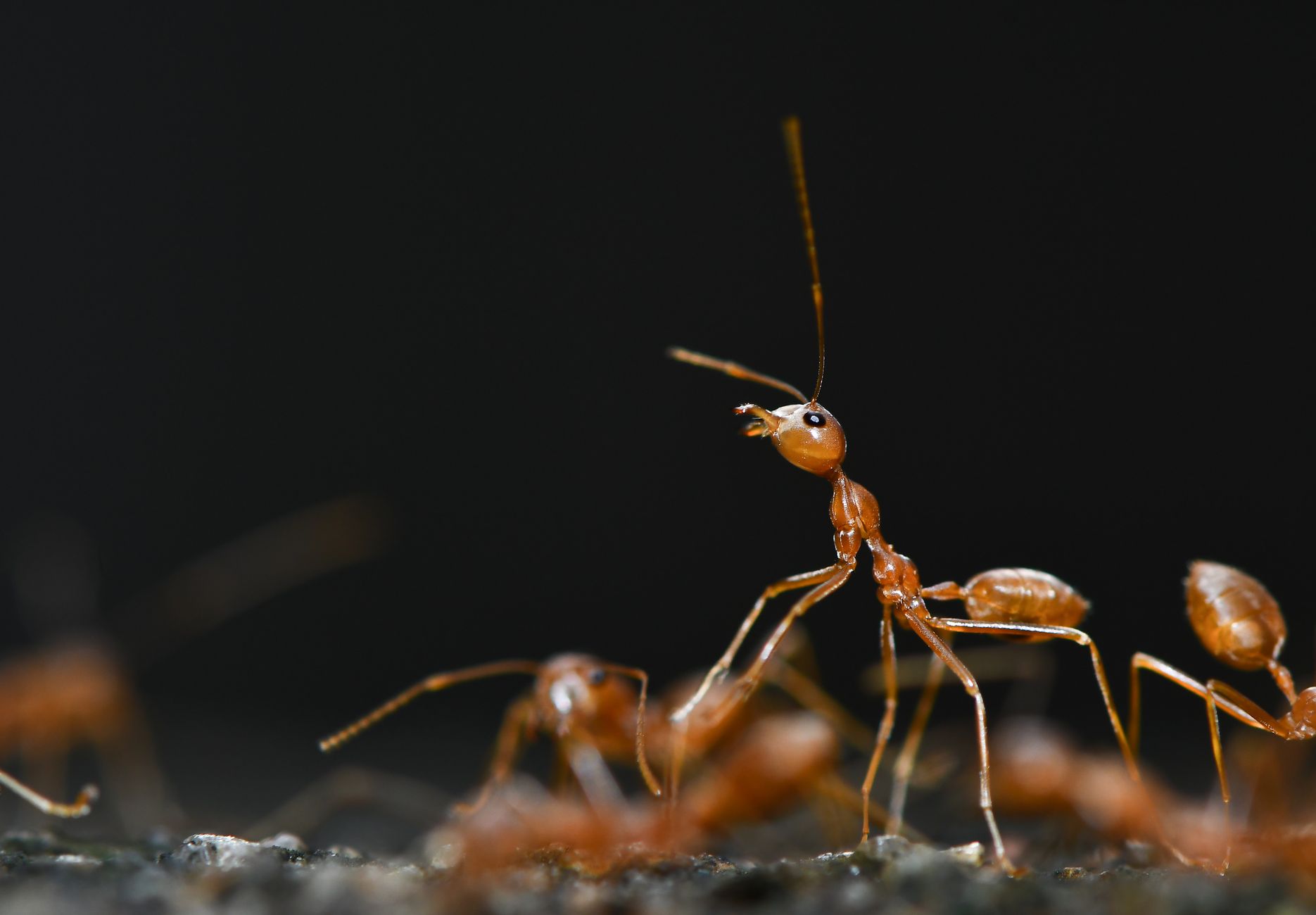
Illustrative stock photograph, not a local project or provider’s work. Photo: Mohamed Nasar. Pexels License.
Why observation quality matters before you call
When you notice ants in or around your Adelaide home, the most useful thing you can do before contacting a licensed pest control provider is to record what you can see clearly — without disturbing the activity or attempting to identify the species yourself. The appropriate control method for ants depends on the species involved, according to Victoria’s Department of Health environmental health guidance on ants and pest control. That determination belongs to a qualified technician, not a household photograph app or a shelf product label.
This guide explains what to record, how to photograph safely, and what details a provider is likely to ask about — so your first conversation is productive.
Photographing visible ant activity from a safe position
A phone camera is enough. You do not need specialist equipment, and you should not get close enough to disturb the trail or provoke defensive behaviour — especially if the ants are large or aggressive. If you have already encountered a painful sting or bite, photograph from further away and note that experience separately.
Useful photographs include:
- A trail shot from a safely accessible existing ground-level position, using zoom if available without approaching the ants
- A zoomed image, if safely possible, with an existing scale reference already visible; do not place coins, pens or other objects near insects
- Entry and exit points — gaps in skirting boards, cracks in paths, door frames, or weep holes
- The surrounding area showing whether ants are emerging from soil, timber, paving, or wall cavities
- Any visible nest material — loose soil, disturbed mulch, or mounding — photographed without disturbing it
Do not climb, open cavities or enter roof spaces to obtain a photograph. If a useful image cannot be taken safely from where you already are, record the location for the provider instead.
Recording trails, locations and times noticed
A written note alongside your photographs gives a provider context that images alone cannot supply. Consider recording:
- Where the trail was first noticed — kitchen bench, laundry floor or garden path; describe any inaccessible location only from existing knowledge, without opening or entering it
- The direction of travel — heading toward food, water, or an exit point
- Time of day — some species are primarily nocturnal, others are active during the day
- How long the activity has been occurring — first noticed yesterday, or ongoing for several weeks
- Whether the trail appears after specific conditions — rain, heat, after food was left out
- Whether ants have been seen carrying anything — eggs, larvae, food particles
- Whether numbers appear to be increasing or constant
Ants communicate using chemical signals called pheromones to leave trails to food sources, according to the health.vic.gov.au ant pest control reference. That means trail behaviour is purposeful — and a provider can often infer useful information from how a trail is organised and where it leads.
Describing the setting without choosing a species
It can be tempting to name the ant before you call — “sugar ants” and “black ants” are common household terms, but these are loosely applied and cover several different species with different biology and therefore different appropriate treatments. Your job at this stage is to describe what you observe, not to diagnose.
Useful descriptive details to note:
- Approximate size (very small, medium, large relative to something you can photograph)
- Colour as you see it — black, dark brown, reddish, pale brown, two-toned
- Whether any ants appear significantly larger than others in the same group (this may indicate a soldier caste)
- Whether wings are visible on any individuals
- Any distinctive smell incidentally noticed previously; do not disturb or crush ants to investigate
- Whether any ants appear to be tending or carrying pale oval objects (possible eggs or larvae)
For further background on common Adelaide species, you may find the sugar ants Adelaide guide and bull ants Adelaide guide useful — but read them as background education, not as a tool for self-diagnosis before your provider visit.
Hypothetical observation scenario — illustrating what helps
This is a hypothetical example to illustrate what information is useful, not a customer account or a predicted outcome.
Imagine a household noticing a trail of medium-sized, two-toned ants (darker at the rear) crossing a laundry floor toward the base of a wall cavity, most active in the early morning. Photos show the trail clearly, an entry point near a weep hole, and a rough scale object. Notes record: first noticed three weeks ago, trail wider after rain, no visible nest outside. This information — without any species guess — gives a provider a starting framework: location type, timing pattern, entry-point type, and behavioural response to moisture. What those details mean for species identification and treatment planning is for the provider to determine on inspection.
Questions about professional identification and assessment
Victoria’s general professional guidance describes inspecting the house and surrounding area, following trails and identifying species when determining control measures. Ask the South Australian provider what the proposed visit covers rather than assuming every engagement includes that entire procedure.
Before or during your enquiry, you might ask the provider:
- What does an initial ant assessment involve — does it include an internal and external inspection?
- Will species identification be confirmed before any treatment is proposed?
- If a nest cannot be located during the visit, what happens next?
- What information from my observations would be most useful to you before the visit?
- Will a written scope or report be provided?
For a professional ant pesticide service, ask the business and technician which authorisations cover the proposed work and verify them with SA Health. SA Health’s guide describes business pest-controller and individual technician licensing, including recognised interstate and exemption provisions; do not assume one general label settles every authorisation question.
Keeping enquiry observations separate from product selection
Before choosing or applying a product, ask the provider which instructions apply to the proposed assessment and any existing treatment. Beyond safety and label-compliance considerations, this matters because some ant species respond poorly to certain intervention types — for example, disturbing a colony with a surface spray can scatter it, potentially worsening the infestation. The health.vic.gov.au ant guidance notes explicitly that the appropriate method of control depends on the species. Product selection is part of what a licensed assessment determines.
Tell the provider about any products already used and ask what to do before the visit, following applicable product labels. Keep the observations and treatment history together rather than assuming one instruction fits every species or engagement.
What to bring to your enquiry
When you make contact with a provider — or submit an enquiry for possible referral — having the following ready makes the conversation more efficient:
- Your photographs (sorted by location and type)
- Your written notes on timing, trail behaviour and setting
- A rough description of the property (house age, construction type if known, any recent landscaping or building work)
- Whether the activity is indoors, outdoors, or both
- Any previous ant treatments carried out at the property
Related guides that may assist with preparation: pest inspection report exclusions and stored-product pest assessment.
If you would like to submit your observations for a possible referral to a licensed Adelaide provider where available, you are welcome to use the enquiry form.
Further reading
- Ants — pest control, Victoria Department of Health: https://www.health.vic.gov.au/environmental-health/ants-pest-control
- Pest control licence requirements in SA, SA.gov.au: https://www.sa.gov.au/topics/business-and-trade/licensing/building-and-trades/pest-control-licence
- SA Health — Guide for pest controllers and management technicians