Pest Fox · Adelaide pest & termite specialists
German Cockroach Treatment Adelaide — Why Bug Bombs Make It Worse | Pest Fox
By Pest Fox · Published 5 May 2026
German Cockroach Treatment in Adelaide — Why Bug Bombs Make It Worse and What Actually Works
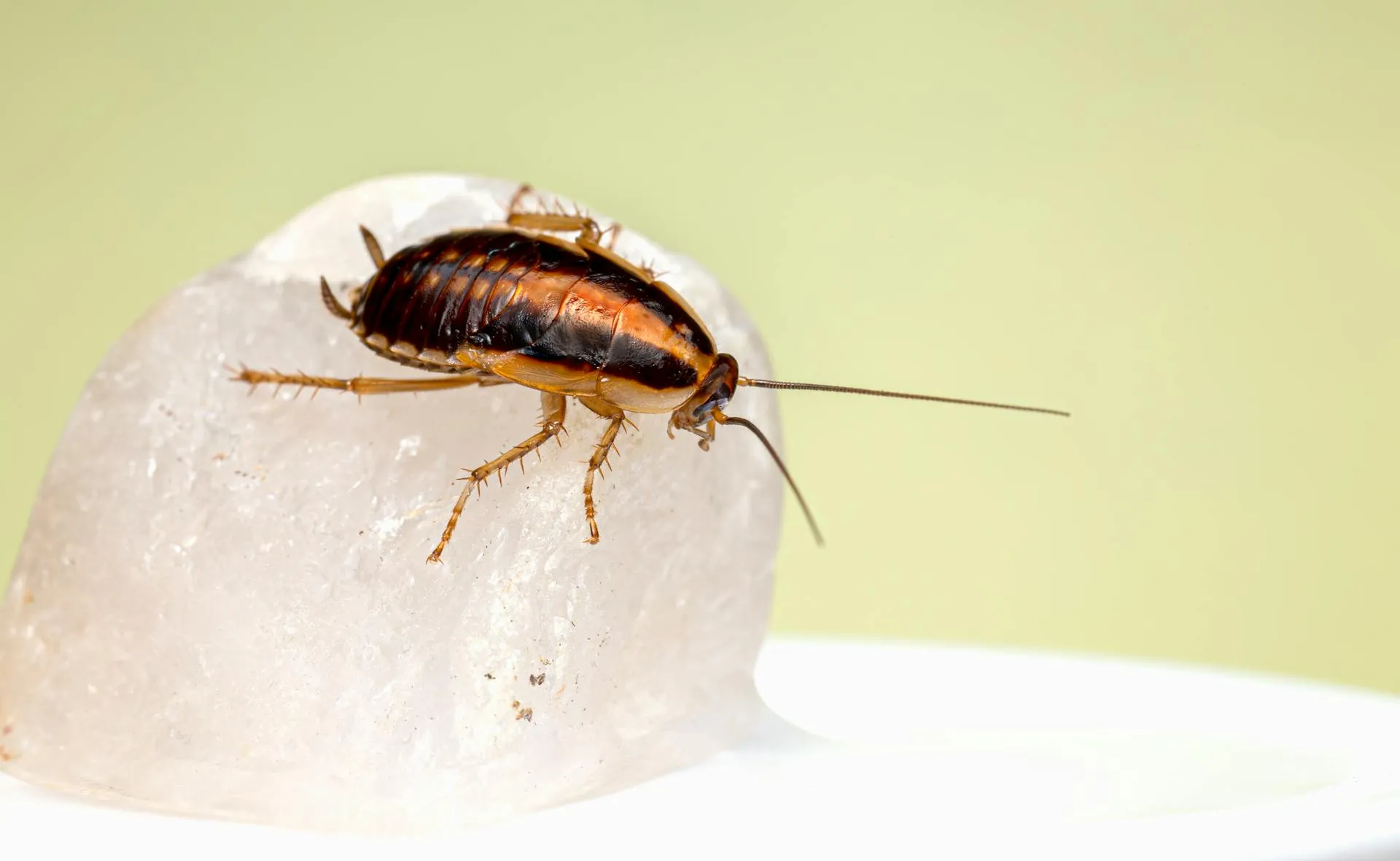
If you have spotted a small light-tan cockroach with two parallel dark stripes behind its head in your Adelaide kitchen, you are looking at Blattella germanica — the German cockroach. It is the dominant indoor cockroach in Australian residential and commercial premises, it breeds fast, and it lives in places you cannot easily reach: dishwasher gaskets, motor housings, fridge compressor compartments, kettle bases, behind splashbacks. The retail bug bomb you might be tempted to use is not just ineffective — peer-reviewed work has documented that total-release foggers can fragment the colony and spread it to new harbourage. The right treatment is gel bait at harbourage points, an insect growth regulator (IGR) to break the breeding cycle, and a 4-8 week elimination programme. This article explains how, and why DIY almost never gets there.
Identifying Blattella germanica
The German cockroach is small, light, and easily distinguished from the other Adelaide cockroach species once you know what to look for.
- Size: 10-15 mm at adult — small for a cockroach. Roughly fingernail-length.
- Colour: Light tan to pale brown.
- The diagnostic mark: Two parallel dark stripes running down the pronotum (the shield-shaped plate behind the head). This is the single best ID — no other Australian indoor cockroach has this pattern.
- Wings: Present, full-length, but they rarely fly. Mostly run.
- Egg case (ootheca): Carried by the female on her abdomen until close to hatching. Pale brown, about 7-9 mm long, curved and ridged. Each ootheca holds 30-40 nymphs.
How they differ from the other Adelaide cockroaches
| Species | Size | Where it lives | Indoor problem? |
|---|---|---|---|
| German cockroach (Blattella germanica) | 10-15 mm | Kitchen, bathroom, warm electrical | Yes — primary indoor pest |
| American cockroach (Periplaneta americana) | 28-44 mm | Drains, sewers, sub-floor | Drain-dweller, occasional crossover |
| Australian cockroach (Periplaneta australasiae) | 30-35 mm | Outdoor, mulch, woodpiles | Outdoor pest, occasional incursion |
| Smoky brown (Periplaneta fuliginosa) | 30-35 mm | Roof voids, outdoor | Roof void, follows lights at night |
If the cockroach you are seeing is large (3-4 cm), dark reddish-brown, and showing up around floor drains or after rain — it is American or Australian. Those are different species with different treatments. The fast-breeding indoor population pest is Blattella germanica.
Where they live in Adelaide kitchens
The German cockroach is a harbourage species — it spends 80% of its time hidden in narrow, warm, dark cracks within 3 metres of a food and water source. The harbourage list, in priority order:
- Dishwasher gaskets and motor housing. Warm, moist, food-contact, undisturbed. The number-one Adelaide kitchen harbourage.
- Fridge compressor compartment. Constant 30-40°C from the motor, food residue from spills, behind a kick-plate that is rarely removed.
- Behind splashbacks — gap between tile back and wall framing, near the cooktop heat.
- Microwave and kettle bases. Warm electrical, food-contact, narrow gaps.
- Sink cabinet under-counter junctions — plumbing entry points, water leaks, food residue. If the cabinetry is old, water-damaged, or carrying a years-long infestation history, a treatment-and-reinstate is sometimes more cost-effective than treatment alone — get a parallel quote for kitchen and cabinetry refresh in Adelaide before spending on multiple treatment cycles.
- Range hood interior — vent grease and warm housing.
- Behind the toaster and small appliances that sit on the bench.
- Inside electrical wall switch and power point cavities in heavy infestations — yes, behind the faceplate.
In Adelaide rental kitchens — especially multi-unit blocks in the inner west and north — German cockroaches travel between units through shared wall cavities, plumbing penetrations and floor drain stacks. One unit’s untreated infestation seeds neighbouring units within months.
Why total-release foggers (“bug bombs”) make it worse
This is the single most counter-productive home-treatment behaviour in cockroach control, and the evidence on it is clear.
A 2019 peer-reviewed study from researchers including DeVries (Total Release Foggers and Cockroach Control, BMC Public Health and related work) tested commercial total-release foggers (TRFs / “bug bombs”) against German cockroach populations in real residential settings. The findings:
- TRFs were ineffective at reducing cockroach populations in the treated units.
- The aerosol settles on horizontal surfaces — counters, tables, floors — but does not penetrate the harbourage cracks where the cockroaches actually live.
- Cockroaches are repelled by surface chemistry from a TRF and shelter deeper in inaccessible voids during application.
- Allergen levels (cockroach faecal and body fragment allergens, a documented asthma trigger) increased in TRF-treated units — the chemistry kicked the allergens around without removing the source.
Earlier work by Wang & Bennett (2006, Journal of Economic Entomology, “Comparative study of integrated pest management and baiting for German cockroach management in public housing”) also demonstrated that gel-baiting integrated programs out-perform broadcast spray and fogger approaches in residential cockroach control.
The pattern is consistent: harbourage-targeted bait reaches the colony; surface-disrupting fogger pushes the colony deeper, fragments it, and increases human exposure to allergens without reducing the population.
If you have already used a fogger on your kitchen, the recovery is the same as starting from scratch — gel bait at harbourage, IGR, and the 4-8 week cycle.
How a licensed treatment actually works
A licensed German cockroach program in Adelaide is a four-element protocol. None of the elements work alone; together they eliminate the colony.
1. Gel bait at harbourage points
- Locating the harbourage — the technician inspects the dishwasher seal, fridge compressor, splashback gaps, sink cabinet, range hood, behind appliances. Activity signs: live cockroaches, faecal specks (small dark dots like ground pepper), shed exoskeletons, ootheca casings.
- Sub-gram gel placements at each harbourage point. APVMA-registered actives — fipronil, hydramethylnon, indoxacarb, imidacloprid — at concentrations carefully calibrated for bait acceptance.
- Slow-action chemistry. Bait is designed so cockroaches feed, return to harbourage, and die within 24-72 hours. Other cockroaches feed on the dead ones (a documented behaviour) and on faecal residue from baited cockroaches (also a transmission pathway). The bait reaches the colony through the cockroach’s own behaviour.
2. Insect growth regulator (IGR)
- IGR (typically S-methoprene or hydroprene at residential bait concentrations) interferes with the cockroach moult cycle.
- Nymphs cannot mature into reproductive adults.
- The breeding cycle breaks within 4-6 weeks.
- IGR is essential because killing adult cockroaches alone is not enough — the nymphs in the wall cavity will mature in 6 weeks if untreated and re-establish the colony.
3. Targeted residual
- Non-repellent residual chemistry on surfaces along travel paths between harbourage and food/water.
- Fipronil-class non-repellents specifically: cockroaches do not detect them, walk through them, transfer the chemistry to the colony.
- Behind appliances, along floor-cabinet junctions, around plumbing penetrations.
4. Monitoring traps
- Glue-board monitor traps placed at harbourage points and along travel paths.
- Trap counts at the follow-up visit measure population reduction.
- Persistent activity at week 4 indicates a missed harbourage and triggers re-treatment.
The 4-8 week elimination cycle
A successful program runs:
- Week 0: Initial inspection, bait placement, IGR application, residual treatment, monitor traps placed.
- Week 2: First follow-up. Trap counts checked, bait replenished, missed harbourage identified.
- Week 4-6: Population near-zero. Monitoring continues; bait remains in place to capture any survivors.
- Week 8: Final inspection, traps removed, debrief on prevention.
Faster than 4 weeks is not realistic — the breeding cycle has to be broken, and that takes the time it takes.
Why you can’t fully fix a rental cockroach problem alone
In Adelaide multi-unit rentals, the cockroach population frequently exists across multiple units, with travel through shared wall cavities, plumbing voids and floor drains. Treatment of one unit does not eliminate the source.
The lever the tenant has:
- Document the infestation with photos and dates.
- Notify the landlord or property manager in writing. Pest infestations of this nature typically fall within the landlord’s repair-and-maintenance obligations under the SA Residential Tenancies Act 1995, particularly where the cockroaches are entering from shared structural voids.
- Request building-wide treatment if the activity is documented across multiple units.
- Single-unit treatment is still worth doing — even with re-introduction pressure, a treated unit holds significantly lower populations than an untreated one.
A tenant-vs-landlord pest responsibility article is the right next read here — Batch A is shipping that as a sibling to this article.
The food-premises angle
For Adelaide cafés, restaurants and food premises, German cockroach control is not optional and not one-shot. Food Safety Standard 3.2.2 paragraph 24 requires premises to be kept free of pests; Food Act 2001 (SA) makes this enforceable. The standard commercial cockroach program is monthly recurring service with documented service records, chemical use logs, and a site map showing bait point locations. SA Health and council Environmental Health Officer audits inspect this documentation.
A residential treatment program works differently from a commercial one — single-shot residential cockroach work clears the population; commercial work prevents the population from establishing. The commercial cockroach pillar is being shipped as part of Batch C.
Prevention — the long game
Once the colony is eliminated, prevention is mostly about food, water and harbourage:
- Wipe down counters, cooktop and bench end-of-day. Crumbs and grease residue feed re-establishment.
- Pull out the fridge and dishwasher quarterly and clean behind them. The dust and food crumbs that accumulate are the cockroach’s food source.
- Fix leaks — under-sink drips, dishwasher hose seeps, kettle base condensation. Cockroaches need water; remove it.
- Seal harbourage cracks — silicone gaps between splashback and bench, between cabinet kicks and floor.
- Empty bins daily; clean the bin lid and lip weekly.
- Don’t rely on pest spray. Resi-grade spray products do not solve a German cockroach problem and may make it harder to treat.
- Quarterly or 6-monthly licensed service for high-pressure properties (multi-unit rentals, heritage stock with shared walls, properties recently treated for an active infestation).
For the broader winter rodent picture in Adelaide kitchens — the Adelaide winter rodent control guide — and for the related ant trail problem common in the same kitchens, see the Adelaide sugar ants and black house ants guide. Kitchens with one of these often have all three.
FAQ
What kills German cockroaches in an Adelaide kitchen? A combination of gel bait at harbourage points (dishwasher gasket, fridge compressor, splashback gaps, sink cabinet), an insect growth regulator to break the breeding cycle, non-repellent residual along travel paths, and 4-8 weeks of monitoring. Surface sprays and bug bombs do not reach the harbourage and frequently make the problem worse by fragmenting the colony.
Do cockroach bombs work in Adelaide kitchens? No. Peer-reviewed work has shown total-release foggers (TRFs) are ineffective at reducing German cockroach populations and can increase the household allergen burden. The aerosol settles on surfaces but does not penetrate the cracks where cockroaches actually live, and the chemistry pushes the colony deeper into inaccessible voids. The right approach is harbourage-targeted gel bait, not broadcast aerosol.
How long does German cockroach treatment take to work? A licensed program runs 4-8 weeks for full elimination. The first 1-2 weeks see significant population reduction; weeks 3-6 are the IGR phase, breaking the breeding cycle and stopping nymphs from maturing; weeks 6-8 are confirmation through monitor traps. Faster than 4 weeks is not realistic — the breeding cycle has to be broken.
Can I do German cockroach treatment myself in Adelaide? For a single-cockroach sighting with no signs of an established population, a hardware-store gel bait at the suspected harbourage is reasonable. For confirmed activity (multiple sightings, faecal specks, ootheca casings, sightings in daylight), DIY almost always falls short — the harbourage points need professional inspection, IGR is required to break the breeding cycle, and the chemistry needs to be matched to the property’s risk profile. A licensed program is faster, more reliable, and lower total cost than serial DIY attempts.
Are German cockroaches dangerous to my Adelaide household? They are a documented allergen and asthma trigger — cockroach faecal and body fragment allergens are recognised triggers for asthma and atopic conditions, particularly in children. They are also mechanical vectors for bacteria carried from drains and bin areas to food-prep surfaces. They are not directly venomous and do not bite, but the indirect health effects make rapid treatment the right call.
Sources
- Wang, C. & Bennett, G.W. (2006). Comparative study of integrated pest management and baiting for German cockroach management in public housing. Journal of Economic Entomology, 99(3), 879-885: https://academic.oup.com/jee/article/99/3/879/884060
- DeVries, Z.C. et al. — Exposure risks and ineffectiveness of total release foggers (TRFs) used for cockroach control in residential settings (PMC): https://pmc.ncbi.nlm.nih.gov/articles/PMC6348656/
- Australian Museum — German Cockroach (Blattella germanica) species page: https://australian.museum/learn/animals/insects/german-cockroach/