Pest Fox · Adelaide pest & termite specialists
Signs of Termites in Adelaide Homes — 9 Things to Check | Pest Fox
By Pest Fox · Published 5 May 2026
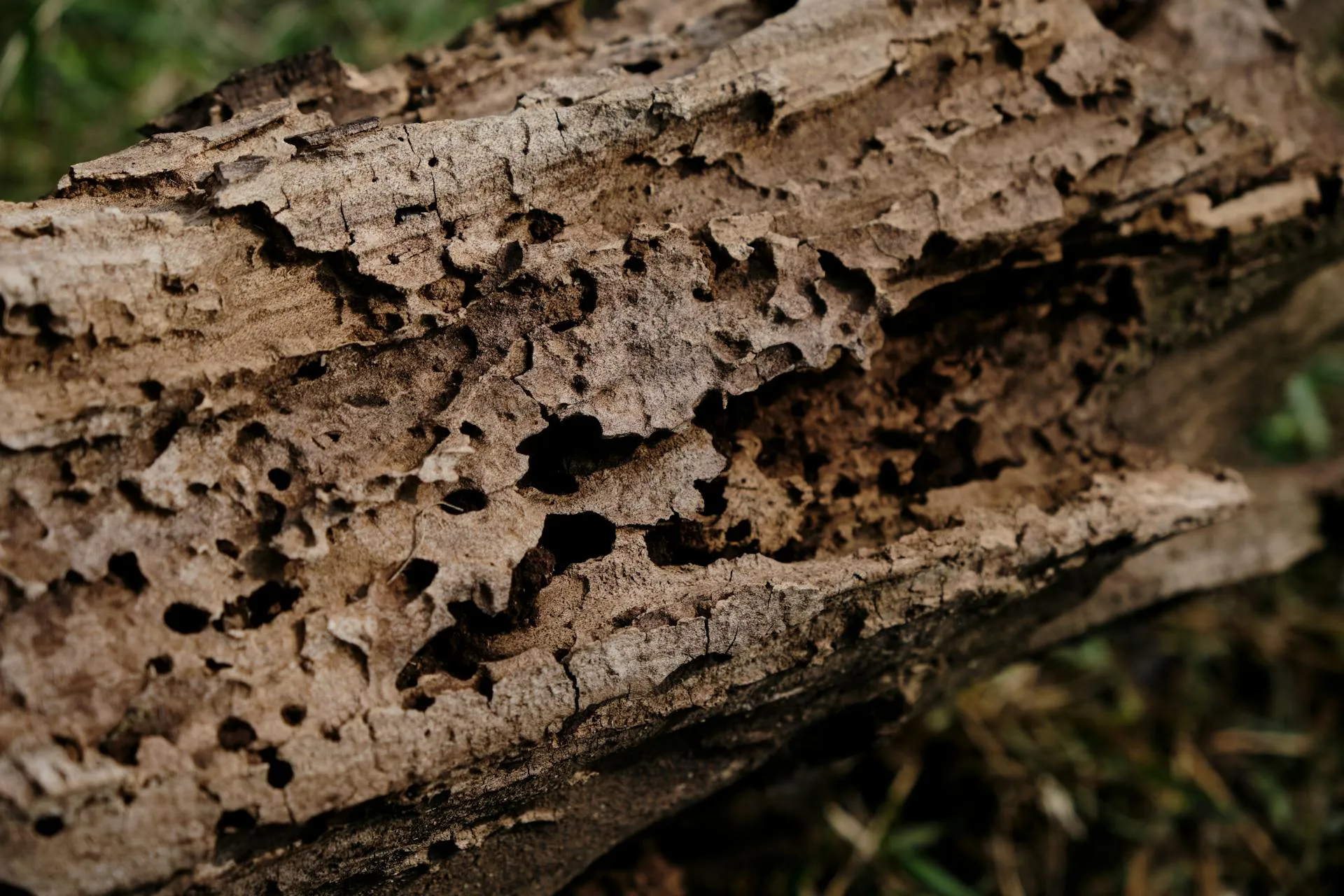
Signs of Termites in Adelaide Homes
Termites in an Adelaide home leave nine visible signs: mud tubes, hollow-sounding timber, frass, blistered paint, pinholes in plasterboard, sticking doors and windows, spongy or sagging floors, alate (winged) swarmers in late spring, and discarded wings on window sills. Most Adelaide infestations are Coptotermes acinaciformis — the dominant termite species in South Australia and the source of the majority of structural damage to Australian buildings. If you find any of the signs below, do not disturb the evidence. Disrupted colonies retreat and re-emerge somewhere harder to find. Book a termite inspection first.
This guide covers each sign in turn — what it looks like, where to find it on an Adelaide home, what it tells you about the colony, and what to do next.
How to read this list
Termite activity is usually invisible until late. By the time the timber sounds hollow, the gallery is already established inside the wall. The earlier signs — fine mud tubes on a brick pier, a few alate wings on a window sill, a small pile of frass on a subfloor surface — are easier to dismiss but easier to act on.
Two rules before you start looking:
- Do not disturb anything you find. Don’t break a mud tube to see what’s inside. Don’t sweep up frass. Don’t paint over a blister. The inspector reads the workings; disturbed evidence forces them to guess.
- Don’t try to spray it yourself. A retail termite product on a Coptotermes gallery scatters the colony, sends it deeper, and makes a positive ID harder. Book the inspection. Treat from the inspection.
Where this guide refers to AS 3660.2-2017 or AS 4349.3-2010, those are the Australian Standards governing inspection and reporting of termites in existing buildings — explained in full in the Adelaide termite inspections guide.
1. Mud tubes (mud leads, shelter tubes)
What it looks like: Pencil-thin to finger-thick brown tubes built from soil, saliva and frass. Run vertically up brick piers, slab edges, internal foundation walls, or across concrete subfloor surfaces. Sometimes branched, often dusty-looking when dry. New tubes are damp and dark; old abandoned tubes are pale and crumbly.
Where to find them on an Adelaide home:
- Subfloor brick piers (the highest-yield location in pre-1970s Adelaide stock)
- Slab-edge perimeter, internal and external face
- Inside subfloor cavities along bearers and joists
- Up retaining walls and garden borders that touch the building
- Around weep-holes, especially where mulch or pavers have been built up against the slab
What it means: Termites are foraging through the structure right now, or have been recently. Mud tubes are how Coptotermes acinaciformis maintains the dark, humid microclimate it needs while bridging from soil to timber. A live tube is a confirmed active workings.
What to do: Don’t break the tube. Take a photo. Book an inspection — the inspector will assess the tube morphology (active vs abandoned, foraging direction, structural entry point) and recommend treatment.
2. Hollow-sounding timber
What it looks like: A timber surface that sounds hollow when tapped — skirtings, architraves, door frames, window reveals, exposed structural posts. Tap with a screwdriver handle or knuckle. Solid timber sounds tight. Termite-affected timber sounds dull, papery, or like a thin shell.
Where to find it on an Adelaide home:
- Skirtings along external walls, especially near wet areas (bathroom, laundry, kitchen)
- Architraves around doors and windows on external walls
- Door jambs at floor level, where slab moisture meets timber
- Exposed structural posts in older homes — verandah posts, internal load-bearing posts in heritage stock
- Timber stair stringers and treads
What it means: The gallery has been inside the timber for a while. Termites work the soft springwood and leave the harder grain — the surface paint or veneer often holds even though the inside is gone. Hollow timber is mid-stage damage; the structural integrity may already be compromised.
What to do: Don’t push or strike the timber further. The thin outer shell can collapse. Photograph, mark the location with masking tape, and book the inspection.
3. Frass (termite droppings)
What it looks like: Coffee-grain-coloured granules, similar to fine sawdust but more uniform. Drywood termites push frass out of small holes and pile it; subterranean species like Coptotermes don’t pile it the same way, but frass appears on subfloor surfaces, in roof voids, and around localised gallery breakouts.
Where to find it on an Adelaide home:
- On subfloor surfaces under bearers and joists
- In roof voids near rafter junctions
- On window sills directly below a localised gallery
- On floor surfaces below a wall cavity break-out
What it means: Active gallery nearby. Frass is the residue of termite digestion — the colony is eating the timber it appears below. The size and freshness of the frass tells the inspector the activity level.
What to do: Don’t sweep it up. Don’t vacuum. Photograph and book the inspection.
4. Blistered or rippled paint
What it looks like: Paint that has lifted in small blisters or ripples on a wall surface — often dismissed as moisture damage, paint failure, or “the previous owner did a bad job.” On termite-affected walls, the blisters are localised, often in lines or patches, and the surface beneath the paint is soft to the touch.
Where to find it on an Adelaide home:
- Internal wall surfaces, especially below window sills and along skirting lines
- External weatherboard surfaces in heritage stock
- Around door frames and window reveals
- On plasterboard walls in wet areas
What it means: Termites have eaten the timber or plaster substrate behind the paint, leaving a thin shell. Moisture inside the gallery drives the paint away from the surface. Often the first sign on an internal wall before the timber sounds visibly hollow.
What to do: Don’t peel the blister. Photograph, leave it intact, book the inspection.
5. Pinholes in plasterboard
What it looks like: Tiny holes in plasterboard surfaces, often with brown or grey staining around the edge. Easily mistaken for old patching, picture-hook holes, or surface defects. The clue is the stain — termite-active pinholes are wet around the edge with mud or frass material.
Where to find them on an Adelaide home:
- Internal walls along structural framing lines
- Below ceiling cornices
- Around architraves and skirtings on external walls
- In wet-area walls near plumbing penetrations
What it means: Termites have broken through the plasterboard from inside the wall cavity. The hole is a foraging breakout — they are trying to access timber on the other side, or the gallery has reached the plasterboard surface and broken through.
What to do: Don’t enlarge the hole. Don’t probe with a screwdriver or wire. Photograph and book the inspection — the inspector uses a borescope to read the cavity behind the hole without disturbing it.
6. Doors and windows that suddenly stick
What it looks like: A door or window that closes fine in summer and binds in autumn, or that has gradually become harder to close over a year. Easy to dismiss as seasonal swelling.
Where to find it on an Adelaide home:
- External doors with timber frames
- Internal doors with timber jambs on external walls
- Sash windows in heritage stock
- French doors with timber thresholds
What it means: Termite-affected timber swells as galleries fill with mud and moisture. The door or window frame deflects, and the door itself stops fitting. Usually a mid-stage finding — the gallery has been there long enough to warp the structure.
What to do: Don’t plane the door or shave the frame to “fix” the binding. That removes the evidence. Photograph the gap pattern, note when the binding started, book the inspection.
7. Spongy, sagging or springy floors
What it looks like: A floor section that gives slightly underfoot, or sounds different when walked on, or has a visible sag in a localised area. Spongy floors in older Adelaide homes are sometimes blamed on subfloor moisture or rotten bearers — and sometimes that’s exactly what it is. Other times, the bearers and joists below have been hollowed by termites.
Where to find it on an Adelaide home:
- Suspended timber floors in pre-1970s stock (Norwood, Unley, Prospect, Walkerville character homes)
- Floors directly above subfloor crawl-space access points
- Wet-area floors (bathroom, laundry) with old timber sub-structure
- Verandah and external timber decking
What it means: Structural timbers (bearers, joists) below the floor have lost section to either termite damage, fungal decay, or both. AS 4349.3-2010 covers both — the report grades the cause.
What to do: Don’t walk repeatedly on the spongy zone. Photograph, note the location, book the inspection — and ask for a subfloor inspection specifically.
8. Alate (winged) swarmers in late spring
What it looks like: Small dark winged insects, 8–12mm long, swarming in late spring or early summer (October–December in South Australia). Often confused with flying ants. Termite alates have two pairs of wings of equal length, a straight body, and straight antennae. Flying ants have unequal wings, a pinched waist, and bent antennae. The wings are easily shed and the alates die quickly outside the colony.
Where to find them on an Adelaide home:
- Around external lights at dusk
- Inside the home around windows, drawn by indoor lighting
- In subfloor and roof-void spaces — sometimes piles of alates near vents
- On windowsills (see sign #9 — discarded wings)
What it means: A mature colony is reproducing. Alates are the new queens and kings, dispersing to start new colonies. A swarm event near or inside your home means an established colony is somewhere on or adjacent to your property.
What to do: Catch a few alates in a sealed container or photograph clearly. Book the inspection — alate identification is the first step in confirming species (Coptotermes acinaciformis alates have specific morphology the inspector will recognise).
9. Discarded wings on window sills
What it looks like: Small translucent, rectangular wings — 6–10mm long — scattered on window sills, near light fittings, or on subfloor surfaces. Alate termites shed their wings shortly after the swarm flight. The wings are uniform in length (unlike flying ant wings, which have a long front pair and short rear pair).
Where to find them on an Adelaide home:
- External and internal window sills, especially in late spring
- Near external lights
- Inside subfloor and roof-void spaces
- On the floor below high-set windows
What it means: A swarm event has happened recently — a colony has reproduced, and dispersing alates have shed near your house. The colony is local. The new alates are already trying to start new colonies, often in the same property.
What to do: Don’t sweep the wings up. Photograph and bag a sample. Book the inspection.
A note on Adelaide-specific risk
The dominant termite species in South Australia is Coptotermes acinaciformis. Three things about this species shape what you should look for:
- Subterranean. Galleries run underground from the colony out to the building. The colony itself can be 50 metres away — in a tree stump, under a footpath, in a neighbour’s garden bed.
- Soil-contact preferred but not required. Coptotermes generally needs soil contact for moisture, but colonies have been found above ground where a constant water source exists (leaking pipe, blocked downpipe, sub-floor moisture).
- Concealed activity. Workings are hidden inside walls, subfloors and roof voids. The visible signs above are the leakage from a much larger gallery system.
Pre-1960 Adelaide stock — Norwood, Unley, Prospect, Walkerville, Semaphore, Port Adelaide, Gawler — pre-dates AS 3660 entirely. Suspended timber floors, mature gardens, no original chemical barrier, reactive clay soils with high moisture retention. The risk profile is high enough that AEPMA and Standards Australia recommend annual inspections at intervals of not more than 12 months.
What to do if you find any of the nine signs
A simple action sequence.
- Do not disturb the workings. No spraying, no breaking open, no vacuuming, no painting over.
- Photograph everything. Wide shot for context, close-up for detail.
- Note the date. When did you first see it? Has it grown? Has it changed colour?
- Book a termite inspection inside the week. Get a quote or call. The inspector confirms species, locates the colony entry, severity-grades the damage, and writes the AS 4349.3-2010 report.
- Read the report carefully. Treatment options follow positive ID. The cost ranges sit in the termite treatment cost guide.
- Check neighbours. Coptotermes forages up to 50 metres from the colony. Your neighbour’s untreated stump may be your active workings.
- Plan the 12-month re-inspection. Whether termites are found or not, the recommended cycle starts now.
What’s not a sign of termites
A few things that get blamed on termites and usually aren’t:
- Powderpost beetle damage (small holes in old furniture, fine talc-like dust). Different pest. Inside AS 4349.3-2010 scope but not termite-related.
- Wet rot / dry rot on weather-exposed timber. Fungal decay. Inside AS 4349.3-2010 scope but treated differently to termites.
- Sugar ants and black house ants in trails along skirtings. Ant problem, not termite problem. See the pest control service page.
- Carpenter bees / wasps in old timber — single-cylinder holes, no galleries. Different pest.
- Borer holes in 1920s flooring — mostly historic, often inactive. The inspector confirms whether active.
The inspector distinguishes all of these in the AS 4349.3-2010 report. If your finding turns out to be one of the above, that’s good news — you got an inspection on the record either way.
FAQ
What does termite damage look like in an Adelaide home? Mud tubes on brick piers and slab edges, hollow-sounding skirtings and architraves, blistered paint on internal walls, pinholes in plasterboard with brown staining, sticking doors and windows, spongy or sagging timber floors, frass on subfloor and roof-void surfaces, and alate swarms or discarded wings in late spring.
Are flying ants and termite swarmers the same? No. Termite alates have two pairs of wings of equal length, a straight body, and straight antennae. Flying ants have unequal wings (long front pair, short rear pair), a pinched waist, and bent antennae. Both swarm in late spring in Adelaide; the species ID determines whether you’re dealing with a termite colony or a nuisance ant flight.
How quickly do termites cause damage? A Coptotermes acinaciformis colony with established galleries can cause structural damage within 6–18 months of first reaching the building. Time to detection matters more than time to damage — early findings (mud tubes on a pier, a few alate wings on a sill) catch the colony before structural impact.
Can I just spray it myself if I find mud tubes? No. Retail termite products are diluted-strength surface treatments. They scatter the colony, drive it deeper, and make positive ID harder for the inspector. A Coptotermes colony with subterranean galleries needs an APVMA-registered termiticide applied by a licensed Pest Management Technician under AS 3660.2-2017.
My house is 1922 and I’ve never seen a sign — am I safe? Pre-1922 Adelaide stock pre-dates AS 3660 entirely. No compliant barrier was installed at construction. The absence of visible signs is not the same as the absence of termites — Coptotermes activity is concealed. The recommended action is an AS 3660.2-2017 inspection on a 12-month cycle, regardless of visible signs.
What’s the most common sign Adelaide homeowners actually catch? Hollow-sounding architraves around doors on external walls — often discovered when the door starts sticking and the homeowner taps the frame. By that stage the gallery is established, so the earlier signs (mud tubes in the subfloor, alate wings on sills) are worth looking for at the 6-monthly mark.
Should I look in the roof void myself? You can do a visual sweep from the access hatch with a torch — look for frass on rafter junctions, mud tubes along ridge beams, alate wings near vents. Don’t crawl through the roof void without proper safety gear; it is the inspector’s job to walk the void, lift insulation, and sound the timber.
Sources
- AEPMA — Notes on updates to AS 3660-2:2017: https://aepma.com.au/News/32028/AEPMA_notes_on_updates_to_AS_3660-2_2017
- Coptotermes acinaciformis species profile (Wikipedia, citing Australian pest research): https://en.wikipedia.org/wiki/Coptotermes_acinaciformis
- Standards Australia Store — AS 4349.3-2010 Inspection of buildings — Part 3: Timber pest inspections: https://store.standards.org.au/product/as-4349-3-2010