Pest Fox · Adelaide pest & termite specialists
Termite Inspection Adelaide — AS 3660 & AS 4349.3 Guide | Pest Fox
By Pest Fox · Published 5 May 2026
Termite Inspection Adelaide: The AS 3660 and AS 4349.3 Guide
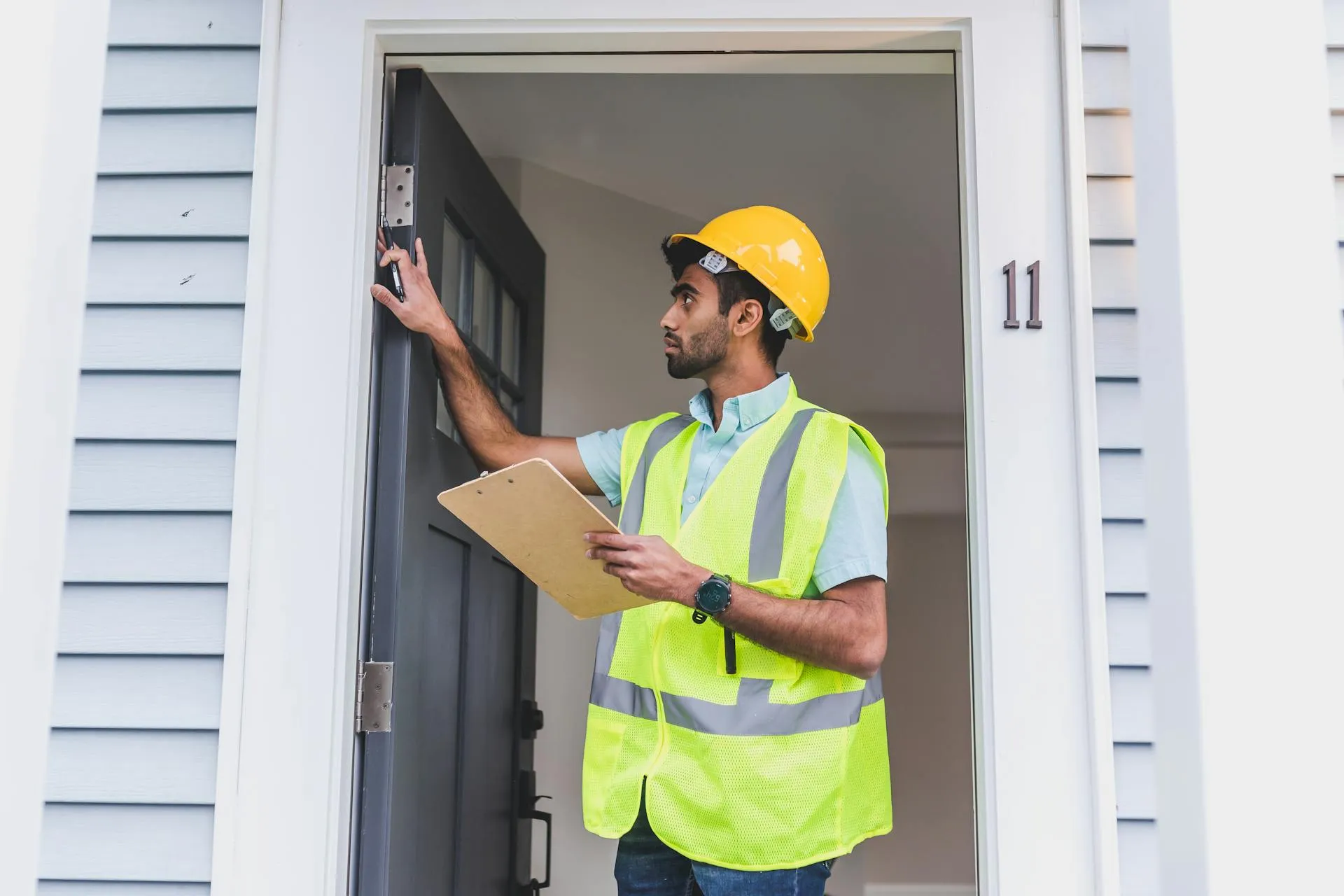
A termite inspection in Adelaide is a structural-risk assessment of the building, performed to AS 3660.2-2017 and reported to AS 4349.3-2010. Standards Australia recommends an inspection at intervals of not more than 12 months for most properties, with shorter intervals on high-risk sites. A standard residential inspection takes 60–90 minutes, costs $180–$350, and produces a written report covering subfloor, internal timbers, roof void, external surrounds and outbuildings within 30 metres of the building.
That is the answer in one paragraph. The rest of this guide is the long version — what each of the three governing standards actually says, when each one applies to your home, what the inspection physically covers, what a thermal-only inspection misses, and what to do with the report once it lands.
Why this guide exists
Most Adelaide pest control sites cite “the Australian Standards” without naming the parts, the editions, or the scope of each. That makes the inspection look generic — and a generic inspection is what a homeowner gets when nobody is checking which standard the inspector is actually working to.
The three documents that govern termite work in South Australia are not interchangeable:
- AS 3660.1-2014 — Termite management — Part 1: New building work. The construction-stage standard.
- AS 3660.2-2017 — Termite management — Part 2: In and around existing buildings and structures. The standard that covers every existing home.
- AS 4349.3-2010 — Inspection of buildings — Part 3: Timber pest inspections. The standard that governs the report itself.
A competent inspection on an existing Adelaide home cites Part 2 of AS 3660 for the methodology and AS 4349.3 for the report form. A new-build sign-off cites Part 1 of AS 3660. A pre-purchase report cites AS 4349.3 with the additional pre-purchase scope. If a quote you’ve been sent doesn’t say which standard applies — that’s the first question to ask.
AS 3660.1-2014: the standard for new building work
AS 3660.1-2014 sets the requirements for the design and construction of subterranean termite management systems for new buildings and new building work in Australia. Standards Australia released the 2014 edition; from 1 May 2017, the National Construction Code (Building Code of Australia) recognised only the 2014 edition as a Deemed-to-Satisfy Solution for termite management in new builds.
What Part 1 governs:
- The chemical barrier systems acceptable at slab construction (perimeter sprays, soil reticulation pipework, treated zones)
- The physical barriers acceptable at slab construction (stainless steel mesh products, graded stone, ant capping over piers)
- Integration with slab design under AS 2870 (Residential slabs and footings) and AS 3600 (Concrete structures)
- The durable notice that must be installed in the meter box recording the system installed, the installer, the chemical (where used), and the next inspection date
- Site management precautions to reduce termite risk during and immediately after construction
When Part 1 applies to you:
- You are building a new home in Adelaide
- You are extending or substantially renovating an existing home (the new work has to comply, even if the existing structure pre-dates the standard)
- You are settling on a brand-new home and the durable notice should already be in the meter box
- You are signing off a builder’s defect-liability period and the termite system is part of the practical-completion checklist
Part 1 does not apply to inspections of existing buildings. That is what Part 2 is for.
AS 3660.2-2017: the standard for existing buildings
AS 3660.2-2017 is the companion standard for buildings already standing. The Standards Australia revision (May 2017, replacing the 2000 edition) tightened the inspection methodology, the documentation requirements, and the recommended inspection-frequency wording.
What Part 2 governs:
- The methodology for inspecting an existing building for termite activity, conducive conditions, and structural risk
- The chemical retrofit options acceptable on existing buildings (soil treatments, foam, dust, baiting)
- The physical retrofit options acceptable on existing buildings (chemical reticulation pipework retrofitted around the slab, stainless steel mesh applied during partial reconstruction)
- The documentation the inspector must produce (severity grading, photographs, recommended treatment, recommended re-inspection interval)
- The recommended inspection frequency — at intervals of not more than 12 months for most properties, with the inspector authorised to recommend shorter intervals on high-risk sites
That 12-month interval is not a marketing line. It is the recommended frequency under AS 3660.2-2017, cited consistently by AEPMA (the industry peak body) and Standards Australia in their guidance to professional pest managers.
When Part 2 applies to you:
- Your home was built before 1995 (when Part 1 was first introduced) — by definition, no compliant barrier was ever installed at construction
- Your home was built between 1995 and the present and has an existing barrier under maintenance
- You have had a previous termite treatment that requires recurring inspection to maintain warranty cover
- You have seen a sign of termite activity (mud tube, frass, alate swarm, hollow timber) and need a positive ID before treating
Most of inner Adelaide’s housing stock — Norwood villas, Unley bungalows, Prospect Californians, Walkerville and Semaphore character homes — pre-dates Part 1 entirely. AS 3660.2 is the governing standard for every one of those properties today. (More on that under “the pre-1960 housing exemption” below.)
AS 4349.3-2010: the standard for the report
AS 4349.3-2010 — Inspection of buildings — Part 3: Timber pest inspections — sets the form and scope of the report itself. AS 3660.2 says how to inspect; AS 4349.3 says what the report has to contain. The two work together. A termite inspection in Adelaide is conducted to AS 3660.2-2017 and reported to AS 4349.3-2010.
What AS 4349.3-2010 requires the report to include:
- Scope of the inspection (what was checked)
- Areas inspected (subfloor, internal, roof void, external, outbuildings)
- Areas not accessible (this is mandatory — operators who write a clean report on a half-inspected property are non-compliant)
- Findings, with severity grading
- Photographs of every finding
- Plain-English summary
- Recommendations (treatment, re-inspection, monitoring)
- Susceptibility assessment of the building to timber pests
- Further investigations required, where the inspector cannot reach a finding
What AS 4349.3-2010 does not cover:
- Drywood termites (rare in southern Australia — outside scope)
- Mould (separate scope, not a timber pest)
- Rodents (separate inspection)
- Underground inspection — house stumps below ground level, tree roots, parts of fence posts below grade
If a report is sold to you as covering “everything,” that is wrong by the standard. AS 4349.3 is a defined scope; an honest inspector will tell you what’s in it and what isn’t.
The pre-1960 housing exemption — what it really means
There is no formal “exemption” for pre-1960 Adelaide homes. What there is — and what most homeowners haven’t been told — is the construction-era reality that pre-dates AS 3660.1 entirely.
AS 3660.1 was first introduced in 1995 and last revised in 2014. Before 1995 there was no Australian Standard for termite management in new construction. A home built in 1922 (Norwood villa), 1947 (post-war Prospect bungalow), 1958 (Mitcham brick-and-tile) or even 1990 (Mawson Lakes early estate) had no AS 3660-compliant barrier installed at construction — because the standard didn’t exist.
This is not a get-out clause. It is the reason AS 3660.2-2017 matters.
What it means in practice:
- Pre-1995 stock has no original compliant barrier. Whatever barrier exists today (if any) was installed retrospectively under AS 3660.2 — or doesn’t exist at all.
- Pre-1960 stock — the Norwood, Unley, Prospect, Walkerville, Semaphore, Port Adelaide and Gawler character corridors — sits in this exposure category by default. Heritage construction (suspended timber floors, mature gardens, no slab edge to inspect) is structurally the highest-risk profile in South Australia.
- The inspection regime on these properties is governed by AS 3660.2-2017 alone. Part 1 doesn’t apply because there’s no new work. Part 2 sets the inspection methodology, the retrofit options if termites are found, and the recommended 12-month inspection interval.
- Your conveyancer, your insurer and your eventual buyer will all expect a written AS 4349.3-2010 inspection on a heritage property, regardless of “no termites visible.”
If you own a pre-1960 home in Adelaide and you have never had an AS 3660.2 inspection, you are not non-compliant — you are uninspected. Different problem, different fix.
What a competent inspection includes
AS 3660.2-2017, working with AS 4349.3-2010, sets the scope. A competent Adelaide termite inspection includes the following — every job, regardless of property age.
Subfloor
The single highest-yield zone in pre-1970s Adelaide stock. The inspector examines:
- Bearers, joists and piers — visual + acoustic sounding for hollow timber
- Ant caps over piers — present, intact, undisturbed
- Ventilation — blocked vents = elevated moisture = termite-favourable subfloor
- Moisture levels in timber — checked with a calibrated moisture meter
- Mud tubes on piers, slab edges, internal foundation faces
Subfloors with restricted crawl access are noted explicitly in the report under AS 4349.3 — the inspector does not skip them silently.
Internal timbers
- Skirtings, architraves, door jambs, window reveals — tapped and probed
- Cornices and exposed structural posts
- Wet-area timbers (bathroom, laundry, kitchen) — moisture meter on every timber edge
- Plasterboard surfaces — checked for blistered paint, pin-holes with brown staining, surface deflection
Roof void
- Rafters, ridge beams, hanging beams — visual and tapped
- Valleys, sarking, flashings — moisture-related decay risk
- Insulation — lifted at random points to check the timber underneath
- Heat anomalies — thermal imaging where an active gallery is suspected
External surrounds
- Fascias, eaves, deck framing — accessible at ladder height
- Retaining sleepers within slab proximity
- Garden beds against the slab edge — soil heaped against the slab is the single most common conducive condition in suburban Adelaide
- Weep-hole obstruction — bricks below DPC need air circulation; mulch and pavers covering them is a flag
- Trees and stumps within 50 metres — Coptotermes acinaciformis forages up to 50 metres from the colony
Outbuildings within 30 metres
Sheds, carports, granny flats, separate workshops. A termite colony does not respect the property’s main-house boundary. AS 4349.3 includes outbuildings within 30 metres in the standard inspection scope.
Conducive conditions
The inspector documents every site condition that elevates termite risk, even if no active workings are visible:
- Slab-edge soil contact
- Untreated softwood landscaping (sleepers, garden borders)
- Drainage failures and pooling water near the building
- Plumbing leaks (mains, hot water, irrigation)
- Tree stumps within 50 metres
- Mulch and bark layered against the slab
The conducive-conditions list often runs to a page on its own. It is the basis of the inspector’s recommendations for the next 12 months.
What a thermal-only inspection misses
Thermal imaging cameras are useful. They do not see termites. They see temperature anomalies in walls and timbers that indicate possible active galleries — water sources, heat from active foraging, moisture differentials. Used correctly alongside a physical inspection, thermal imaging converts a visual sweep into a structural assessment.
Used as the only inspection method, a thermal camera misses:
- Inactive galleries in dry timber (no thermal signal, plenty of structural damage)
- Termite damage to hidden subfloor timbers (the camera can’t see through the floor)
- Conducive conditions in the soil and external surrounds (no thermal cue)
- Borer activity (lyctus, anobium — not termites, also inside AS 4349.3 scope)
- Timber decay (wet rot — moisture is detectable, but the structural damage from rot needs a physical sounding)
A thermal-only inspection at $99 is not cheap. It is incomplete. AS 3660.2-2017 and AS 4349.3-2010 require a physical inspection of every accessible area, supplemented by — not replaced by — non-invasive technology.
The kit a competent Adelaide inspector carries:
- Thermal imaging camera (Termatrac, FLIR class) — heat signatures
- Moisture meter — moisture-content readings on accessible timbers
- Borescope — into wall cavities and inaccessible voids
- Acoustic sounding tool / probe — hollow-timber confirmation
- Termatrac T3i (radar-based) — movement detection inside walls
- Torch + headlamp — subfloor and roof-void illumination
No single instrument is the inspection. The inspector is.
Which standard applies to your home
A simple decision tree.
- You’re building or extending in 2026. AS 3660.1-2014 governs the system installed at slab stage. The builder’s termite installer issues the durable notice for the meter box. AS 3660.2 takes over from year one onward.
- You bought a 1985 home with an existing barrier. AS 3660.2-2017 governs your annual inspection. The original barrier may or may not be a Part 1 system (Part 1 didn’t exist when the home was built — but a retrofit barrier installed since may comply). The inspector confirms what’s in place and writes the report to AS 4349.3.
- You own a 1922 Norwood villa. AS 3660.2-2017 alone. No original barrier was installed. Annual inspection at the recommended 12-month interval. AS 4349.3-2010 governs the report form.
- You’re about to buy a property. AS 4349.3-2010 with the additional pre-purchase scope. The inspection finds what’s there before settlement. See the pre-purchase termite inspection guide.
- You found mud tubes yesterday. Stop disturbing them. AS 3660.2-2017 inspection inside the week — book one at our termite inspection service page. Treatment options follow positive ID. The cost ranges sit in the termite treatment cost guide.
What to expect on the day
A standard residential AS 3660.2-2017 inspection in Adelaide looks like this.
- Arrival and brief. The inspector confirms property scope (storeys, outbuildings, subfloor access, roof-void access), introduces the kit, and asks about any signs the homeowner has noticed.
- External walk. Slab perimeter, weep-holes, drainage, garden beds, retaining sleepers, trees and stumps within 50 metres.
- Subfloor. Crawl access where available; visual + sounding on bearers, joists, piers; moisture meter on suspect points; thermal camera on wet zones.
- Internal sweep. Wet rooms first (bathroom, laundry, kitchen); skirtings, architraves, door jambs, window reveals; moisture meter on every wet-area timber edge; sounding on accessible structural timbers.
- Roof void. Rafters, ridge beams, hanging beams; insulation lifted at random points; thermal camera on suspect zones.
- Outbuildings. Sheds, carports, granny flats — same scope as the main building, scaled.
- Debrief on site. Plain-English summary of findings before the inspector leaves. No surprises in the written report.
- Written report within 24–48 hours. AS 4349.3-2010 form and content. Severity grading. Photographs. Recommendations.
If you’ve never had a termite inspection, expect 60–90 minutes on a single-storey home with reasonable access. Larger homes, two-storey, or restricted subfloor access can take 2 hours or more.
The licence the inspector must hold
Termite inspection in South Australia is a licensed trade under the Controlled Substances Act 1984 and the Controlled Substances (Pesticides) Regulations 2017. Two licences are relevant:
- Pest Controller’s Licence — the business licence. Held by Pest Fox at the entity level.
- Full Pest Management Technician’s Licence (FPMT) — the technician licence. Authorises pest control work without supervision. Required to complete the inspection and any treatment that follows.
A Limited Pest Management Technician’s Licence (LPMT) holder can inspect under FPMT supervision but not solo. Anyone working without one of these licences is operating outside the law in SA. The licence numbers are public — SA Health publishes them — and you can verify any operator before booking.
Pest Fox holds both licences and an AEPMA membership, which adds a Code of Ethics, mandatory professional indemnity and public liability cover, and access to the PestCert accreditation scheme. The licence and membership numbers sit on the Contact page and the footer of every page on this site. Verifying them is encouraged.
Frequency and cost in Adelaide
AS 3660.2-2017 recommends inspections at intervals of not more than 12 months for most properties. Shorter intervals — 6-monthly — are recommended for high-risk sites. High-risk in Adelaide context means:
- Pre-1960 housing stock (Norwood, Unley, Prospect, Walkerville, Semaphore)
- Reactive clay soils with established gardens (Prospect/Sefton Park calcarosol band; Mitcham foothills clay)
- Properties on bushland fringes (Belair, Stirling, Aldgate, Mount Barker)
- Active treatment under a 12-month service warranty (annual re-inspection is a warranty condition, not optional)
- A previous infestation, even if treated and cleared
Cost guidance for a standard residential inspection in Adelaide sits at $180–$350. The drivers (size, storeys, subfloor and roof-void access, outbuildings, pre-purchase scope) are explained on the termite inspection service page and broken down further in the termite treatment cost article.
What the inspection won’t tell you
Worth saying explicitly because every inspection question follows from it.
- The inspection is a snapshot — it tells you the building’s status on the day. A clean report does not mean a clean house in 18 months. The 12-month re-inspection is how status stays current.
- The inspection does not include destructive investigation. AS 4349.3 is a non-invasive standard. If a finding requires opening up a wall, lifting a floorboard, or removing cladding, the inspector recommends further investigation — and quotes for it.
- The inspection does not value the property. It does not determine whether to buy, sell or renovate. It tells you what’s there. Decisions are yours.
- The inspection does not certify a barrier. Part 1 systems are certified at construction by the installer (the durable notice). The Part 2 inspector confirms what is in place and whether it is doing its job — they do not re-certify it.
FAQ
How often should I get a termite inspection in Adelaide? AS 3660.2-2017 recommends inspections at intervals of not more than 12 months for most properties. High-risk sites — pre-1960 stock, reactive clay soils, established gardens, bushland fringes, properties under active treatment — benefit from 6-monthly intervals. Standards Australia and AEPMA both cite the 12-month baseline.
Which Australian Standard applies to my termite inspection? The inspection methodology is governed by AS 3660.2-2017 (existing buildings) or AS 3660.1-2014 (new building work). The report itself is governed by AS 4349.3-2010. A pre-1960 Adelaide home is governed by Part 2 alone — Part 1 didn’t exist when the home was built.
My home is from the 1920s — does AS 3660 apply? AS 3660.1-2014 (new construction) doesn’t, because your home pre-dates the standard entirely. AS 3660.2-2017 governs the inspection and remediation regime that applies to your home today. AS 4349.3-2010 governs the report. Both are in force; both apply to a 1920s villa.
What’s the difference between AS 3660.1 and AS 3660.2? AS 3660.1-2014 covers termite management for new building work (the system installed at slab stage). AS 3660.2-2017 covers termite management in and around existing buildings (the inspection and retrofit regime for buildings already standing). They are companion parts of the same standard, written for different stages of a building’s life.
Is a thermal-only inspection acceptable under AS 3660.2-2017? No. AS 3660.2-2017 requires a physical inspection of every accessible area (subfloor, internal, roof void, external, outbuildings). Thermal imaging is a supplement to the physical inspection, not a replacement. A thermal-only inspection misses inactive galleries, hidden subfloor damage, conducive conditions, borers and timber decay.
How long does a termite inspection take in Adelaide? 60–90 minutes on a standard single-storey home with reasonable subfloor and roof-void access. Two-storey homes, restricted access, or properties with multiple outbuildings can run 2 hours or more.
What licence does my termite inspector need in SA? A Full Pest Management Technician’s Licence (FPMT) under the Controlled Substances (Pesticides) Regulations 2017, held by the technician. The business also needs a Pest Controller’s Licence, held at entity level. Both are issued by SA Health Controlled Substances Licensing and the numbers are publicly verifiable.
Does AEPMA membership matter? For accountability, yes. AEPMA members are bound by a Code of Ethics, must hold professional indemnity and public liability insurance, and have access to the PestCert accreditation scheme. Membership is voluntary in SA but a recognised E-E-A-T signal — a member operator has a published industry-body accountability layer above the SA Health licence.
Sources
- Standards Australia — Australia’s termite management standard revised: https://www.standards.org.au/news/australias-termite-management-standard-revised
- AEPMA — Notes on updates to AS 3660-2:2017: https://aepma.com.au/News/32028/AEPMA_notes_on_updates_to_AS_3660-2_2017
- Standards Australia Store — AS 3660.1:2014 Termite management — Part 1: New building work: https://store.standards.org.au/product/as-3660-1-2014
- Standards Australia Store — AS 4349.3-2010 Inspection of buildings — Part 3: Timber pest inspections: https://store.standards.org.au/product/as-4349-3-2010
- HIA — Termite management for new building work: https://hia.com.au/resources-and-advice/building-it-right/australian-standards/articles/termite-management-for-new-building-work
- SA Health — Pest control licensing: https://www.sahealth.sa.gov.au/wps/wcm/connect/public+content/sa+health+internet/public+health/drugs+poisons+chemicals+and+contaminants/pest+control+licensing/pest+control+licensing
- AEPMA — Australian Environmental Pest Managers Association: https://aepma.com.au/