Pest Fox · Adelaide pest & termite specialists
Termite Inspection Mitcham, Belair, Blackwood | Pest Fox
By Pest Fox · Published 5 May 2026
Termite Inspections in Mitcham and the Foothills: Belair, Blackwood and the Reserve-Edge Risk
A termite inspection in the City of Mitcham — Belair, Blackwood, Eden Hills, Brown Hill Creek, Bellevue Heights, Hawthorndene, Coromandel Valley — is a Part 2 inspection under AS 3660.2-2017, reported to AS 4349.3-2010, on a property profile that carries above-average termite risk. The reasons are environmental: clay-loam transition soils that retain seasonal moisture, mature stringybark and river red gum within drop-distance of dwellings, bushland-reserve adjacency that introduces a second termite species, and a housing stock dominated by 1920s–1950s stone bungalows and 1960s–1980s foothills builds. Cost for a standard residential inspection sits at $250 to $350, with annual frequency under AS 3660.2-2017 — and six-monthly recommended on bushland-fringe properties with active conducive conditions.
That is the short version. The detail below explains why the foothills profile differs from inner-Adelaide stock, what the inspector is looking for in a Belair subfloor, the second termite species you only see near the reserves, and how the Bushfire Protection Overlay interacts with treatment options.
The foothills termite-risk profile
The City of Mitcham is the largest priority LGA Pest Fox services by population, with around 67,000 residents across the metro-foothills band. The termite-risk profile across Mitcham, Belair, Blackwood, Eden Hills and the surrounding suburbs is structurally distinct from inner Adelaide:
- Clay-loam transition soils. The eastern slopes of the Mount Lofty Ranges sit on clay-loam soils that retain seasonal moisture under garden beds, lawn areas and adjacent to slab edges. Subterranean termites favour soil moisture for tunnelling and foraging.
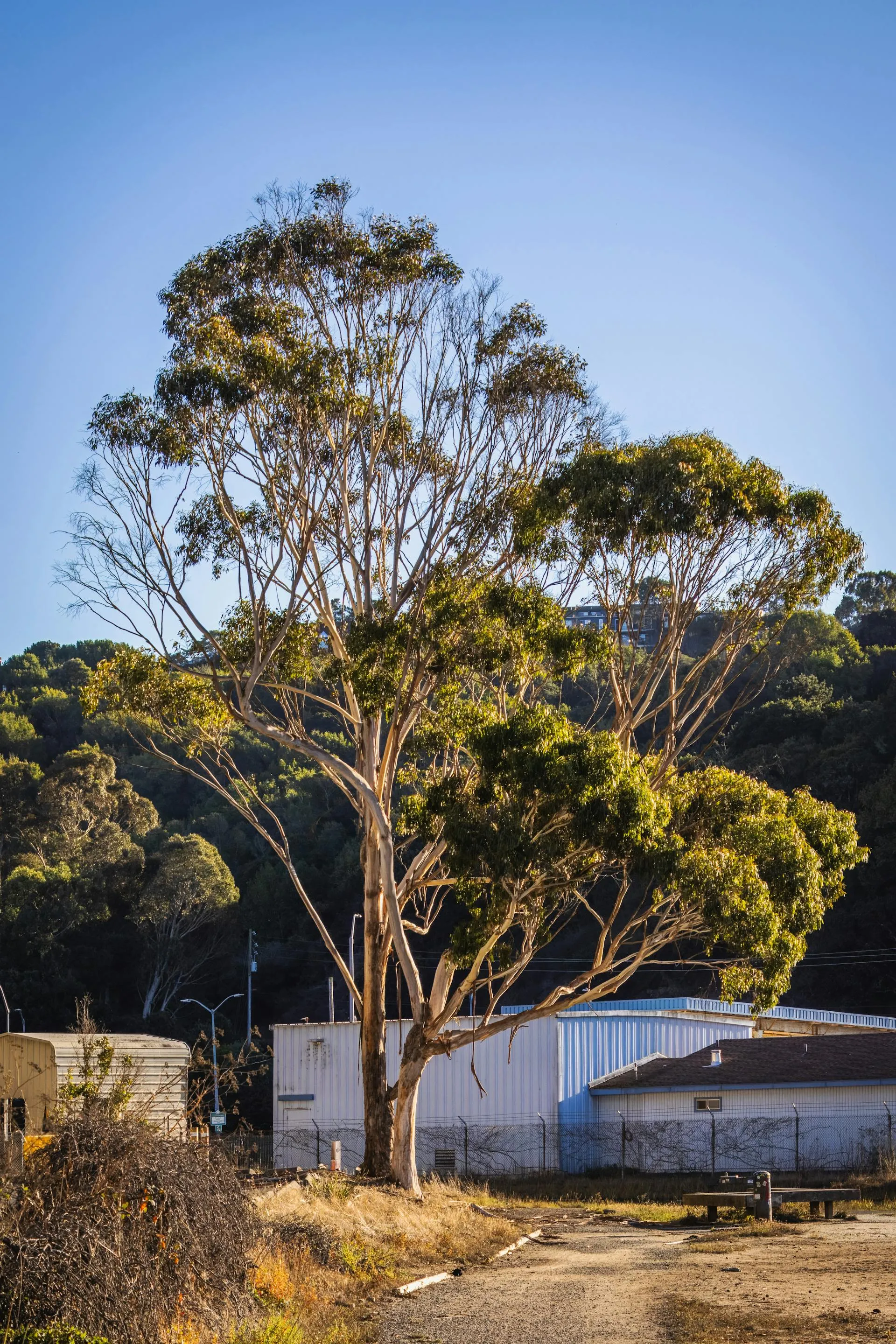
- Mature eucalypts within drop-distance. River red gum (Eucalyptus camaldulensis), SA blue gum (Eucalyptus leucoxylon) and stringybark (Eucalyptus obliqua) feature heavily across foothills properties — often within 20 metres of the dwelling. Mature eucalypts create cellulose food sources (fallen branches, dropped bark, stumps left after felling) right against the building envelope.
- Bushland-reserve adjacency. Belair National Park, Brown Hill Creek Recreation Park, Sturt Gorge Recreation Park, Mark Oliphant Conservation Park — the reserve system runs through the foothills band and brings native termite species into the urban interface.
- 1920s–1950s stone bungalow stock. Older Mitcham proper, Lower Mitcham, Kingswood, Springfield — heritage stone bungalows on suspended timber floors, similar profile to NPSP villa stock.
- 1960s–1980s foothills builds. Belair, Blackwood, Bellevue Heights, Hawthorndene — slab-construction era housing, often with original perimeter chemistry that has long since lapsed.
- Sloping blocks and rock-shelf subsoil. Foothills geology restricts trenching depth in places; some perimeter sections cannot be treated to AS 3660 specification without engineering work.
The cumulative effect is a profile where annual AS 3660.2-2017 inspection is the baseline and six-monthly is recommended for bushland-edge properties. The full standards picture is set out in the Pest Fox guide to termite inspections in Adelaide.
Coptotermes acinaciformis — the dominant species
The species you will find most often in a Mitcham subfloor or footing-line is Coptotermes acinaciformis — the dominant subterranean termite across South Australia. The species is subterranean nesting (nests in soil, in old stumps, or inside structural timbers concealed by soil contact), forages up to 50 metres from the colony, and builds the characteristic mud tubes that climb piers, slab edges and external walls.
In a foothills property, the colony is often:
- In an old eucalypt stump within or adjacent to the property — particularly common where mature gum trees have been felled and the stump left to rot
- In a structural timber concealed by soil contact — a sleeper retaining wall, an in-ground timber post, or a section of structural timber where landscaping has been built up against the wall
- In a buried timber detail — old fence posts below grade, old paling fences with the lower section in soil, deck framing sitting on bearer plates touching soil
The 50-metre foraging range means a colony in a neighbour’s stump or in the verge of an adjacent reserve can reach the property. Annual inspection’s job is to find the foraging signs — mud tubes, frass, hollow timber — before the structural exposure develops.
Nasutitermes — the reserve-edge species
The second species to discuss is Nasutitermes — a genus you do not see in inner Adelaide stock but which appears with regularity on properties adjacent to Belair National Park, Brown Hill Creek and Sturt Gorge.
Nasutitermes characteristics:
- Arboreal nesting. Nests are built in trees — typically in mature eucalypts — as visible mud-and-carton structures attached to trunks or major branches, sometimes high in the canopy.
- The “soldier nasutus”. Nasutitermes soldiers are distinctive — small, with a pointed nasus (snout) used to spray a defensive secretion. Visible in foraging columns and broken tubes; the field-identification cue inspectors use to distinguish Nasutitermes from Coptotermes.
- Foraging columns. Unlike Coptotermes’s concealed mud tubes, Nasutitermes often forages in visible covered runways across surfaces — fence rails, tree trunks, garden-bed edges.
- Less destructive to structural timber. Nasutitermes preferentially feeds on dead wood — fallen branches, stumps, weathered fence timbers — rather than seasoned structural timber. Their economic impact on a building’s structural elements is generally less than Coptotermes.
A Nasutitermes finding still triggers a treatment decision — the species can damage external timber elements (decking, pergola posts, fence rails, garden retaining sleepers) — but the response is typically targeted nest treatment rather than a full structural barrier installation.
A foothills inspector should be able to distinguish Nasutitermes from Coptotermes on field evidence. Confirming the species informs the treatment plan and the cost.
What an AS 4349.3-2010 inspection covers in a foothills property
The methodology is governed by AS 3660.2-2017; the report scope is governed by AS 4349.3-2010. The on-site work:
Subfloor crawl
- Bearers, joists, piers — visual sweep plus acoustic sounding
- Pier ant caps — present, intact, undisturbed
- Subfloor ventilation — blocked vents elevate moisture
- Moisture readings on accessible timbers
- Mud tubes on stumps, piers, perimeter footings
Internal timbers
- Skirtings, architraves, door jambs, window reveals — tapped and probed
- Wet-area timbers — moisture readings on every wet edge
- Plasterboard surfaces — checked for blistered paint, pinholes, surface deflection
Roof void
- Rafters, ridge beams, hanging beams — visual and tapped
- Insulation lifted at random points
- Heat anomalies — thermal imaging where active galleries are suspected
External surrounds — extended scope for foothills properties
This is where the foothills inspection diverges from the inner-Adelaide standard scope:
- Slab edge and footing-line walk — soil contact, mulch heights, weep-hole obstruction
- Garden beds against the slab — the most common conducive condition
- Tree-stump survey within 50 metres — foothills properties commonly have multiple felled stumps within foraging range; each one is a potential colony site
- Live tree assessment within 20 metres — mature eucalypts are inspected at trunk level for Nasutitermes mud structures and at the base for Coptotermes soil-contact entry points
- Sleeper retaining walls and timber landscape detail — foothills landscaping commonly uses timber retaining; each wall is a candidate harbourage
- Reserve fence-line for properties bordering Belair NP, Brown Hill Creek, Sturt Gorge — foraging columns crossing from reserve land into the property are inspected
Outbuildings within 30 metres
Foothills properties commonly have detached garages, workshops, garden sheds and pool houses. Each is included in the standard AS 4349.3 scope.
Conducive conditions documentation
Every site condition that elevates risk is documented — slab-edge soil contact, untreated softwood landscaping, drainage failures, plumbing leaks, mulch against slab, retained tree stumps, sleeper retaining timbers, firewood stockpiles against external walls.
The bushfire-overlay interaction
Belair, Blackwood, Eden Hills, Bellevue Heights and most of the western foothills sit inside the Bushfire Protection Overlay under the Planning and Design Code (plan.sa.gov.au). The overlay regulates vegetation management for bushfire mitigation — clearing zones around dwellings, fuel-load reduction, asset-protection-zone requirements.
The interaction with termite work is direct:
- Vegetation management for bushfire compliance removes some conducive conditions for termites. Clearing fuel from within 20 metres of the dwelling removes some cellulose food sources and forces the inspector’s external-surrounds scope to follow the cleared geometry.
- Stump removal versus stump retention — bushfire-mitigation guidance often recommends stump removal; termite-risk guidance reinforces it. Some homeowners retain stumps for habitat reasons; the inspector documents these as conducive conditions and recommends targeted monitoring.
- CFS recommendations for site preparation sometimes interact with termite barrier installation — particularly where reticulation pipe routing or chemical-treatment zones overlap with bushfire-protection vegetation rules.
- Fence-line and shed scope — overlay-compliant fences and outbuildings carry construction details (non-combustible cladding, slab edge details) that influence the inspection scope.
A foothills inspector should be familiar with the overlay’s interaction with their work. CFS bushfire site assessment guidance is the parallel framework — it doesn’t override AS 3660.2, but it shapes the property context the inspection sits in.
Common findings on Mitcham foothills properties
The patterns we see most often on foothills inspections:
- Mud tubes on pier brickwork or stumps — the Coptotermes signal in subfloor or external footing-line
- Hollow architraves and skirtings behind plaster — tapped-timber test reveals concealed gallery damage
- Frass in wet-area timbers — kitchen and bathroom moisture is the entry environment
- Old gum-tree stumps left in place — particularly common where mature eucalypts have been felled in the 1990s or 2000s and the stump retained for stability or habitat reasons
- Mature live eucalypts within 10 metres of the dwelling with bark cracks, deadwood limbs and basal soil contact — candidate harbourage
- Garden-bed mulch against weatherboards — heritage cottage stock in Mitcham proper, Kingswood and Lower Mitcham
- Sleeper retaining walls in direct contact with structural framing — foothills landscaping detail that creates concealed termite access
- Damaged eucalypt deadfall on roofs and gutters — cellulose food source plus moisture trap
The full visual signal-set for active termite activity sits in the Pest Fox signs of termites in Adelaide homes article.
How treatment differs in foothills properties
Three factors change the treatment-options arithmetic on a foothills property:
Rock-shelf and slope restrict trenching
Some perimeter sections cannot be trenched to AS 3660 specification depth without rock-saw or engineering work. Reticulation pipe can sometimes route around obstacles where a perimeter spray would leave coverage gaps. Where neither is achievable to compliant depth, baiting becomes the primary system rather than the supplement.
Bushland-edge properties favour baiting
For properties on the reserve-fence line, baiting systems function as both monitoring and elimination — stations along the reserve-side perimeter detect foraging columns crossing from the reserve, eliminate the colony, and then provide ongoing monitoring of further activity. The case for baiting on these properties sits in the Pest Fox termite baiting system guide.
Heritage Mitcham bungalow stock benefits from reticulation
Mitcham proper, Kingswood, Springfield, Lower Mitcham — heritage stone bungalow stock has the same retrofit-reticulation logic as NPSP villa stock. Reticulation laid once with refills at 5–8 years preserves the heritage gardens and avoids repeat trenching. Cost arithmetic and chemistry options sit in the Pest Fox termite barrier cost guide.
The credentialing question — who is allowed to inspect, who is allowed to treat — is covered in the Pest Fox SA Health pest controller’s licence guide.
Annual inspection cost and what’s included
Standard residential AS 4349.3 inspection in the City of Mitcham: $250 to $350. Drivers:
- Property size and storeys
- Subfloor and roof-void access
- Outbuildings within 30 metres
- Pre-purchase scope (extended scope, higher fee)
- Reserve-fence-line scope where applicable
The written report is delivered within 24–48 hours, follows the AS 4349.3 form, and includes findings with severity grading, photographs, plain-English summary, recommended treatment (where applicable), recommended re-inspection interval, and conducive-conditions documentation.
What to ask the inspector:
- Are you confirming species (Coptotermes versus Nasutitermes) on any active findings?
- What is the recommended re-inspection interval — annual or six-monthly — and why?
- Does the property profile recommend baiting, reticulation or chemical perimeter as the primary system if treatment is required?
- Is the bushfire overlay flagged in the recommendations where it interacts with treatment?
FAQ
Are termites worse in the Adelaide foothills? Above the metropolitan average, yes. The foothills profile combines clay-loam soils that retain moisture, mature eucalypts within drop-distance of dwellings, bushland-reserve adjacency that introduces a second species (Nasutitermes), and a housing stock split between heritage stone bungalows and 1960s–1980s slab construction. Annual inspection under AS 3660.2-2017 is the baseline; six-monthly is recommended for bushland-fringe properties.
How often should a Belair home be inspected for termites? At intervals of not more than 12 months under AS 3660.2-2017. Six-monthly is recommended for high-risk sites — bushland-fringe properties, properties with mature eucalypts within 20 metres of the dwelling, properties with retained stumps or active conducive conditions. The inspector confirms the recommended interval in the AS 4349.3 report.
Do gum trees attract termites? They host termite populations rather than “attracting” them. Coptotermes acinaciformis nests in soil and in old stumps; mature eucalypts and the stumps left after felling are common nest sites within foothills properties. Live mature eucalypts can also harbour Nasutitermes colonies as visible canopy nests. The inspection scope on a foothills property includes a tree-and-stump survey within 50 metres of the dwelling.
Does the Bushfire Overlay affect termite treatment? Indirectly. The Bushfire Protection Overlay regulates vegetation management for bushfire mitigation; many of those rules also remove conducive conditions for termites (cleared fuel, removed stumps, reduced vegetation against the dwelling). Some treatment options interact with overlay-compliant landscaping and asset-protection-zone requirements. A foothills inspector should be familiar with both frameworks.
What’s the difference between Coptotermes and Nasutitermes? Coptotermes acinaciformis is the dominant SA species — subterranean-nesting, mud-tube-building, structurally destructive to seasoned timber. Nasutitermes is more common at the reserve edge — arboreal-nesting (visible canopy nests on mature eucalypts), with a distinctive snouted soldier (the “nasutus”), and feeds preferentially on dead wood rather than structural timber. Both species are present in foothills properties; field identification informs the treatment decision.
Does Pest Fox cover Belair, Blackwood, Eden Hills, Bellevue Heights, Hawthorndene, Coromandel Valley and Brown Hill Creek? Yes — the full City of Mitcham area sits inside our standard service zone, with the same AS 4349.3 inspection scope and report standard across the LGA. Adjacent foothills coverage extends into the City of Onkaparinga (south) and the Adelaide Hills Council area (east). Suburb-specific service details sit on the Mitcham location page.
Sources
- Standards Australia — AS 3660.2:2017 Termite management — Part 2: In and around existing buildings and structures: https://store.standards.org.au/product/as-3660-2-2017
- Standards Australia — AS 4349.3-2010 Inspection of buildings — Part 3: Timber pest inspections: https://store.standards.org.au/product/as-4349-3-2010
- City of Mitcham: https://www.mitchamcouncil.sa.gov.au/
- PlanSA — Planning and Design Code (Bushfire Protection Overlay): https://plan.sa.gov.au/
- South Australian Country Fire Service — bushfire site assessment guidance: https://www.cfs.sa.gov.au/
- AEPMA — Australian Environmental Pest Managers Association: https://aepma.com.au/