Pest Fox · Adelaide pest & termite specialists
Termite Inspection Norwood, Payneham, St Peters | Pest Fox
By Pest Fox · Published 5 May 2026
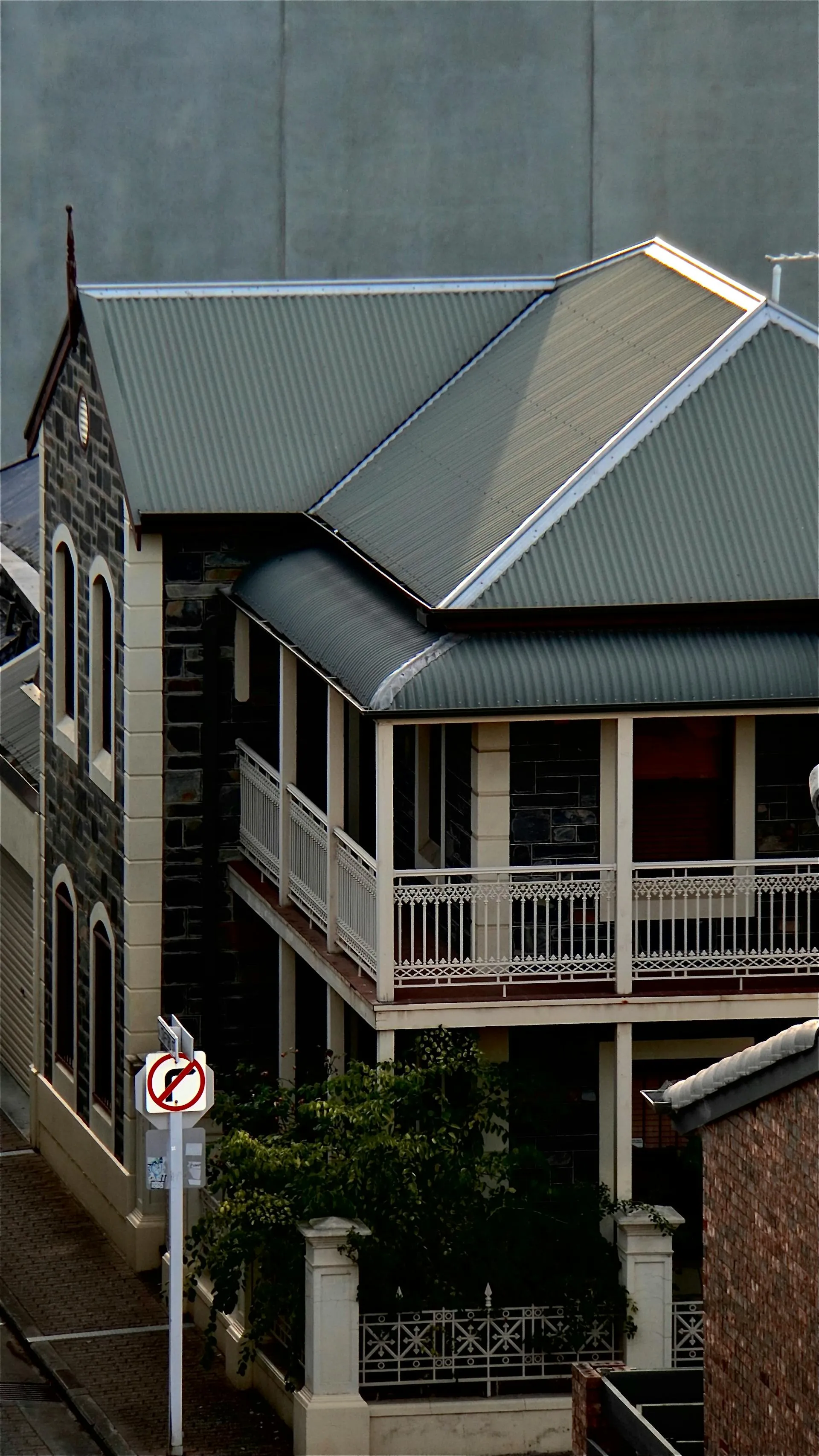
Termite Inspections in Norwood, Payneham & St Peters: What 1880s Sandstone Villas Hide
A termite inspection on a Norwood, Payneham or St Peters villa is a Part 2 inspection under AS 3660.2-2017, reported to AS 4349.3-2010, and almost always carries a higher-than-average finding rate. The reason is structural: the dominant housing stock — 1880s to 1920s sandstone villas with suspended timber floors over subfloor crawl spaces — pre-dates AS 3660.1 entirely, sits on calcarosol/loam soils with seasonal moisture, and is surrounded by mature gardens that drop leaf litter against weatherboards and pier footings. Cost for a standard residential inspection in NPSP sits at $250 to $350, takes 90 to 120 minutes on a typical villa with reasonable subfloor access, and produces a written report covering subfloor, internal timbers, roof void, external surrounds and outbuildings within 30 metres.
That is the short version. The detail below explains why the City of Norwood, Payneham & St Peters housing stock is the highest-risk profile in metropolitan Adelaide, what the inspector is looking for in the subfloor crawl, and what the heritage-character zone allows when termites are confirmed.
Why NPSP villas are termite magnets
Norwood, College Park, Joslin, Marden, Payneham, St Peters, Stepney, Maylands, Trinity Gardens, Kent Town and the surrounding streets sit on a particular combination of factors that elevate termite risk above the metropolitan average:
- Suspended timber floors over subfloor crawl spaces. The dominant 1880s–1920s construction puts bearers, joists and flooring timbers directly above ventilated soil — exactly the food source and access route subterranean termites are looking for.
- Sandstone footings with mortar gaps. The stone-and-mortar pier and perimeter footings have weathered for 100-plus years. Mortar shrinks, cracks and ablates. The voids created are concealed access for termites travelling from soil to subfloor.
- Calcarosol/loam soils with seasonal moisture. The eastern suburbs sit on a calcarosol band that retains moisture under garden beds and adjacent to slab edges. Subterranean termites favour soil moisture for tunnelling and foraging.
- Mature gardens. Jacarandas, plane trees, magnolias and old olive trees feature heavily across NPSP. Leaf litter, mulch beds and old tree stumps are cellulose food sources right against the building envelope.
- The pre-AS-3660 reality. Every villa built before 1995 was constructed without an Australian-Standards-compliant termite barrier — because the standard didn’t exist. Whatever protection exists today was either retrofitted under AS 3660.2-2017 or is absent.
The cumulative effect is a housing-stock profile where annual inspection is not a paperwork exercise. It is the structural-risk-assessment regime AS 3660.2-2017 was written for.
Coptotermes acinaciformis — the dominant SA species
The termite species you are most likely to find in a NPSP subfloor is Coptotermes acinaciformis — the dominant subterranean termite across South Australia and the most economically destructive timber pest in Australia. Key facts the inspector is working with:
- Subterranean nesting. The colony nests in soil, in old stumps, or inside structural timbers concealed by soil contact. The nest is rarely visible from above ground.
- Forages up to 50 metres from the colony. A colony in a neighbour’s garden tree can reach your subfloor easily.
- Builds mud tubes. Termites need humidity; they construct soil-and-saliva tubes between the nest and the food source, climbing piers, slab edges and external walls.
- Eats spring and softwood preferentially. Pine, oregon, baltic, hoop and softwood framing are favoured. Hardwoods are eaten more slowly. Heritage Australian hardwoods (red gum, jarrah) are more resistant but not immune.
- Active year-round in Adelaide. Unlike termites in cooler climates, Coptotermes in southern Australia forages year-round, with peak activity through warmer months.
A confirmed Coptotermes finding triggers the AS 3660.2-2017 treatment pathway — chemical or non-chemical control, depending on the colony location and the structural exposure. Treatment options are explained in the Pest Fox guide to termite treatment cost in Adelaide.
What an AS 4349.3-2010 inspection in Norwood actually covers
A competent NPSP villa inspection follows the methodology set out in AS 3660.2-2017 and is reported to the form and content specified in AS 4349.3-2010 — Inspection of buildings — Part 3: Timber pest inspections. The scope:
Subfloor crawl
The single highest-yield zone in NPSP heritage stock. The inspector physically enters the crawl space (where access permits) and examines:
- Bearers, joists, piers — visual sweep plus acoustic sounding for hollow timber
- Pier ant caps — where present, intact, undisturbed
- Subfloor ventilation — blocked vents elevate moisture and termite favourability
- Moisture readings on accessible timbers — calibrated moisture meter
- Mud tubes on stumps, piers, perimeter footings, plumbing penetrations
Heritage villas often have tight subfloor access — 400 to 600 mm crawl height — and some pockets are unreachable. AS 4349.3 requires the inspector to record areas not accessible explicitly in the report. A clean report on a half-inspected subfloor is not compliant.
Internal timbers
- Skirtings, architraves, door jambs, window reveals — tapped and probed
- Wet-area timbers (kitchen, bathroom, laundry) — moisture readings on every wet edge
- Plasterboard surfaces — checked for blistered paint, pinholes with brown staining, surface deflection
- Cornices and structural posts where exposed
Roof void
- Rafters, ridge beams, hanging beams — visual and tapped where accessible
- Insulation lifted at random points to inspect timber underneath
- Heat anomalies — thermal imaging where active galleries are suspected
- Sarking, valleys, flashings — moisture-related decay risk
External surrounds
- Slab edge or footing-line walk — soil contact, mulch heights, weep-hole obstruction
- Garden beds adjacent to building footprint — the most common conducive condition in NPSP
- Trees and stumps within 50 metres — Coptotermes foraging range
- Retaining sleepers within slab proximity
- Fence-line timbers showing termite-damaged sections
Outbuildings within 30 metres
NPSP properties commonly carry old timber sheds, lean-to laundries, summer-houses and detached garages from the heritage period. AS 4349.3 includes outbuildings within 30 metres in the standard inspection scope.
Conducive conditions documentation
The inspector records every site condition that elevates termite risk, even where no active termites are visible — slab-edge soil contact, untreated softwood landscaping, drainage failures, plumbing leaks, mulch against the slab. These form the basis of the recommendations for the next 12 months.
The full standards picture — Part 1, Part 2, AS 4349.3 and how they fit together — is covered in the Pest Fox guide to termite inspections in Adelaide.
The pre-AS-3660 reality — what it means for your villa
There is no formal exemption for pre-1960 NPSP homes. There is a construction-era reality.
AS 3660.1 was first introduced in 1995 and last revised in 2014. A villa built in 1898 (Norwood), 1908 (St Peters) or 1922 (Joslin) had no AS 3660-compliant barrier installed at construction — because the standard didn’t exist. Whatever protection exists today is either:
- A chemical perimeter or reticulation system retrofitted under AS 3660.2-2017 in the past 20–30 years
- An informal soil treatment from an earlier era, no longer compliant or documented
- Nothing at all
AS 3660.2-2017 governs the inspection regime that applies to your villa today. Annual inspection is the recommended interval for most properties; six-monthly is recommended for high-risk sites — and pre-1960 stock with active conducive conditions falls inside that high-risk definition.
The treatment-options mathematics on a heritage villa is also distinct: chemical perimeter trenching is complicated by sandstone footings, finished pavers and mature plantings; reticulation systems are often the practical answer because the pipe network can be laid once and refilled without repeat disturbance. The case is set out in detail in the Pest Fox guide to termite reticulation systems in Adelaide and the Pest Fox sandstone-villa termite-risk article.
Common findings on Norwood, St Peters and Payneham villas
The patterns we see most often on NPSP inspections:
- Mud tubes on pier brickwork in the subfloor — the textbook Coptotermes signal, climbing from soil to subfloor timber
- Frass and damaged timber in skirtings behind kitchen and bathroom walls — wet-area moisture creates the entry environment
- Hollow door jambs and architraves — the tapped-timber test reveals the gallery damage even where the surface appears intact
- Old garden stumps within 50 metres of the dwelling — the original colony source, often pre-dating the current owner
- Mulch and bark layered against weatherboards — the conducive-conditions classic in heritage gardens
- Blocked subfloor vents — modern landscaping or paving over the original brick vents, trapping subfloor moisture
- Plumbing leaks behind kitchen cabinetry — often a lead-pipe-era hot-water connection that has weeped for decades
- Damaged retaining sleepers abutting external walls — old timber retaining filled with garden soil, sitting against the building envelope
Findings of any of these does not automatically mean termites are present. They mean the conditions are favourable and re-inspection-frequency may need to shorten. Active termite findings — visible mud tubes with live termites, frass in active galleries, or alate (winged reproductive) emergence — are the trigger for the AS 3660.2-2017 treatment pathway.
The visual signal-set for active termite activity is broken down in the Pest Fox signs of termites in Adelaide homes article.
Heritage character zone — what it limits
NPSP carries some of the densest heritage character zoning in metropolitan Adelaide. The Heritage Character Zone (Part 10 of the Planning and Design Code on plan.sa.gov.au) restricts external alterations to character-contributing dwellings and constrains some treatment options:
- Physical barrier retrofits that involve slab-edge work or structural alterations are practically restricted on character-listed homes — the slab-edge access is rarely available without major work that would itself require council approval.
- Chemical reticulation systems are usually the practical answer because the buried pipe network does not affect the building’s external character. Junction boxes can be located in service areas where they are not character-defining.
- Tree-protection overlays interact with treatment. Significant Trees (under the Development Act 1993 / Planning, Development and Infrastructure Act 2016 framework) within or adjacent to the property limit some chemical applications and may dictate a baiting-led approach instead.
- Council interaction is sometimes required where the treatment plan involves work on a character-contributing fence, an external wall fabric, or a verge tree close to the property line.
A competent NPSP inspector will note any character-zone implications in the inspection report and adjust the treatment recommendation accordingly. The heritage-stock biology and treatment options are covered in detail in the Pest Fox sandstone-villa termite-risk article.
What a Norwood inspection costs and what comes next
Standard residential AS 4349.3 inspection in NPSP: $250 to $350. The cost drivers:
- Property size and storeys — single-storey villa is the baseline; double-storey or extended footprint shifts the upper bound
- Subfloor access — full standing-height crawl is best; restricted crawl (<400 mm) requires belly-crawl access and slows the inspection
- Roof-void access — manhole access, headroom, insulation type
- Outbuildings — old timber shed, garage, granny flat each adds inspection time
- Pre-purchase scope — pre-purchase inspections under AS 4349.3 carry an extended scope and a higher fee tier than annual maintenance inspections
The written report is delivered within 24–48 hours and follows the AS 4349.3 form: scope, areas inspected, areas not accessible, findings with severity grading, photographs, plain-English summary, recommendations, susceptibility assessment, further investigations required.
If termites are confirmed, treatment options are quoted separately under AS 3660.2-2017 — chemical perimeter, reticulation retrofit, baiting system, or in-place colony treatment depending on the location of the activity. Cost ranges sit in the Pest Fox termite barrier cost guide and the termite treatment cost guide.
FAQ
Are termites common in Norwood? Yes — Norwood and the broader NPSP area sit at the higher-risk end of the metropolitan Adelaide profile. The combination of pre-1960 sandstone villa stock, suspended timber subfloors, calcarosol/loam soils, and mature gardens with old stumps and mulch beds creates a structurally favourable environment for Coptotermes acinaciformis. AS 3660.2-2017 annual inspection is the recommended baseline; six-monthly is recommended on high-risk sites within that profile.
How often should an NPSP villa be inspected? At intervals of not more than 12 months, per AS 3660.2-2017. Six-monthly is recommended for high-risk sites — pre-1960 stock with active conducive conditions, properties with prior infestation history, properties under an active warranty that requires more frequent inspection. The inspector confirms the recommended interval in the AS 4349.3 report after the first inspection.
Does my heritage-listed house need a different inspection? The inspection methodology is the same — AS 3660.2-2017 — but the report’s treatment recommendations factor in heritage-character-zone constraints. Some chemical perimeter and physical barrier options are practically restricted on character-listed villas; reticulation and baiting are usually the practical retrofit answers. Treatment options are covered in our termite reticulation system guide.
What does a termite inspection cost in Norwood? $250 to $350 for a standard residential AS 4349.3 inspection. Drivers include property size, subfloor and roof-void access, outbuildings, and pre-purchase scope (which adds an extended-scope fee). The written report is delivered within 24–48 hours.
Can termites hide in sandstone walls? The sandstone itself is not consumed by termites. The mortar and the timber framing behind it are. Termites can travel concealed routes through mortar gaps and shrinkage cracks in heritage stone, reaching internal timber framing without visible external signs. The inspection methodology accounts for this — moisture mapping, internal timber probing and roof-void inspection are how concealed activity is detected.
Does Pest Fox cover Payneham, St Peters, College Park, Joslin, Marden, Stepney, Kent Town and Maylands? Yes — the full City of Norwood, Payneham & St Peters area sits inside our standard service zone. The same inspection scope and report standard applies across the LGA. Service is also available for adjacent Walkerville, Prospect, Burnside and Adelaide City Council areas. Suburb-specific service details sit on the Norwood location page.
Sources
- Standards Australia — AS 3660.2:2017 Termite management — Part 2: In and around existing buildings and structures: https://store.standards.org.au/product/as-3660-2-2017
- Standards Australia — AS 4349.3-2010 Inspection of buildings — Part 3: Timber pest inspections: https://store.standards.org.au/product/as-4349-3-2010
- City of Norwood, Payneham & St Peters: https://www.npsp.sa.gov.au/
- PlanSA — Planning and Design Code (Heritage Character Zone, Part 10): https://plan.sa.gov.au/
- AEPMA — Australian Environmental Pest Managers Association: https://aepma.com.au/