Pest Fox · Adelaide pest & termite specialists
Spring Termite Swarm Adelaide — When Alates Fly | Pest Fox
By Pest Fox · Published 5 May 2026
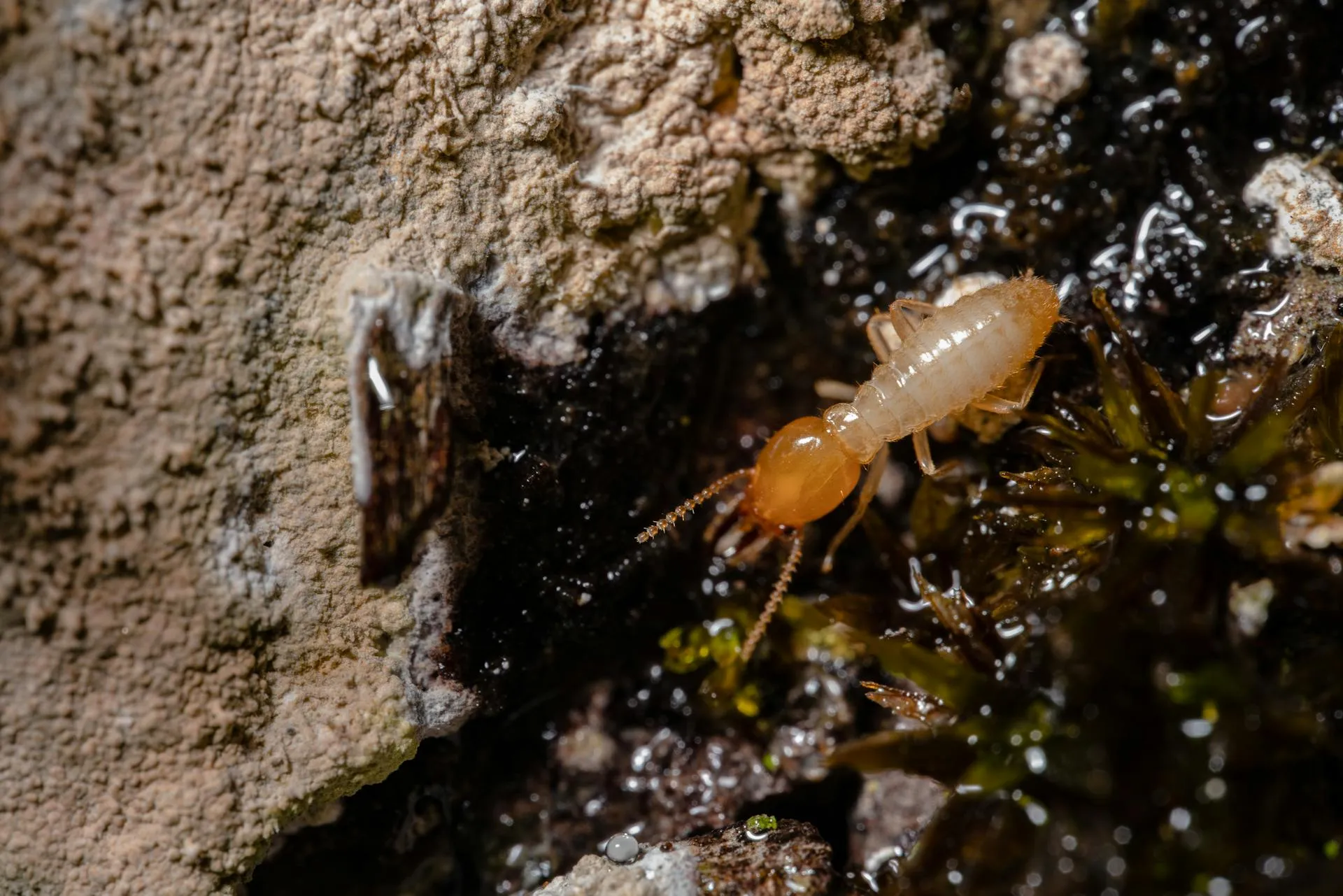
Spring Termite Swarm Season in Adelaide: When Alates Fly and What to Do
Adelaide termite alates — the winged reproductive caste of Coptotermes acinaciformis, the dominant SA species — emerge in late spring and early summer, typically October to December, after warm-evening rainfall when humidity is elevated. A flight is the colony’s once-a-year reproductive dispersal: thousands of alates fly briefly, drop their wings, pair up and attempt to found new colonies. Alates inside or around your home indicate a mature colony within 50 to 100 metres — possibly already in your structure, possibly in a neighbour’s, possibly in a stump or street tree. Sighting warrants an immediate AS 4349.3-2010 inspection. Not next month. This week.
This guide explains why alates fly, when Adelaide flights actually happen, how to tell an alate from a flying ant in 30 seconds, what it means if you find them inside versus outside, and what to do — and what not to do — in the first 48 hours after a sighting.
Why alates fly
Termite colonies are eusocial. The vast majority of individuals are workers (sterile, unpigmented, eats and processes cellulose) and soldiers (sterile, large mandibles, defends the colony). The reproductive caste — alates — develops only in mature colonies, typically after three to five years of established growth.
The colony produces alates for one purpose: annual reproductive dispersal. Once a year, when environmental conditions trigger the flight, the alates leave the nest in coordinated emergence. They fly briefly (most flights last under an hour), shed their wings, pair up (a male and a female), find a suitable site, and attempt to found a new colony. Survival rates are low — most alates do not establish a colony — but the sheer numbers produced ensure some founder pairs succeed each year.
Alate flight is the colony’s signal of maturity. A colony you didn’t know existed has been growing in or near your property for years before producing alates. The flight is the moment that growth becomes visible to you.
When Adelaide alates fly specifically
The Adelaide alate flight window is narrower than most generic Australian termite content suggests.
- Primary flight window — late October to mid-December, with peak activity typically in November
- Secondary flight window — late December to early February in seasons where spring rainfall was unusual or delayed
- Trigger conditions — warm humid evening (typically 25°C+ at dusk), rainfall in the previous 24–72 hours (raises soil moisture and signals colonies to fly), still or light wind
- Time of day — flights begin near dusk and continue into the early evening; alates are attracted to artificial light and gather at porch lights, kitchen windows, pool lights and verandah fixtures
Adelaide’s Mediterranean climate puts the spring rainfall trigger reliably in October and early November. By mid-December the dry summer is established and rainfall events become less frequent, which is why the primary flight window concentrates in the October–early December band rather than running into peak summer.
This is different from northern Australian climates (Brisbane, Darwin, Cairns) where higher year-round humidity and rainfall produces a longer and later flight window. Adelaide-specific framing matters — generic Australian termite content often quotes “November to February” or “summer months”, which is correct for some species and some climates but understates how concentrated the Adelaide window actually is.
What an alate looks like vs a flying ant
This is the single most useful 30-second test in the article. Most callers describe seeing “flying ants” and what they have seen is a termite alate. Three differences, all visible without magnification.
| Feature | Termite alate | Flying ant (winged reproductive ant) |
|---|---|---|
| Antennae | Straight, beaded | Elbowed (sharply bent at the joint) |
| Wings | Four wings, all equal in length and shape, longer than the body | Four wings, front pair noticeably larger than rear pair |
| Waist | No constriction — the body is uniformly thick from thorax to abdomen | Sharp narrow waist between thorax and abdomen |
| Body colour | Pale tan to mid-brown, soft-bodied appearance | Black, dark brown, or reddish; harder body |
| Behaviour at the light | Drops wings and walks once landed; wings shed in piles around lights and windowsills | Flies erratically; rarely sheds wings indoors |
The wing-shedding signature is diagnostic. A pile of equal-length translucent wings on a windowsill or under a porch light is termite alate evidence and almost nothing else. Flying ants don’t routinely shed their wings indoors; termites do, every flight, every time.
If you can capture one specimen — sealed jar, dry, no alcohol — your inspector can confirm species in seconds. Coptotermes acinaciformis alate is the most likely identification in Adelaide; Nasutitermes and Heterotermes alates are also possible in foothills and reserve-edge properties.
What it means if you find alates inside
Inside the house is the high-anxiety presentation. Worth being clear about what it indicates and what it doesn’t.
What it does indicate:
- A mature colony exists within 50 to 100 metres of the property
- The flight emerged from a nest with thousands of mature alates ready to fly — meaning a substantial established colony, not a new arrival
- The alates entered the property through a window, door, ventilation gap, or weep-hole
- Possibility, not proof, that the colony is in your structure — alates fly to lights regardless of which property the nest is in, so an indoor sighting alone does not prove an in-structure colony
What it doesn’t necessarily indicate:
- It does not prove the alates emerged from your structure (they may have flown in through an open window from a neighbour’s stump or a street tree)
- It does not mean you have visible structural damage today — alates emerge from the parent nest, not from feeding sites in your structure
- It does not mean the colony arrived this season — colonies producing alates are typically 3–5 years established
What it absolutely warrants:
- An AS 4349.3-2010 inspection within the week — see the termite inspection guide for what the inspection covers and what report you should receive
- Sample collection — sealed dry jar with three or four alates and any shed wings, kept for the inspector
- No DIY treatment — surface insecticide kills the alates you can see and doesn’t address the colony
What it means if you find alates outside
Outside is the lower-anxiety presentation but still warrants action.
What it indicates:
- A mature colony is within reasonable proximity — typically inside 50–100 metres
- The colony may be in a stump on your property, a fence-line woodpile, a neighbour’s stump or shed, a street tree, or in your structure (the alates flew out, you saw them outside)
- Flight evidence in the garden — shed wings on paving, alate bodies in a pool skimmer or on outdoor furniture — can be the first signal of a nearby colony you didn’t know existed
Lower urgency than inside, but not zero:
- A colony at 80 metres in next-door’s gum stump can extend foraging galleries 100+ metres in suitable soil; your fence-line is well inside foraging range
- A stump on your own property producing alates has had a colony in it for 3–5 years and is currently at risk of producing the next generation that founds in your structure
- The cost of an inspection now ($180–$350) is a fraction of the cost of a treatment for an established structural infestation 12 months later
Recommended action:
- Book an AS 4349.3-2010 inspection at the next reasonable opportunity (within 4–6 weeks)
- Walk the property — look for stumps, woodpiles, garden retaining walls and timber landscaping that could host a colony; flag any of these to the inspector
What attracts termites in the first place
Two categories of attraction. Address both.
Moisture
Termites cannot survive without consistent access to moisture. The Adelaide property conditions that hold moisture and attract colonies:
- Leaking tap, hose connection, or irrigation line at the slab edge or against the wall
- Air-conditioner condensate dripping onto soil at the slab edge
- Blocked subfloor vents trapping moisture under suspended timber floors (heavy in Adelaide heritage stock — see the sandstone villa article)
- Garden beds with heavy mulch against the wall that retain moisture against weep-holes and brickwork
- Sloped garden draining toward the building rather than away
- Low-lying paving that pools rainwater against the slab
Cellulose
Termites eat cellulose. The cellulose sources they prefer:
- Stumps left in place after garden tree removal — the single most attractive cellulose source on most properties
- Untreated landscaping timber — sleepers, retaining walls, garden borders
- Firewood stacked against the building or stored on bare soil
- Hardwood mulch in deep beds against the slab edge
- Cardboard storage on bare soil in sheds and subfloor crawl spaces
- Old fence palings, paling fence posts in soil contact, dead stumps in adjoining properties
The combination — moisture plus cellulose plus slab-edge proximity — is the colony’s invitation. Removing one of the three substantially reduces attraction; removing all three is the gold standard.
What to do in the next 48 hours
A practical first-response checklist after an alate sighting.
Immediately (today)
- Capture a sample — three to four alates and any shed wings into a sealed dry jar (no alcohol, no water; dry jar with a lid). Keep refrigerated if more than 24 hours before inspection.
- Photograph the sighting site — windowsill with shed wings, porch light with alate bodies, any visible mud-tube near where alates emerged
- Do NOT spray surface insecticide — kills the visible alates, doesn’t reach the colony, drives the colony to retreat and harder to find at inspection
- Do NOT disturb any visible mud tube — leave intact for the inspector; mud tubes are diagnostic of an active foraging gallery
This week
- Book an AS 4349.3-2010 inspection — full structural inspection with thermal imaging, moisture mapping, subfloor crawl, roof void survey and external surrounds check. Cost runs $180–$350; see the termite inspection guide for what an AS 4349.3 report contains.
- Walk the property exterior — look for visible mud tubes against piers, slab edges, brick veneer; check stumps and woodpiles for activity; flag suspect zones to the inspector
- Stop any activity that might compromise inspection — don’t move firewood, don’t dig garden beds, don’t disturb the subfloor
After the inspection
- Read the report — AS 4349.3 reports are severity-graded; understand what each finding means and what timeframe applies
- Plan the response — if active termites are confirmed, a treatment plan ($800–$3,500 typically — see the termite treatment cost guide) is the next step; if no active workings are found but conducive conditions exist, address those before next year’s flight window
- Schedule the next inspection — Standards Australia recommends not more than 12 months between inspections; high-risk properties (heritage stock, foothills bushland-edge, market-garden adjacency) warrant more frequent
Why DIY response makes it worse
Five reasons the supermarket response to a termite alate sighting reliably backfires.
- Surface spray kills the foragers but not the colony. Termite colonies have hundreds of thousands of workers; the dozen alates and dozen workers you see at a feeding gallery are 0.01% of the colony. The colony itself is in the soil, in a stump, or in a structural cavity 5–50 metres away.
- Disturbance triggers retreat. Termites that detect chemistry or physical disturbance abandon the gallery and re-route through a different entry point. The colony continues; the entry point you knew about is gone; the next visible evidence appears in a different wall cavity months later.
- Mud tube destruction destroys the evidence. Mud tubes are diagnostic — they tell the inspector where the active gallery is, how heavy the activity is, and what species. Destroying the mud tube before inspection blinds the inspector to the most useful evidence.
- Misidentification. Surface treatment of “flying ants” that turn out to be termite alates wastes the chemistry and misses the species — you’ve treated for ants and the termites have flown.
- The “I’ll watch and see” approach burns the inspection window. The alate flight is the colony’s annual reveal. Waiting six months after a sighting hands the colony another summer of growth before you investigate.
The only first-response that consistently works: capture a sample, photograph the site, book a licensed inspection. Anything else either wastes money or compounds the problem.
How this connects to the broader termite picture
For context across the Pest Fox termite content set:
- The signs of termites in Adelaide homes article covers the persistent indicators (mud tubes, hollow timber, frass, blistering paint) — the year-round clues an inspection looks for, vs the annual alate flight this article covers
- The termite inspections guide explains AS 3660.1-2014, AS 3660.2-2017 and AS 4349.3-2010 — which standard governs which scenario, what an inspection covers, and what the report should contain
- The termite treatment cost guide covers the $800–$3,500 treatment range, the $2,500–$6,500 barrier band, and what moves prices up and down
- The sandstone villa heritage article is essential reading for anyone in pre-1960 housing (Norwood, Unley, Walkerville, Semaphore, Prospect, North Adelaide) where the AS 3660 pre-existence reality changes the inspection scope materially
- The summer pest pressure article sets the broader seasonal context — alate flight is one of half a dozen Adelaide pest pressures concentrated in the October–March window
FAQ
When do termites swarm in Adelaide? Adelaide Coptotermes acinaciformis alates fly in late spring and early summer — typically late October to mid-December, with peak activity in November. Flights occur after warm-evening rainfall when humidity is elevated, generally beginning at dusk and continuing into the early evening. Alates gather at porch lights, kitchen windows and pool lights. Some seasons see secondary flights into late December or early February, particularly if spring rainfall was delayed.
Are flying ants the same as flying termites? No. Termite alates have straight beaded antennae, four wings of equal length, and no waist constriction. Flying ants have elbowed antennae, four wings with the front pair larger than the rear, and a sharp narrow waist. The most diagnostic feature: termite alates routinely shed their wings indoors after flight, leaving piles of translucent equal-length wings on windowsills and under lights. Flying ants don’t do this. If you see piles of shed wings, you have termites — confirmed.
What should I do if I find termites in my house? Capture three to four alates and any shed wings in a sealed dry jar; photograph the sighting site; book an AS 4349.3-2010 inspection for this week — not next month. Do not spray surface insecticide and do not disturb any visible mud tubes. The full first-response checklist is in this article above. The cost of an immediate inspection is $180–$350; the cost of waiting and discovering structural damage 12 months later is materially higher.
Why do termites fly in spring? Mature termite colonies — typically 3–5 years established — produce alates as their annual reproductive dispersal mechanism. The flight is triggered by warm humid evenings following rainfall, which raises soil moisture and signals favourable conditions for new-colony founding. Adelaide’s spring rainfall (October–November) followed by warming evening temperatures hits the trigger reliably; flights occur on the warmest evenings in the days after rainfall.
Do swarmers always mean termites are in my house? Not always. Alates fly to artificial light and may have emerged from a neighbour’s stump, a street tree, or a woodpile rather than your structure. However, alates inside the property indicate a mature colony within 50–100 metres, which is well inside the foraging range of Coptotermes acinaciformis. Whether the colony is in your structure or nearby, the inspection is warranted — both to confirm or rule out structural infestation, and to identify the source so the colony can be treated before next year’s flight.
Can I prevent termites from being attracted to my property? Partially. Address the moisture sources (leaking taps, A/C condensate, blocked subfloor vents, garden beds against walls) and the cellulose sources (stumps in soil, untreated landscaping timber, firewood against walls, hardwood mulch at slab edges). Removing all three — moisture, cellulose, slab-edge proximity — substantially reduces attraction but does not guarantee zero risk. The Adelaide Coptotermes acinaciformis population is established across the metropolitan area and beyond; annual AS 3660.2-2017 inspection is the practical preventive layer.
How much does the inspection cost? Standard residential AS 4349.3-2010 inspection in Adelaide runs $180–$350, depending on property size and access. Heritage stock with subfloor crawl and additional outbuildings sits at the upper band; standard slab-on-ground three-bedroom homes sit at the lower. The inspection produces a written severity-graded report, photographs, recommendations and a follow-up timeline. See the termite treatment cost guide for the full pricing context.
Sources
- AEPMA — Coptotermes acinaciformis technical bulletin: https://aepma.com.au/
- CSIRO — Australian termite biology and swarm phenology: https://www.csiro.au/
- Australian Museum — Termites factsheet: https://australian.museum/learn/animals/insects/termites/
- Bureau of Meteorology — Adelaide climate averages: http://www.bom.gov.au/climate/averages/tables/cw_023034.shtml
- Standards Australia — AS 3660.2-2017 Termite management — Part 2: In and around existing buildings and structures: https://store.standards.org.au/product/as-3660-2-2017
- Standards Australia — AS 4349.3-2010 Inspection of buildings — Part 3: Timber pest inspections: https://store.standards.org.au/product/as-4349-3-2010